
“Evers’ judges” is our effort to present information about Gov. Tony Evers’ appointees to the bench. The information is taken from the appointees’ own judgeship applications.
Italics indicate direct quotes from the application. Typos, including punctuation errors, come from the original application even though we have not inserted “(sic)” after each one. WJI has left them as is.
Italics indicate direct quotes from the application. Typos, including punctuation errors, come from the original application even though we have not inserted “(sic)” after each one. WJI has left them as is.
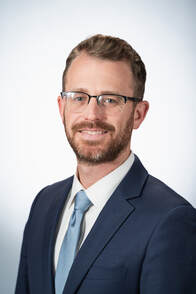
Name: Samuel T. Berg
Appointed to: Walworth County Circuit Court
Appointment date: Nov. 7, 2025, to term ending July 31, 2027
Education:
Law School – Marquette University, Milwaukee, Wisconsin
Undergraduate – University of Wisconsin-Madison
High School – Big Foot High, Walworth, Wisconsin
Recent legal employment:
October 2024-present – Associate attorney, Gardiner Koch Weisberg & Wrona, Lake Geneva, Wisconsin
June 2020-October 2024 – Assistant district attorney, Walworth County District Attorney’s Office
July 2016-June 2020 – Assistant attorney general, Wisconsin Department of Justice, Madison, Wisconsin
August 2014-July 2016 – Law clerk, U.S. District Court for the Eastern District of Wisconsin, Hon. William C. Griesbach, Green Bay, Wisconsin
May 2014-August 2014 – Associate attorney, Kravit, Hovel & Krawczyk, Milwaukee, Wisconsin
Bar and administrative memberships:
State Bar of Wisconsin
U.S. District Court for the Eastern District of Wisconsin
U.S. District Court for the Western District of Wisconsin
General character of practice:
Our law firm has over 50 practice areas and represents individuals and corporations in a diverse range of concentrations. The general character of our Lake Geneva office, where I primarily work, is a general practice setting, including civil litigation, criminal defense, probate and guardianship, personal injury, estate planning, real estate, business formation, contract review, and employment law. As a senior associate in this office, I handle all of these case types on a regular basis, I oversee the intake process and handle most new client meetings, and I manage 4-5 other attorneys.
Describe typical clients:
My firm’s general practice setting means I represent diverse clients, including business owners, wealthy individual clients, condo and homeowners associations, white and blue collar clients, clients facing various criminal charges, and indigent clients in contingency fee cases.
Number of cases tried to verdict: Approximately 25 jury trials and numerous bench trials
List up to three significant trials, appeals, or other legal matters in which you participated as a judge or lawyer in the past seven years:
State v. Gabriel Estrada; Walworth County . . . . This case was significant because the jury returned a verdict of guilty on all counts, including multiple felonies, and the defendant was sentenced to multiple years in prison, even though the case was initially referred for a single misdemeanor charge. This case is representative of how I tried to prosecute domestic violence cases: by listening to the victim and, when I believed her and when she provided ample supporting documentation to corroborate her statements, by aggressively prosecuting the case to keep the victim safe and allow her to get out of the cycle of domestic violence.
State v. Larry Mitchell; Walworth County . . . . This case was significant because it was my first criminal trial and my first trial as a prosecutor. I had to prepare two felony cases for trial that day, one of which had a recanting victim and one of which had a victim who was refusing to come to court. The case where the victim refused to come to court ended up proceeding that day and even without her participation, I was able to obtain a felony false imprisonment conviction. It is not ideal to try a case without the victim but I knew that the case would have to be dismissed if I did not do so, and I felt that trying the case was necessary to protect the victim and the public. Preparing for these two cases and trying this case showed me that as a prosecutor, I would have to work hard, understand the rules of evidence intimately, and figure out how to appeal to jurors’ sense of justice.
Experience in adversary proceedings before administrative bodies:
As an assistant attorney general in the civil litigation unit of the Wisconsin Department of Justice, I handled certiorari actions in circuit court for judicial review of various administrative proceedings. However, my positions have not, to date, involved participating directly in administrative agency or commission proceedings.
Describe your non-litigation experience (e.g., arbitration, mediation).
I have handled numerous mediations in state and federal cases. At my current firm, I represent clients in real estate transactions and perform estate planning, contract drafting, and advising in a general counsel role. Previously, as an ADA and AAG, I advised law enforcement agencies, oversaw investigations, advised local district attorney’s offices, and advised organizational clients such as the Department of Corrections.
Position or involvement in judicial, non-partisan, or partisan political campaign, committee, or organization:
I volunteered to help my former colleague, Walworth County District Attorney Zeke Wiedenfeld, with his campaign for re-election in 2024. My participation was limited to obtaining approximately 10-20 signatures from family and friends, which I did to help Zeke secure a place on the ballot. This was an uncontested election.
Previous runs for public office: N/A
All judicial or non-partisan candidates endorsed in the last ten years: N/A
Professional or civic and charitable organizations:
St. James the Less Academy, School Advisory Committee, 2024-present
St. Francis de Sales School, School Advisory Committee, 2023-2024
St. Francis de Sales Parish, religious education teacher, 2022-present
St. Thomas More Society of Madison, board member, 2019-2024
Significant pro bono legal work or volunteer service:
During law school, I volunteered at the Marquette Volunteer Legal Clinic at the House of Peace on 1702 W. Walnut St. in Milwaukee. We met with individuals who were typically indigent and who were facing all kinds of legal challenges, most commonly landlord-tenant/eviction issues. Our representation would be limited to one meeting per matter and would consist of providing preliminary advice, basic assistance drafting pleadings, and referrals to attorneys or agencies that could assist further.
I also volunteered at the adult guardianship clinic at the law school. This involved going through training and then assisting individuals become guardians of adult wards in uncontested cases. We assisted the proposed guardians by helping them complete the necessary forms and navigate the guardianship process.
Quotes:
Why I want to be a judge:
I am grateful to be considered for an appointment to the Walworth County Circuit Court and humbled to be in a position to apply at this stage in my career. I want to serve as a judge for the people of Wisconsin—and specifically, of the county where I grew up—because I believe I am uniquely qualified for the job and because I want to use my gifts in whatever way most enables me to promote the common good and make a difference in my community.
I am uniquely qualified for the job because I have a broad range of legal experience. My legal experience includes substantial experience trying cases, which is crucial for a circuit court judge. I have tried numerous cases in state court, federal court, criminal court, civil court, on the plaintiff’s side, and on the defense side. I have spent over four years exclusively practicing civil litigation and over four more years exclusively prosecuting criminal cases. In my current position, I continue to practice civil litigation and criminal law, as well as personal injury, probate and guardianship, and juvenile law. I also have significant experience in non-litigation matters including contract drafting, employment law, corporate law, estate planning, and real estate law. I have been fortunate to work in an unusually broad range of concentrations, and this has prepared me well for the role of a circuit court judge, particularly in Walworth County, where each judge handles all types of matters at the same time.
In addition, I have a record of working well with others. I have been blessed to work under and be mentored by some exceptional lawyers and judges, including the Honorable John Franke (when I assisted him with his duties as the special prosecutor of an inquest), the Honorable Michael Brennan of the Seventh Circuit (when he was managing partner of Gass Weber Mullins in Milwaukee), the Honorable William C. Griesbach of the U.S. District Court for the Eastern District of Wisconsin (as his law clerk), the Honorable Ann Peacock (when she was directing the Civil Litigation Unit at WDOJ), and, most recently, District Attorney Zeke Wiedenfeld and my current employer in private practice, Attorney Tom Gardiner. These mentors taught me not only how to practice law but also how to be a professional and how to work well with supervisors, colleagues, and people under my supervision. As I explain more below, an important part of a circuit court judge’s role, particularly in a county of our relative size, is to be an administrator of the justice system, and such administrative duties necessarily require working well with others.
For these reasons, I believe I have a unique skill set that would enable me to be successful on the Walworth County Circuit Court bench.
Describe which case in the past 25 years by the Wisconsin Supreme Court or U.S. Supreme Court you believe had a significant positive or negative impact on the people of Wisconsin.
Counterman v. Colorado, 600 U.S. 66 (2023) and Kindschy v. Aish, 2024 WI 27 are two recent decisions that will have an overall positive impact on the people of Wisconsin. These cases each involved delineating the line between constitutionally protected speech and “true threats” which are beyond the scope of First Amendment protection. In Counterman, in an opinion written by Justice Kagan, the United States Supreme Court ruled in favor of a man who was prosecuted for stalking a woman online. In Kindschy, in an opinion written by Justice Dallet for a unanimous Wisconsin Supreme Court, the ruling was in favor of an anti-abortion protestor whose activities included singling out one clinic staff member and making statements that she believed to be threatening. These cases involve courts doing what courts do: reviewing difficult factual scenarios and making a ruling based on the law, even if it is in favor of an individual who has engaged in behavior that many find objectionable. These are not easy decisions, and this is an important area of law, as society continues to grapple with rising gun violence, online radicalization of various ideologies, and more aggressive enforcement and prosecution of hate speech by legislators and prosecutors of all political stripes. But these are instances in which our highest courts correctly came down in favor of the important principle of freedom of speech.
Two or three judges whom I admire and why:
I admire Judge William C. Griesbach and Judge Lynn Adelman of the U.S. District Court for the Eastern District of Wisconsin because of their dedication to public service, their collegiality, and their commitment to doing what is right.
Both men have been judges for nearly 30 years. Judge Griesbach is a former prosecutor and Judge Adelman is a former state senator. As Judge Griesbach’s law clerk, I watched him come to work early, stay late, and come in on most Saturdays. Judge Adelman is also well known as a hardworking judge who reads everything and writes prolifically. These men showed me that there is no substitute for hard work in the legal profession.
These judges also showed me the importance of mutual respect and collegiality. Reminiscent of the late Justice Scalia and Justice Ginsburg, Judge Griesbach and Judge Adelman were appointed by presidents of different political parties, but they have a special working relationship and friendship. I saw firsthand that they did not always agree on certain issues, but they valued each other’s opinions and debated each other openly, honestly, and respectfully.
Finally, these judges are committed to doing what is right in the promotion of the common good. It is sometimes said that the role of a judge is to “call balls and strikes,” and although that is true to a certain extent, Judge Griesbach and Judge Adelman showed me that compassion and conscience also have an inescapable role to play in the administration of justice.
The proper role of a judge:
A judge must administer justice by faithfully interpreting and applying the law as enacted by the legislative branch, by overseeing the conduct of the executive branch, and by enforcing the statutory and constitutional rights of all citizens.
A judge must maintain impartiality in all matters and must treat with respect and courtesy all litigants, attorneys, and indeed all people they encounter in both their professional and personal lives. Such respect is required by virtue of the human dignity of every person, and such impartiality is required to maintain the public’s utmost confidence in the integrity of the judiciary specifically and the rule of law in general.
A judge must also be a leader of the justice system in which he or she serves. A judge should be active in the local bar and should assist and mentor attorneys, especially new attorneys, thereby enhancing the quality of legal representation for the public and guaranteeing the efficacy of the justice system for generations to come.
Finally, being a judge requires humility and courage. Humility is needed to stay open-minded and to never stop learning and growing. Courage is needed to do what is right, especially when it is difficult.
Appointed to: Walworth County Circuit Court
Appointment date: Nov. 7, 2025, to term ending July 31, 2027
Education:
Law School – Marquette University, Milwaukee, Wisconsin
Undergraduate – University of Wisconsin-Madison
High School – Big Foot High, Walworth, Wisconsin
Recent legal employment:
October 2024-present – Associate attorney, Gardiner Koch Weisberg & Wrona, Lake Geneva, Wisconsin
June 2020-October 2024 – Assistant district attorney, Walworth County District Attorney’s Office
July 2016-June 2020 – Assistant attorney general, Wisconsin Department of Justice, Madison, Wisconsin
August 2014-July 2016 – Law clerk, U.S. District Court for the Eastern District of Wisconsin, Hon. William C. Griesbach, Green Bay, Wisconsin
May 2014-August 2014 – Associate attorney, Kravit, Hovel & Krawczyk, Milwaukee, Wisconsin
Bar and administrative memberships:
State Bar of Wisconsin
U.S. District Court for the Eastern District of Wisconsin
U.S. District Court for the Western District of Wisconsin
General character of practice:
Our law firm has over 50 practice areas and represents individuals and corporations in a diverse range of concentrations. The general character of our Lake Geneva office, where I primarily work, is a general practice setting, including civil litigation, criminal defense, probate and guardianship, personal injury, estate planning, real estate, business formation, contract review, and employment law. As a senior associate in this office, I handle all of these case types on a regular basis, I oversee the intake process and handle most new client meetings, and I manage 4-5 other attorneys.
Describe typical clients:
My firm’s general practice setting means I represent diverse clients, including business owners, wealthy individual clients, condo and homeowners associations, white and blue collar clients, clients facing various criminal charges, and indigent clients in contingency fee cases.
Number of cases tried to verdict: Approximately 25 jury trials and numerous bench trials
List up to three significant trials, appeals, or other legal matters in which you participated as a judge or lawyer in the past seven years:
State v. Gabriel Estrada; Walworth County . . . . This case was significant because the jury returned a verdict of guilty on all counts, including multiple felonies, and the defendant was sentenced to multiple years in prison, even though the case was initially referred for a single misdemeanor charge. This case is representative of how I tried to prosecute domestic violence cases: by listening to the victim and, when I believed her and when she provided ample supporting documentation to corroborate her statements, by aggressively prosecuting the case to keep the victim safe and allow her to get out of the cycle of domestic violence.
State v. Larry Mitchell; Walworth County . . . . This case was significant because it was my first criminal trial and my first trial as a prosecutor. I had to prepare two felony cases for trial that day, one of which had a recanting victim and one of which had a victim who was refusing to come to court. The case where the victim refused to come to court ended up proceeding that day and even without her participation, I was able to obtain a felony false imprisonment conviction. It is not ideal to try a case without the victim but I knew that the case would have to be dismissed if I did not do so, and I felt that trying the case was necessary to protect the victim and the public. Preparing for these two cases and trying this case showed me that as a prosecutor, I would have to work hard, understand the rules of evidence intimately, and figure out how to appeal to jurors’ sense of justice.
Experience in adversary proceedings before administrative bodies:
As an assistant attorney general in the civil litigation unit of the Wisconsin Department of Justice, I handled certiorari actions in circuit court for judicial review of various administrative proceedings. However, my positions have not, to date, involved participating directly in administrative agency or commission proceedings.
Describe your non-litigation experience (e.g., arbitration, mediation).
I have handled numerous mediations in state and federal cases. At my current firm, I represent clients in real estate transactions and perform estate planning, contract drafting, and advising in a general counsel role. Previously, as an ADA and AAG, I advised law enforcement agencies, oversaw investigations, advised local district attorney’s offices, and advised organizational clients such as the Department of Corrections.
Position or involvement in judicial, non-partisan, or partisan political campaign, committee, or organization:
I volunteered to help my former colleague, Walworth County District Attorney Zeke Wiedenfeld, with his campaign for re-election in 2024. My participation was limited to obtaining approximately 10-20 signatures from family and friends, which I did to help Zeke secure a place on the ballot. This was an uncontested election.
Previous runs for public office: N/A
All judicial or non-partisan candidates endorsed in the last ten years: N/A
Professional or civic and charitable organizations:
St. James the Less Academy, School Advisory Committee, 2024-present
St. Francis de Sales School, School Advisory Committee, 2023-2024
St. Francis de Sales Parish, religious education teacher, 2022-present
St. Thomas More Society of Madison, board member, 2019-2024
Significant pro bono legal work or volunteer service:
During law school, I volunteered at the Marquette Volunteer Legal Clinic at the House of Peace on 1702 W. Walnut St. in Milwaukee. We met with individuals who were typically indigent and who were facing all kinds of legal challenges, most commonly landlord-tenant/eviction issues. Our representation would be limited to one meeting per matter and would consist of providing preliminary advice, basic assistance drafting pleadings, and referrals to attorneys or agencies that could assist further.
I also volunteered at the adult guardianship clinic at the law school. This involved going through training and then assisting individuals become guardians of adult wards in uncontested cases. We assisted the proposed guardians by helping them complete the necessary forms and navigate the guardianship process.
Quotes:
Why I want to be a judge:
I am grateful to be considered for an appointment to the Walworth County Circuit Court and humbled to be in a position to apply at this stage in my career. I want to serve as a judge for the people of Wisconsin—and specifically, of the county where I grew up—because I believe I am uniquely qualified for the job and because I want to use my gifts in whatever way most enables me to promote the common good and make a difference in my community.
I am uniquely qualified for the job because I have a broad range of legal experience. My legal experience includes substantial experience trying cases, which is crucial for a circuit court judge. I have tried numerous cases in state court, federal court, criminal court, civil court, on the plaintiff’s side, and on the defense side. I have spent over four years exclusively practicing civil litigation and over four more years exclusively prosecuting criminal cases. In my current position, I continue to practice civil litigation and criminal law, as well as personal injury, probate and guardianship, and juvenile law. I also have significant experience in non-litigation matters including contract drafting, employment law, corporate law, estate planning, and real estate law. I have been fortunate to work in an unusually broad range of concentrations, and this has prepared me well for the role of a circuit court judge, particularly in Walworth County, where each judge handles all types of matters at the same time.
In addition, I have a record of working well with others. I have been blessed to work under and be mentored by some exceptional lawyers and judges, including the Honorable John Franke (when I assisted him with his duties as the special prosecutor of an inquest), the Honorable Michael Brennan of the Seventh Circuit (when he was managing partner of Gass Weber Mullins in Milwaukee), the Honorable William C. Griesbach of the U.S. District Court for the Eastern District of Wisconsin (as his law clerk), the Honorable Ann Peacock (when she was directing the Civil Litigation Unit at WDOJ), and, most recently, District Attorney Zeke Wiedenfeld and my current employer in private practice, Attorney Tom Gardiner. These mentors taught me not only how to practice law but also how to be a professional and how to work well with supervisors, colleagues, and people under my supervision. As I explain more below, an important part of a circuit court judge’s role, particularly in a county of our relative size, is to be an administrator of the justice system, and such administrative duties necessarily require working well with others.
For these reasons, I believe I have a unique skill set that would enable me to be successful on the Walworth County Circuit Court bench.
Describe which case in the past 25 years by the Wisconsin Supreme Court or U.S. Supreme Court you believe had a significant positive or negative impact on the people of Wisconsin.
Counterman v. Colorado, 600 U.S. 66 (2023) and Kindschy v. Aish, 2024 WI 27 are two recent decisions that will have an overall positive impact on the people of Wisconsin. These cases each involved delineating the line between constitutionally protected speech and “true threats” which are beyond the scope of First Amendment protection. In Counterman, in an opinion written by Justice Kagan, the United States Supreme Court ruled in favor of a man who was prosecuted for stalking a woman online. In Kindschy, in an opinion written by Justice Dallet for a unanimous Wisconsin Supreme Court, the ruling was in favor of an anti-abortion protestor whose activities included singling out one clinic staff member and making statements that she believed to be threatening. These cases involve courts doing what courts do: reviewing difficult factual scenarios and making a ruling based on the law, even if it is in favor of an individual who has engaged in behavior that many find objectionable. These are not easy decisions, and this is an important area of law, as society continues to grapple with rising gun violence, online radicalization of various ideologies, and more aggressive enforcement and prosecution of hate speech by legislators and prosecutors of all political stripes. But these are instances in which our highest courts correctly came down in favor of the important principle of freedom of speech.
Two or three judges whom I admire and why:
I admire Judge William C. Griesbach and Judge Lynn Adelman of the U.S. District Court for the Eastern District of Wisconsin because of their dedication to public service, their collegiality, and their commitment to doing what is right.
Both men have been judges for nearly 30 years. Judge Griesbach is a former prosecutor and Judge Adelman is a former state senator. As Judge Griesbach’s law clerk, I watched him come to work early, stay late, and come in on most Saturdays. Judge Adelman is also well known as a hardworking judge who reads everything and writes prolifically. These men showed me that there is no substitute for hard work in the legal profession.
These judges also showed me the importance of mutual respect and collegiality. Reminiscent of the late Justice Scalia and Justice Ginsburg, Judge Griesbach and Judge Adelman were appointed by presidents of different political parties, but they have a special working relationship and friendship. I saw firsthand that they did not always agree on certain issues, but they valued each other’s opinions and debated each other openly, honestly, and respectfully.
Finally, these judges are committed to doing what is right in the promotion of the common good. It is sometimes said that the role of a judge is to “call balls and strikes,” and although that is true to a certain extent, Judge Griesbach and Judge Adelman showed me that compassion and conscience also have an inescapable role to play in the administration of justice.
The proper role of a judge:
A judge must administer justice by faithfully interpreting and applying the law as enacted by the legislative branch, by overseeing the conduct of the executive branch, and by enforcing the statutory and constitutional rights of all citizens.
A judge must maintain impartiality in all matters and must treat with respect and courtesy all litigants, attorneys, and indeed all people they encounter in both their professional and personal lives. Such respect is required by virtue of the human dignity of every person, and such impartiality is required to maintain the public’s utmost confidence in the integrity of the judiciary specifically and the rule of law in general.
A judge must also be a leader of the justice system in which he or she serves. A judge should be active in the local bar and should assist and mentor attorneys, especially new attorneys, thereby enhancing the quality of legal representation for the public and guaranteeing the efficacy of the justice system for generations to come.
Finally, being a judge requires humility and courage. Humility is needed to stay open-minded and to never stop learning and growing. Courage is needed to do what is right, especially when it is difficult.