
 Early in my career in education, I was introduced to a learning scale that offered both my students and me a different way of thinking about competency. The scale looks like this:
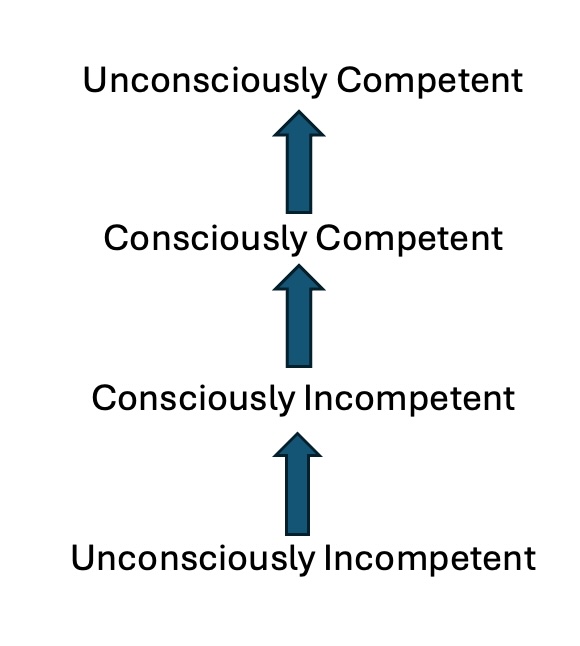
Understanding the Competency Continuum
Let’s consider this through a real-world example: learning to drive a car.
Before you begin learning to drive, you
Latest from Slaw - Page 5
The Task for Ontario’s Next Chief Justice
With Chief Justice Morawetz set to ride off into the sunset, the Ontario Superior Court will soon be graced with a new leader. While it can be anticipated that the new Chief will continue the court’s mission to prioritize form over substance, it is respectfully suggested that the new Chief Justice focus on a
What’s an Author to Do? Shadow Libraries in the Age of AI.
 On March 6th, a prominent group of publishers including the 5 biggest global book publishers (Hachette, Penguin Random House, HarperCollins, Macmillan and Simon and Schuster) filed a lawsuit in NY federal court to try and shut down the shadow library “Anna’s Archive”. A decade ago, John Willinsky described scholarly publishing as having its “
Wednesday: What’s Hot on CanLII? – April 2026
 Each month, we tell you which three English-language cases and French-language cases have been the most viewed* on CanLII in the previous month and we give you a small sense of what the cases are about.
For this past month, the three most-consulted English-language decisions were:
1. R. v. Singer, 2026 SCC 8
[1] Thirty
The Case for and Against Co-Authoring With AI
 In recent posts, I have been skeptical about using AI to generate certain kinds of legal writing. I’ve drawn a distinction between using AI to edit or revise a document and using it to create one from scratch.
I take the view that even if you can avoid hallucinations, using AI to create a court
AI and Alternative Dispute Resolution (Are We Ready for AI-DR?)
 Artificial Intelligence (AI) is a bold experiment being conducted on our institutions, with very few guardrails. When we do experiments with chemicals and biological materials to develop new drugs, pesticides, or even cleaning products, we set up controlled environments with protections for the humans involved in the testing. AI is mostly being developed without external
Inclusion and Belonging in the Boardroom: A Call to Rethink How We Lead
 Across Canada and beyond, organizations are waking up to a hard truth:
It’s no longer enough to say you value inclusion—your boardroom needs to show it.
For young lawyers and law students just beginning their careers, this call for inclusion is not theoretical, it’s foundational. They’re entering a world where law, leadership, and lived experience
The Wellness Lawyer: “Can You Be a Lawyer and a Highly Sensitive Person (HSP)?”
 I recently watched a documentary called Sensitive. The topic of this article was inspired by its content.
Introduction
Have you ever been told that you are too sensitive? Or that you need to have tough skin in this world and especially in the legal profession?
Or, how about the time when you are feeling sad
Towards Transparency: Why Not a Court AI Register?
 Canadian courts and judges are using AI in their work. Not all of them, but some of them. A small number of courts have publicly announced formal pilots or adoption of AI tools (see, e.g.,
 Bill C-12 and the Changing Landscape of Asylum Access in Canada
 On March 26, 2026, Bill C-12, the Strengthening Canada’s Immigration System and Borders Act, received Royal Assent. Framed as a response to system pressures and “asylum shopping,” the law marks one of the most significant shifts in Canada’s refugee regime since 2002. Its core effect is simple but profound: it narrows