
Dismissals, dueling summary-judgment briefs, and the first post-Cox AI rulings show how fast Cox v. Sony Music is reshaping copyright litigation—and where the next fight is heading.
Copyright doctrine usually doesn’t move this quickly. On March 25, the Supreme Court handed down Cox Communications v. Sony Music Entertainment, and the copyright world has been rearranging itself around the decision ever since.
Two of the country’s most significant ISP piracy cases have already ended. On April 22, the major music companies voluntarily dismissed their suits against Verizon and Altice, filing stipulations dropping all claims with prejudice. Both cases had been on hold pending Cox, and both rested on the same theory Cox foreclosed: that an internet provider can be liable for contributory infringement for continuing to provide service to known infringers. Once that path closed, there wasn’t much left to litigate. The Supreme Court itself drove the point home, vacating a Fifth Circuit decision against ISP Grande Communications in a two-sentence order that sent the case back for another look in light of Cox.
In a development with potentially bigger implications, the music publishers pressing Anthropic over Claude’s reproduction of copyrighted song lyrics have narrowed their secondary liability claims across two related lawsuits, known as Concord Music I and Concord Music II. In the older case, they dropped both contributory and vicarious infringement with prejudice as Anthropic’s summary judgment motion loomed; in a newer one, they recently dropped their vicarious infringement claim without prejudice.
Whatever else you want to say about Cox, it’s proven to be a remarkably efficient litigation cleanup tool.
To be clear, while Cox narrowed secondary liability, it didn’t bury it. In Nazemian v. NVIDIA, Northern District of California Judge Jon Tigar let a contributory infringement claim through under both of Cox‘s surviving theories—inducement and tailoring. And just last week in Disney v. MiniMax, the motion picture studios’ suit against the maker of an AI video generator, Central District of California Judge Stanley Blumenfeld declined to toss an inducement claim built, in part, on how aggressively the defendant allegedly marketed its tool.
But as secondary liability narrows in Cox‘s wake, the doctrine that may shape the next phase of AI litigation—the fight over its outputs—lives on the direct infringement side of the line. It’s volitional conduct, a judge-made rule that decides who’s responsible when an automated system makes an infringing copy. AI defendants have consistently taken the position that any resulting liability belongs to the user who enters the prompt, not the company that built the tool itself.
The Volitional Conduct Play
Despite its name, volitional conduct isn’t really about intent or mental state. It’s more like copyright’s version of proximate causation. Under the framework from the Second Circuit’s Cartoon Network v. CSC Holdings—the case everyone calls Cablevision—”the person who actually presses the button” supplies “the necessary element of volition.” Last month, Anthropic filed a motion in the Concord Music I case arguing that because Claude produces output automatically in response to user requests, Claude’s users, not Anthropic, “cause the copying.”

MiniMax made the same argument in the Disney case. Perplexity is making it in the New York Times and Chicago Tribune cases. But while these arguments have been pressed in pleading-stage motions to dismiss, Anthropic’s version is on summary judgment (read motion here). That means it comes coupled with an evidentiary record, including the fact that, according to Anthropic, more than 83% of the prompts that produced lyrics in discovery were generated by the plaintiff music publishers themselves or their agents attempting to circumvent Claude’s guardrails. Anthropic argues that, because it “actively designed its system to avoid and eliminate copyright infringement,” it has not “engage[d] in volitional conduct necessary to support a finding of direct liability.”
The Plaintiff-Side Response
The plaintiff-side argument increasingly turns on the Ninth Circuit’s 2019 opinion in VHT v. Zillow, which asks whether the defendant controlled the system, selected the material, or instigated the copying. Hit any one, the plaintiffs argue, and you’ve cleared the volitional conduct bar.
The music publishers say Anthropic cleared it coming and going. In their motion for partial summary judgment (read here), they point to at least four different exercises of volition: that training on the lyrics caused Claude to reproduce them; that Anthropic trained Claude to answer lyric-seeking prompts with lyrics; that it launched Claude without effective copyright guardrails; and that Claude produced copyrighted lyrics even when users never asked.
That last point cuts to the core of the volitional conduct debate. The doctrine was built for machines that execute commands. Press record on a DVR and it faithfully captures whatever program you selected; it doesn’t improvise. But when Claude produces copyrighted lyrics in response to a prompt that never asked for them, it’s making its own choices about what to put out. And because volition turns on who actually caused the copy, it gets much harder to point at the user when an AI model isn’t fully deterministic and the same prompt might produce a different result each time.
There’s also authority for treating the design of an automated system itself as volitional conduct. In 2013’s Capitol Records v. ReDigi, the court held that a company’s “fundamental and deliberate role” in designing its resale software made the case “indistinguishable from those where human review of content gives rise to direct liability”—even though users initiated each individual transaction.
The newspapers suing Perplexity sounded the same theme on May 15, anchoring their opposition (read it here) in Capitol Records v. MP3tunes, where the court found volitional conduct in a music locker that fetched copyrighted album art whenever a user uploaded a song. The volition there belonged to the company that built the locker, not to the end user. Perplexity’s answer engine, the newspapers argue, is the same kind of system the company pre-loaded with unauthorized copies.
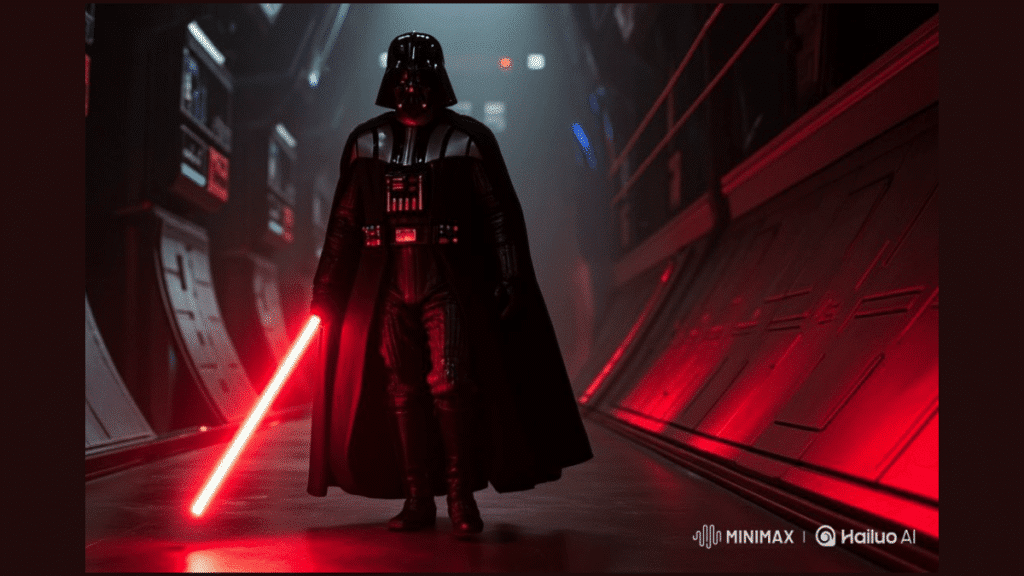
And the studios just got their first output-side win in Disney v. MiniMax, the same suit behind the inducement ruling I mentioned earlier. In his May 22 order denying the defendant’s motion to dismiss, Judge Blumenfeld not only preserved the studios’ secondary liability claims, he also refused to dismiss their direct infringement claim (read the order here). MiniMax had argued that its users, not the company, make the infringing videos, so the output claims fail for lack of volition. But because the studios claim that MiniMax trained its Hailuo AI on their characters and advertised its ability to reproduce them, the court held that this “alleged volitional conduct goes beyond merely operating a website on which users are able to independently upload infringing content.”
A Doctrine About to Get Its Close-Up
For a doctrine now poised to decide who answers for the output of the most sophisticated software ever built, volitional conduct rests on a remarkably thin foundation. The term doesn’t appear anywhere in the Copyright Act, tracing to a single sentence in a single 1995 district court opinion, Religious Technology Center v. Netcom On-Line Communication Services. Netcom was a dispute over a former Scientologist posting church scriptures to a Usenet newsgroup. Worried about holding every internet provider liable for content merely passing through its servers, the Netcom court wrote that “there should still be some element of volition or causation which is lacking where a defendant’s system is merely used to create a copy by a third party.” That one sentence is the seed of the entire modern doctrine of direct infringement causation.
It’s been living on borrowed authority ever since. Congress declined to codify Netcom in the 1998 DMCA, choosing the conditional section 512 safe harbors instead. And in 2014’s American Broadcasting Cos. v. Aereo, the Supreme Court held a company directly liable even though the user picked the content and the system did the rest. Yet, as David Nimmer has noted, lower courts keep applying Cablevision’s “presses the button” test as though Aereo never happened.
None of this mattered all that much when the real fight was over secondary liability or training-stage fair use. After Cox narrowed the alternatives, far more rides on it. That means a doctrine built in 1995 to keep the dial-up internet from collapsing under liability is about to be asked whether it reaches a system built from the very copyrighted content it later reproduces.
The Bottom Line
Disney v. MiniMax is just a motion-to-dismiss decision, where the bar is plausibility and the allegations are accepted as true. The real test is still to come. The parties’ cross-motions for summary judgment in Concord Music I are set for October 21—the first time a court will weigh volitional conduct in an AI copyright infringement lawsuit on a full record.
But the stakes reach well past any single case. If courts accept the Cablevision analogy and treat generative AI as a machine that merely executes commands, the companies that build them may be unreachable for infringing outputs—and after Cox, secondary liability is a narrower road than before. Without inducement or tailoring, that would leave the user as the only viable defendant for output-side claims, liable for a copy they may not have asked for and, under the Copyright Office’s current guidance, can’t even claim to have authored.
Does a framework built for conduits fit a system built from the content itself? A growing number of federal judges are about to decide.
As always, let me know what you think in the comments below or @copyrightlately on social media.
The post Cox and Effect: Why Volitional Conduct Is AI Copyright’s Next Battleground appeared first on Copyright Lately.