
Fair use wins, exclusivity loses, the Ninth Circuit finally publishes, and the future of a psychic network’s lawsuit looks hazy. Time to catch up.
Hi everyone! If you’ve been wondering why Copyright Lately has been quieter than the salad bar at a Golden Corral, it’s because I have this pesky habit of practicing law for a living—which this summer meant fighting about ugly houses in a Delaware trademark trial. Turns out I can only juggle one kind of IP at a time. But I’m back and ready to disappoint you on a more regular schedule. While I was gone, the copyright world kept churning out decisions like generative AI with no guardrails. Here’s what I missed:
Transformative on Monday, Suspended by Wednesday
Early last year, serial fabulist George Santos sued Jimmy Kimmel for airing Cameo videos the late-night host ordered under fake names for a recurring bit called “Will Santos Say It?” (sample message: congratulating someone for eating six pounds of loose ground beef in under 30 minutes). Last week, in Santos v. Kimmel (read here), the Second Circuit agreed with the district court: that’s fair use.
The original Cameos were earnest pep talks conveying “feelings of hope, strength, perseverance, encouragement, and positivity.” Kimmel’s show used them to mock Santos’ willingness to say anything for money. Post-Warhol, what matters is what a reasonable viewer would perceive, not the subjective intent of the requester or the performer.
The court kept it short and sweet: different purpose, no market substitution, and no legal alchemy that transforms “you tricked me” into “you infringed me.” Santos’ contract claims fared no better—he wasn’t a party to the Cameo terms he claimed were breached. In the end, Santos’s lawsuit performed about as well as his résumé.
And yet, just two days after Kimmel’s Second Circuit victory, ABC indefinitely suspended Jimmy Kimmel Live! under regulatory and affiliate pressure. Of course, that’s not a copyright problem; it’s a First Amendment problem, with all the familiar jawboning vibes. But the result is a disconcerting split-screen: copyright law protects the commentary while the commentator gets benched—a pyrrhic victory if there ever was one.
The Ninth Circuit Finally Hits ‘Publish’
I’ve written many times about the Ninth Circuit’s frustrating habit of deciding substantial similarity cases through unpublished memorandum dispositions. These rulings—cursory, inconsistent, and technically nonprecedential—have left everyone guessing about when it’s proper to dismiss a case at the pleading stage.
In Biani v. Showtime Networks (read here), we finally get a published opinion involving literary works. The plaintiff alleged that Showtime’s Penny Dreadful conjured its characters by blending traits from three of her online role-playing creations. The district court dismissed, and the Ninth Circuit affirmed—but not before clarifying a distinction courts often blur.
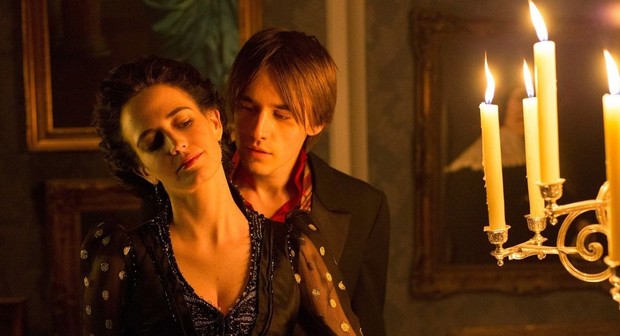
Copyright infringement requires both copying and unlawful appropriation. The copying prong asks whether the defendant actually used the plaintiff’s work. Without proof of access, plaintiffs can try to establish “striking similarity”—resemblance so close that independent creation is virtually impossible. But, here, Biani’s pleading couldn’t clear that bar. The characters exhibited “many more differences than similarities”: Biani’s witch was a remorseless killer who wore men’s clothes; Showtime’s witch killed no one and grieved others’ deaths. Even casting Eva Green wasn’t striking since she’d previously played a witch in The Golden Compass and several other projects. (Apparently Eva Green is to witches what Sean Bean is to dying on screen.)
The unlawful appropriation prong asks a different question: even if copying occurred, did the defendant take enough protected expression to matter? Courts filter out unprotectable ideas, tropes, and scènes à faire. Here, Biani’s alleged similarities—pale brunettes in Victorian attire rebelling against social norms—were too general to qualify as protectable expression. That description could fit half the crowd at a steampunk convention.
The ruling is narrow: the court dismissed based on inadequate allegations rather than a full comparison of the works. But it’s still notable that the Ninth Circuit has finally published its reasoning for affirming a pleading-stage dismissal in a substantial similarity case involving literary works. It’s not the comprehensive framework we need, but after years of unpublished hand-waving, even breadcrumbs count.
Mockingbird’s Last Stand
Back in April, I wrote about the dueling To Kill a Mockingbird appeals in the Second and Seventh Circuits and how they spotlighted copyright termination’s “derivative works exception.” That provision says a derivative work “prepared under authority of the grant before its termination may continue to be utilized” after termination. The narrow carveout was designed so that when authors reclaim their rights, existing adaptations don’t have to be yanked from circulation.
Dramatic Publishing, which licensed Christopher Sergel’s 1969 stage adaptation of To Kill a Mockingbird, tried to turn that safety valve into a permanent chokehold. It argued that the derivative works exception doesn’t just preserve the right to keep staging the Sergel play, but that it also preserved Dramatic’s original exclusive rights to block any new stage versions, like Aaron Sorkin’s Broadway adaptation, even decades after Harper Lee terminated its license.
The Second Circuit wasn’t buying it. In Atticus LLC v. Dramatic Publishing (read here), the court held that the derivative works exception allows Dramatic to keep licensing the Sergel play, but it doesn’t let it fence out new adaptations. Otherwise, the termination right would be meaningless. The panel distinguished Mills Music, which allowed continued royalty collection but never addressed post-termination exclusivity.
As for the Seventh Circuit, a parallel appeal between the Lee Estate and Dramatic settled on the eve of oral argument, presumably because someone read the Second Circuit’s opinion and thought better of it. That leaves us with one clear takeaway: the derivative works exception protects continued use, not eternal exclusivity.
Beauty, the Beast, and Vicarious Liability
Disney thought it had escaped visual effect company Rearden’s lawsuit over the MOVA motion-capture system used on the live-action Beauty and the Beast, but the Ninth Circuit had other ideas in Rearden v. Walt Disney Pictures (read here).
A district judge had set aside an earlier jury verdict against Disney, finding Rearden failed to show Disney could identify and stop vendor Digital Domain’s unlicensed use of MOVA. The Ninth Circuit disagreed, reinstating the $250,638 verdict and clarifying that vicarious liability turns on control over the infringer and a financial benefit—not certainty about infringement.
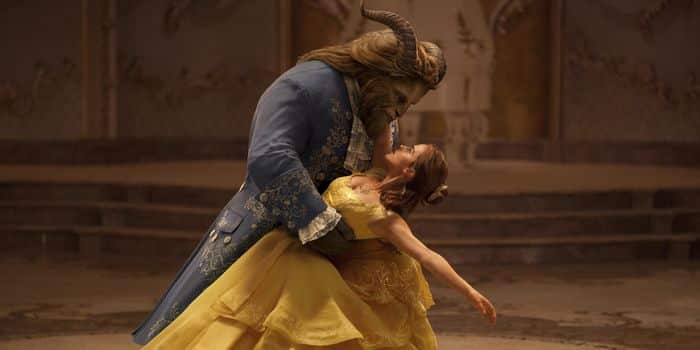
The panel pointed to evidence that Disney’s director and VFX supervisor attended every capture session; Disney’s contract gave it broad supervisory rights, including termination for infringement; and Disney paid Digital Domain $31 million—nearly half the film’s VFX budget. Rearden’s copyright notice appeared on MOVA computers, and a Hollywood Reporter article published before the contract reported that Rearden founder Steve Perlman claimed Digital Domain lacked a license.
The court stressed that actual knowledge isn’t required and that an unsettled ownership dispute doesn’t excuse infringement. It also broke new ground: disgorgement of profits is an equitable remedy with no jury right, making the jury’s $345,000 profits award merely advisory.
The timing is notable: just as the Ninth Circuit weighs in on vicarious liability, the Supreme Court is teeing up Cox v. Sony Music, the first high court secondary liability case since Grokster. There, the Court will decide whether ISPs can be on the hook for failing to cut off infringing subscribers—or whether contributory liability demands Grokster-style inducement. Between Rearden and Cox, the coming term could reshape secondary copyright liability from Hollywood soundstages to home routers.
Perlmutter Back (For Now)
Back in May, I wrote about Shira Perlmutter’s abrupt firing as Register of Copyrights and her lawsuit challenging it. Earlier this month, the D.C. Circuit handed her a lifeline—temporarily reinstating her while the case plays out. Perlmutter v. Blanche (read here).
In a 2–1 order, the court granted an emergency injunction pending appeal, finding Perlmutter likely showed her removal was unlawful. The key issue: only the Librarian of Congress can remove the Register, not the President. The Trump administration tried to work around this by using the Federal Vacancies Reform Act to install Deputy AG Todd Blanche as Acting Librarian, who could then ratify the firing. But the panel found the FVRA likely doesn’t apply to the Library of Congress, which resides in the legislative branch.
Perlmutter argues the timing speaks for itself: she released a pre-publication version of the Copyright Office’s AI training report on May 9, and the White House fired her the next day. The panel called this an “extraordinary” separation-of-powers violation—alleged retaliation by the President against a legislative branch official for advice she gave Congress.
Judge Walker dissented, arguing that the Register exercises executive power and citing the Supreme Court’s recent shadow-docket orders in Trump v. Wilcox and Trump v. Boyle. But the majority distinguished those cases—they involved executive branch agencies, while the Register primarily serves Congress. Whether Perlmutter stays in office may depend on how the court ultimately views this clash between executive power and legislative independence.
Call Me Dismissed
And finally, if you suffered from insomnia in the ’90s, you’ll remember Miss Cleo, the infomercial psychic who urged late-night viewers to “Call me now!” In 2024, A&E’s Lifetime biopic Miss Cleo: Her Rise and Fall chronicled both her meteoric rise as the face of Psychic Readers Network’s pay-per-call empire and the subsequent FTC investigation that led to a $500 million settlement. The film apparently struck a nerve with PRN, which still claims to own the Miss Cleo character and brand.
PRN sued A&E for copyright infringement in Psychic Readers Network v. A&E Television Networks (read here), but its lawsuit had more holes than a crystal ball warranty. PRN only offered copyright registrations for three works—a tarot deck, a book, and a VHS tape—yet never specified whether, where, or how these works appeared in A&E’s film. As Judge Dale Ho noted, Rule 8 doesn’t require divination, but plaintiffs should at least identify what was supposedly copied.
Judge Ho’s parting shot was worth the price of admission: Rule 8 exists so defendants “need not resort to prognostication (e.g., scrying, divination, palmistry, etc.)” to determine what they’re accused of. While PRN’s complaint was dismissed with leave to amend, any refiled claim faces an uphill battle—biographical films typically qualify for fair use protection, and PRN will need much more than vague hand-waving about “look and feel” to overcome that defense.
That’s a wrap on the roundup! Drop your thoughts below or find me @copyrightlately on social media. I’ll try not to disappear again for months, but given my track record, you might want to set your expectations somewhere between “sporadic” and “occasional cameo.”
The post What’s Up With Copyright Lately?: Sweater Weather Edition appeared first on Copyright Lately.