
U.S. Reps. Anna Paulina Luna (R-Fla.) and Alexandria Ocasio-Cortez (D-N.Y.) have introduced legislation that would cap credit-card interest rates at 10%, with the claim that it would help poorer Americans. Unfortunately, both economic theory and centuries of evidence demonstrate that the effect would be quite the opposite.
When the government sets a ceiling on the price of something, less of that thing gets made and sold because producers switch to things that are not subject to price controls and are thus more profitable. Think about what happened in Venezuela when the government set maximum prices on such everyday items as milk and bread: the shelves at supermarkets quickly became bare of those items. In response, the government introduced rationing, with the result that people spent time queuing rather than doing productive work. Meanwhile other producers switched to smuggling in goods and selling them (illegally) at higher prices.
Interest rates are, in essence, the “price” of borrowing money. When governments set a ceiling on some interest rates, lenders supply less money via that route. Thus, imposing “caps” on credit-card interest rates means that suppliers of credit cards will ration credit. Most likely, they will limit the availability of credit to those with high credit scores, cutting off those with lower scores. Meanwhile, banks and other lending organizations will supply slightly more credit via other means, such as loans and overdrafts. This most likely benefits people with good credit scores, who will be eligible for unsecured bank loans at lower interest rates.
People with poor credit scores will find it much more difficult to borrow money. Some may need to post something they own as collateral simply to obtain a loan to cover existing credit-card debt. Even then, anyone with a credit score below 690 is likely to face an interest rate of more than 10%, and potentially as high as 36%. And lenders can charge significant upfront fees (sometimes as much as 10% of the loan amount) for arranging a secured loan, adding to the borrower’s debt.
In a statement accompanying the bill’s introduction, Rep. Luna claimed:
For too long, credit card companies have abused working class Americans with absurd interest rates, trapping them in an almost insurmountable amount of debt.
But that’s just not true. Interest rates on credit cards reflect the unsecured nature of the credit being offered and the risk of default. The reality is that millions of Americans rely on credit cards to tide them over during short periods when they have an emergency expenditure, when their income drops unexpectedly, or when they are waiting on a payment.
Credit cards have also frequently been used for creative projects that otherwise would not have been financed. For example filmmaker Spike Lee famously financed his film “She’s Gotta Have It” almost entirely on credit cards, while Kevin Smith did the same for “Clerks.” Many businesses also use credit cards for cash management.
Most people who don’t pay off their credit cards within the interest-free period do so within a few months. While some do take much longer, the Consumer Financial Protection Bureau (CFPB) in 2019 found that, even for those with credit scores below 660, the average duration is 13 months—see figure below; CFPB classifies credit scores below 660 as “subprime”—only four months longer than those with higher credit scores.
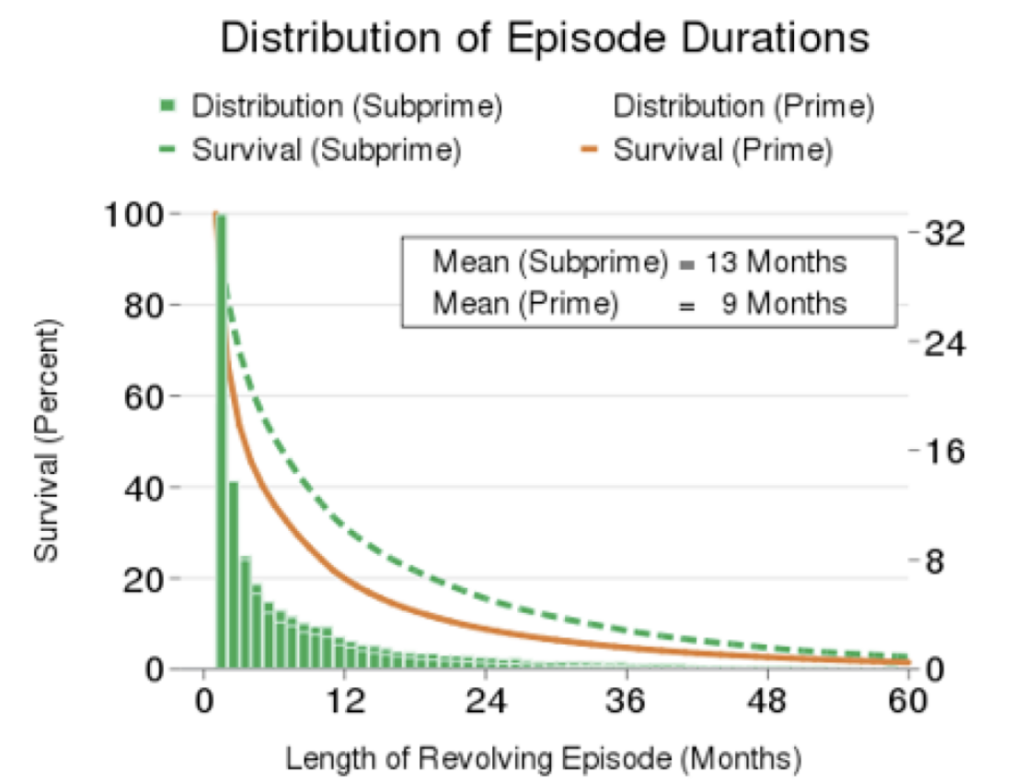
There are, no doubt, examples of people who spend more on their credit cards than they had intended and then struggle to pay off the debt. But the reality is that banks will generally work with customers to figure out a payment solution. For example, they will often write off a significant portion of a customer’s credit-card debt through a settlement if that person agrees to a payment plan. Meanwhile, there are nonprofits who also offer help by taking on the remaining debt and offering zero-interest repayment plans.
Those people who genuinely cannot pay off their debt due to unforeseen circumstances may be forced into personal bankruptcy, but that is very much a last resort and one that usually has come about through a concatenation of circumstances.
Luna and Ocasio-Cortez would throw the baby out with the bathwater. Capping interest rates on credit cards would make it all but impossible for people with low credit scores to obtain an unsecured credit card. That would make it more difficult for most people to build a credit score, which would in turn make it more difficult for most young people to obtain any kind of loan.
Denied the option of a credit card, many of those with low credit scores will turn elsewhere for credit, such as payday loans and pawnshops, both of which commonly charge much higher rates of interest than credit cards. Some might even turn to informal lenders (commonly known as “loan sharks”) that charge exorbitant rates and employ aggressive or abusive collection practices.
The stated aim of capping credit-card rates is to make borrowing “more affordable.” But for the riskiest borrowers, the cap would make it impossible to get a credit card. When those consumers do borrow, they will end up paying more (through payday lenders, pawn shops, or unregulated lenders) and they will lose many valuable consumer protections available from credit cards, such as dispute-resolution procedures and chargeback rights that alternative forms of credit do not provide.
Finally, it is worth noting that, in the very competitive U.S. market, credit-card companies look for ways to innovate—whether by offering lower fees, loyalty rewards, or specialized programs to help consumers build credit. Interest-rate caps reduce the profitability to serve riskier segments of the market, leaving many low-income and high-risk customers without access to these beneficial innovations.
It is ironic that the sponsors of the latest bill—Anna Paulina Luna and Alexandria Ocasio-Cortez—are both millennials, as people in their age group and younger would likely be the most adversely affected by the caps if they were implemented.
The post Credit-Card Price Controls Are Counter Productive appeared first on Truth on the Market.