
Originally posted 2013-05-13 09:00:58.
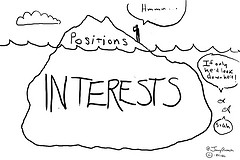
Ever since I read the two articles referenced in last week’s Musings, I have been thinking about how I as a Virginia construction attorney can be part of the solution. Then, fortuitously, my good friend and ubermediator, Victoria Pynchon, dusted off her Negotiation Law Blog to discuss 10 Reasons To Negotiate Instead Of Suing The Bastards.
As always, Vickie has insight into the minds of those in conflict (she did write The Grownup’s Guide to Conflict Resolution (somehow I ended up with a blurb) and Success as a Mediator for Dummies). Ms. Pynchon, a wise lady who has assisted and inspired me as a mediator finishes her recent post with:
My best advice? Negotiate the resolution of the dispute yourself even if it requires you to swallow your pride and to be the first one to say, “let’s sit down and figure out how best to serve your interests and mine at the same time.”
While I always recommend that you get in touch with your friendly neighborhood construction attorney early in the process (where he or she can be of most help), this is not always the situation. Problems occur out of the blue. Even he best construction projects can take the fast elevator to Hades and disputes occur. All is not lost and litigation is not inevitable. The involvement of experienced counsel can (and in my mind should) help avoid forcing a judge or arbitrator to decide your fate.
While the negotiation and eventual settlement of a dispute may hurt a lawyer’s bottom line (thus the common thought that attorneys (even construction litigators like me) will always push to run up the bill by avoiding such a result), the wise construction lawyer sees that control of the process and the use of negotiation leads to a happier client and more likely a repeat one. In short, the “counselor” aspect of a lawyer’s job description is as important as the other aspects. Far from clogging up the process, a good construction lawyer will streamline the process and help resolve what is in many cases a no-win (financially) situation and help get to the best resolution of your dispute.
My recommendation (aside from reading Vickie’s post) is to get the advice of an experienced construction attorney (whether a solo practitioner or a lawyer at a firm) and at the very least use that advice to get as much lemonade from the lemons that got you into your dispute in the first place.
I would love to hear your responses whether they be positive or negative. How do you feel about the debate relating to the involvement of lawyers in the construction world?
For more on this debate (attorneys in construction) check out my buddy Craig Martin’s (@craigmartin_jd) recent post.
As always, I welcome your comments below. Please subscribe to keep up with this and other Construction Law Musings.
© Construction Law Musings- Richmond, VA is licensed under a Creative Commons Attribution-NonCommercial-NoDerivatives 4.0 license.