
A new crop of copyrighted works (including rights in a certain famous British detective) will enter the public domain in the United States on January 1, 2023. Here’s what it all means.
Last month, Hulu announced that the upcoming third season of its Hardy Boys reboot would be the series’ last. While it’s certainly not unusual for streamers to cancel shows after only a few seasons, it also just so happens that the first three novels introducing the teenage sleuths are about to enter the public domain.

There’s no indication that Hulu’s decision was influenced by the copyright status of The Hardy Boys’ titular characters. But it’s also no secret that under the “cost-plus” model used by streaming services nowadays, the rates paid to producers, talent and rightsholders become more expensive the longer a series goes on. You’d forgive any business-minded licensee for thinking twice about paying escalating fees for the right to use source material that may only be copyrighted within an inch of its life.
Happy Public Domain Day 2023
On January 1, 2023, Frank and Joe Hardy will be in good company. That’s when a whole slew of popular books, stories and films first copyrighted in 1927 will enter the public domain in the United States. They include the Hermann Hesse novel Steppenwolf, Virginia Wolff’s To the Lighthouse, and The Case-Book of Sherlock Holmes, which features the final set of Sir Arthur Conan Doyle’s Sherlock Holmes stories (more on that one later).

Also heading to the U.S. public domain on January 1 are the 1927 films The Lodger, which was Alfred Hitchcock’s first thriller, and The Jazz Singer, the first full-length movie to feature synchronized dialogue. Unfortunately, that one is also a racist mess.
And let’s not forget the groundbreaking and highly influential Metropolis, which is actually about to make its second trip into the public domain. The copyright in the Fritz Lang motion picture first lapsed in 1953 after its owner didn’t renew the initial copyright registration. However, in 1996, the Uruguay Rounds Agreements Act resurrected the film’s copyright. The Act restored protection for Metropolis and other foreign works that were still protected by copyright in their source countries, but which had fallen into the U.S. public domain for failure to comply with the various formalities (e.g., notice, registration and renewal) formerly imposed under U.S. law.

The public domain status of all of these works was further delayed by 1998’s Sonny Bono Copyright Term Extension Act (CTEA), which extended the term of copyright protection for subsisting copyrighted works by 20 years. Works copyrighted prior to 1978 had their terms extended from 75 years to 95 years from the date of publication.
Following a twenty-year hiatus that ended in 2019, a new crop of works has entered the U.S. public domain each year on January 1. In 2023, this will include all works first published in 1927. Note that works remain protected until the end of the calendar year. That’s why Disney’s Steamboat Willie won’t enter the public domain until January 1, 2024, even though the film is set to celebrate its 95th birthday in 2023.
IMPORTANT Public domain is country specific. Just because a work is in the public domain in the United States doesn’t mean it isn’t protected by copyright elsewhere—and vice versa. Check out the Copyright Myth Project for more.
A Matter of Character(s)
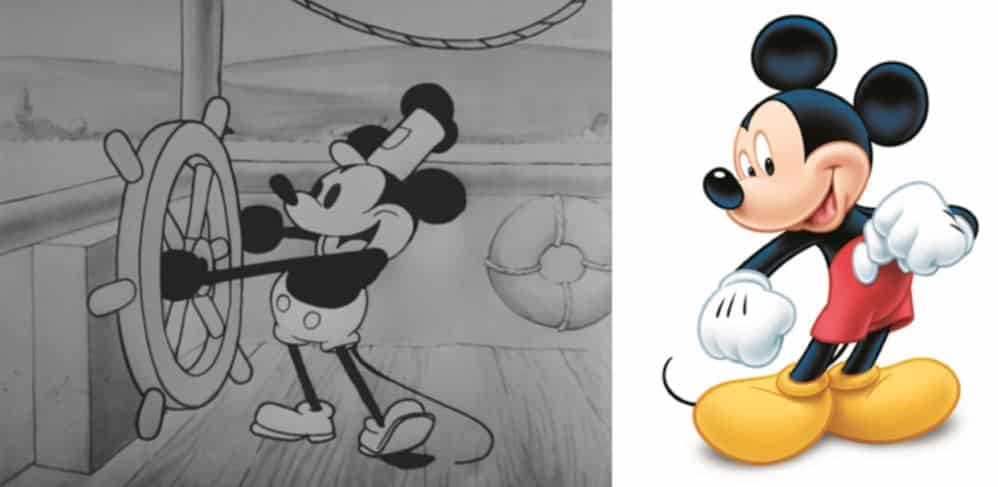
One of the most interesting issues involving older content involves characters that first appear in a public domain work but which then evolve or change over the course of later works that are still protected by copyright. For example, the version of Mickey Mouse featured in Steamboat Willie had black eyes, small ears, and a pointy nose. He also had a bad temper and the unfortunate habit of using barnyard animals as musical instruments.

Gradually, over time, Mickey’s eyes were enlarged (and pupils were added), his ears became more pronounced, and his nose was shortened. Following a visit from the ASPCA, he became devoted to animals. These later versions of Mickey will still be protected by copyright even after the character’s original iteration enters the public domain.
The principle that characters which evolve over time don’t enter the public domain all at once was established by the 2014 opinion in Klinger v. Conan Doyle Estate, Ltd. The Klinger case arose because the Arthur Conan Doyle estate tried to claim that Doyle’s Sherlock Holmes character would stay out of the public domain so long as any individual work depicting the character remained protected. But the Seventh Circuit rejected that view.
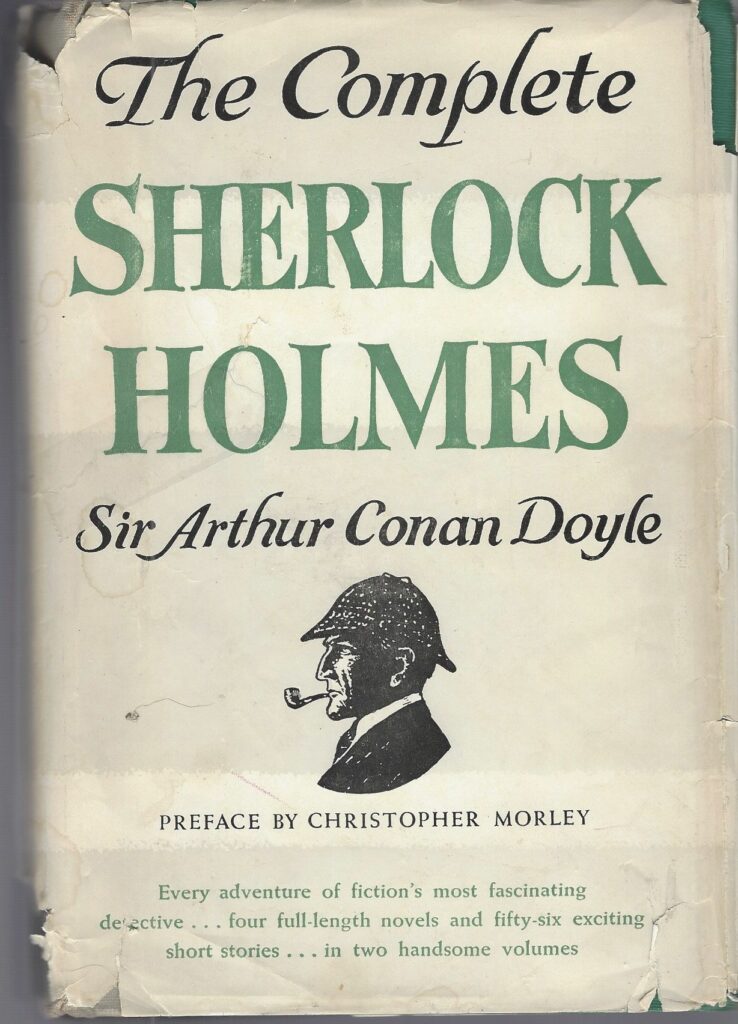
Instead, the court ruled that a copyrighted character begins to fall into the public domain when the first published story featuring that character enters the public domain. At this point, “story elements—including characters covered by the expired copyright—become fair game for follow-on authors.”
At the same time, those aspects of the character’s evolution that don’t appear until later works may still be eligible for copyright protection.
While later iterations of a character may be protected, you can’t bootstrap the copyright in a derivative work to extend protection on the original work. Because author Klinger was only looking to adapt the Holmes and Watson characters as they appeared in the stories that had lapsed into the public domain, he was free to do so.
Still, the fact that fully 98% of the Sherlock Holmes works are in the public domain hasn’t stopped the Doyle estate from taking the position that nearly anyone who wants to create a derivative work featuring the character needs to get a license. Among the licensed works touted on the Estate’s slickly-produced website are the long-running CBS series “Elementary,” the Will Ferrell comedy “Holmes and Watson” and two films starring Robert Downey, Jr. But come January 1, 2023, none of the stories in the original Sherlock Holmes canon will be protected by U.S. copyright.
Running Down the Clock

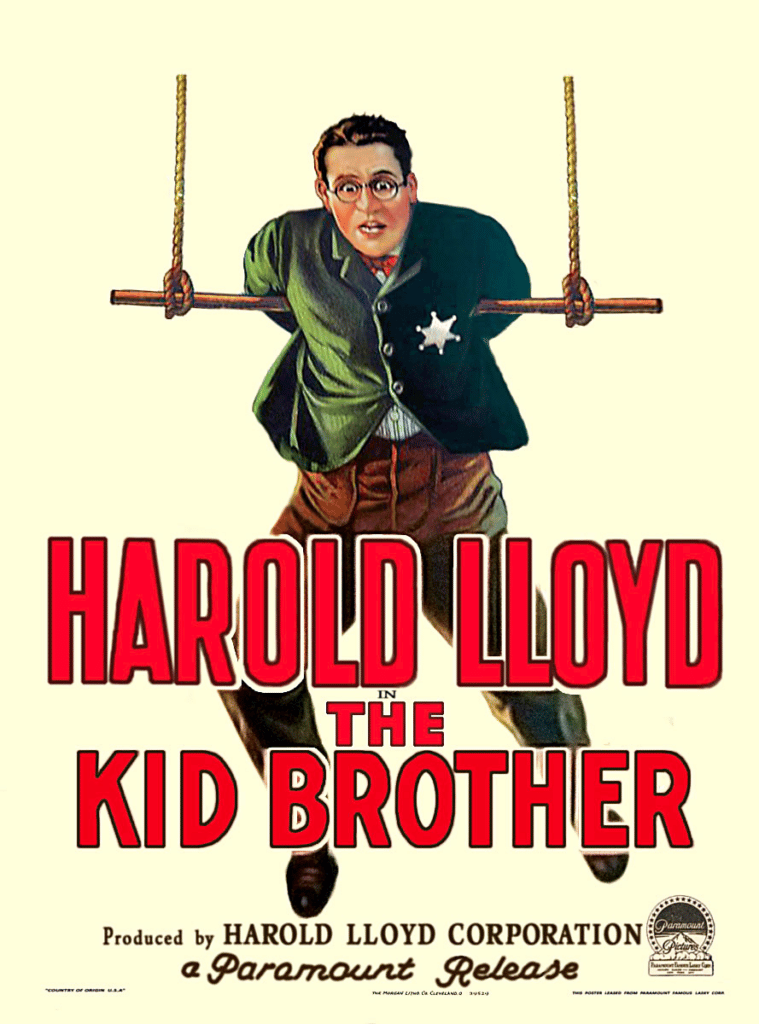
Estates of famous authors have sometimes tried to enforce their rights in works up until the last minute. The estate of Harold Lloyd provides a good example of a copyright owner attempting to wring every last ounce of copyright protection from a work before the protection clock ran out. Perhaps to underscore the ticking time analogy, in 2014, Harold Lloyd Entertainment filed a lawsuit against the manufacturer of a clock that the plaintiff argued was a “direct appropriation of the iconic clock scene” from Lloyd’s 1923 film “Safety Last.” Harold Lloyd Entertainment filed several lawsuits alleging infringement as late as 2015—92 years after the film’s copyright was originally secured and just a few years before it was set to expire.

Interestingly, were it not for the passage of the CTEA in 1998 (or had the film been released just one year earlier), “Safety Last” would have been in the public domain at the time of the 2014 suit. Instead, it was part of Public Domain Day’s Class of 2019, soon to be joined in January 2023 by another Harold Lloyd classic, “The Kid Brother.”
Extending Rights in Public Domain Works
There are a few recognized methods that publishers and other rightsholders use to retain market share even after a work has entered the public domain. “Special editions” tend to proliferate a year or two before a copyright is set to expire, filed with annotations, prefaces and essays that are still protected by copyright.
For example, Agatha Christie’s estate just authorized the first-ever Miss Marple Calendar, as well as twelve new mysteries featuring the character. The estate’s announcement of these works coincides with the first Miss Marple story’s impending entry into the public domain.
Note that the early appearances of the Marple character are different from how she appears in later Agatha Christie books. That’s another reminder to make sure that if you use copyrighted characters featured in a public domain work, you shouldn’t take aspects of those characters that first appear in later works still protected by copyright.

A more controversial approach involves using trademarks (which can be perpetual) in characters to extend protection in public domain works. The Supreme Court hasn’t ruled on the precise question, although in 2003, Justice Scalia, writing for the Supreme Court in Dastar Corp. v. Twentieth Century Fox, warned that allowing these types of restrictions on a public domain work could effectively create “a species of mutant copyright law” that would limit the public’s right to copy and use expired copyrights.
As always, I’d love to hear your thoughts in the comments below or on social media @copyrightlately. I’m now also on Mastodon at copyrightlately@mastodon.social. Meanwhile, here are some notable works that you can copy, distribute or adapt starting on January 1, 2023:
Notable Films Entering the Public Domain in 2023
- Metropolis
- Wings
- Chicago
- London After Midnight
- Sunrise
- The Lodger: A Story of the London Fog
- The Jazz Singer
- The Unknown
- It
- The Great Leap
- The Cat and the Canary
- 7th Heaven
- Underworld
- When Boys Leave Home
- The Beloved Rogue
- The Kid Brother
- The Mystery of the Louvre
- Uncle Tom’s Cabin
- The Way of All Flesh
- Casey at the Bat
- Tarzan and the Golden Lion
Notable Books Entering the Public Domain in 2023
- To the Lighthouse, Virginia Wolff
- Steppenwolf, Hermann Hesse
- Death Comes for the Archbishop, Willa Cather
- The Big Four (Hercule Poirot, #4), Agatha Christie
- The Bridge of San Luis Rey, Thornton Wilder
- Amerika, Franz Kafka
- The Case-Book of Sherlock Holmes, Arthur Conan Doyle
- Now We Are Six (Winnie-the-Pooh, #4), A.A. Milne
- Men Without Women, Ernest Hemingway
- Emily’s Quest (Emily, #3), L.M. Montgomery
- The Tower Treasure (The Hardy Boys, #1), Franklin W. Dixon (pseduonymous)
- The House on the Cliff (The Hardy Boys, #2), Franklin W. Dixon (pseduonymous)
- The Secret of the Old Mill (The Hardy Boys, #3), Franklin W. Dixon (pseduonymous)
- Aspects of the Novel, E.M. Forster
- The Gangs of New York, Herbert Asbury
- The Colour Out of Space, H.P. Lovecraft
- The Treasure of the Sierra Madre, B. Traven
- Twilight Sleep, Edith Warton
- The Tuesday Night Club: A Miss Marple Short Story (Miss Marple), Agatha Christie
- Mosquitoes, William Faulkner
- The Killers, Ernest Hemingway
- Freddy Goes to Florida (Freddy the Pig #1), Walter Rollin Brooks
- Notes on Democracy, H.L. Mencken
- In Another Country, Ernest Hemingway
- The Future of an Illusion, Sigmund Freud
- Gentlemen Prefer Blondes / But Gentlemen Marry Brunettes, Anita Loos
Notable Musical Compositions Entering the Public Domain in 2023
- “Are You Lonesome Tonight?”
- “The Best Things In Life Are Free“
- “Blue Skies”
- “Dew-Dew-Dewy Day”
- “He Loves and She Loves“
- “(I Scream You Scream, We All Scream for) Ice Cream“
- “Let’s Kiss And Make Up“
- “Me And My Shadow”
- “My Blue Heaven“
- “Ol’ Man River“
- “‘S Wonderful”
The post Public Domain Day 2023 is Coming: Here’s What to Know appeared first on Copyright Lately.