
Member states of the International Criminal Court will vote today on whether to fire the court’s suspended chief prosecutor Karim Khan KC for alleged sexual misconduct. He denies the allegations.
Khan’s accuser, a lawyer at the court identified only by her first name Sarah, spoke on camera for the first time last week. In an interview with CNN, she repeated her allegations that the prosecutor had a non-consensual sexual relationship with her.
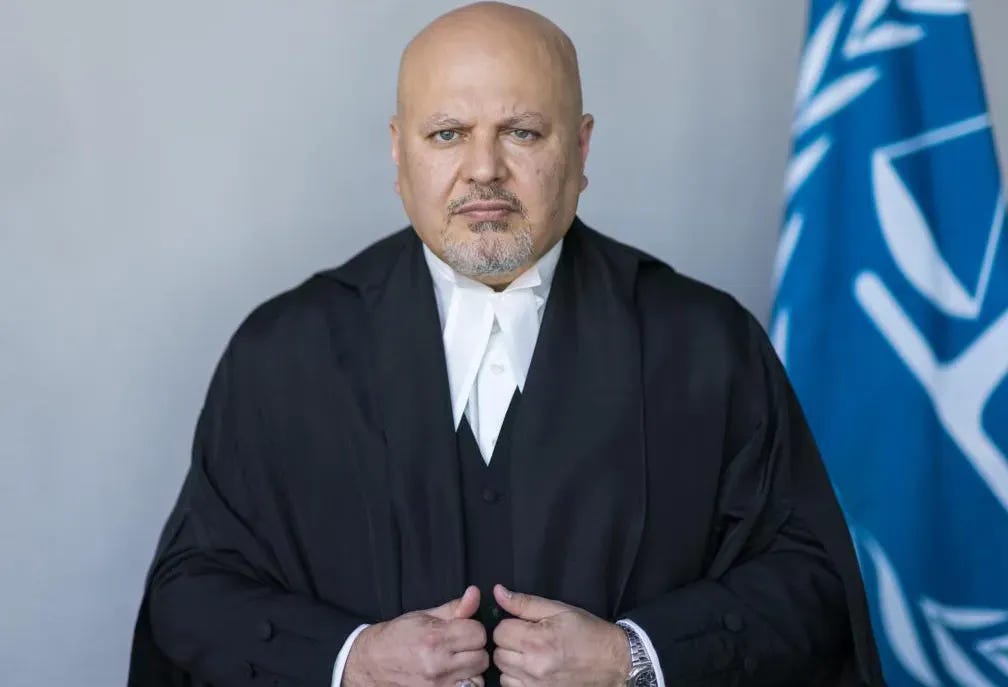
Acting on behalf of the Assembly of States Parties last month, its 21-member executive bureau suspended the prosecutor from duty pending today’s secret ballot. In London 10 days ago, a Bar Standards Board panel suspended Khan from practice as a barrister while the regulator’s disciplinary proceedings are continuing.
His solicitor, Tayab Ali, and his barrister, Sareta Ashraph, published a lengthy statement this week complaining that Khan and his lawyers will not be able to address member states ahead of today’s vote. It’s hard to see what difference they could make because votes will be cast by diplomatic representatives of the 125 member states, who will presumably be following instructions from their respective governments.
Voting will take place at the United Nations in New York because all the states parties have missions there — unlike The Hague, where the court sits. The vote is expected at around 3pm local time.
For Khan to be removed, an absolute majority of at least 63 of the court’s 125 member states would have to agree. The only state to have declared its position, according to the Associated Press news agency, is the court’s host state: the Netherlands will vote for his removal.
Comment
If Khan loses the vote, questions will be asked about why it took the court’s leadership more than two years to investigate and reach conclusions on allegations against its most important non-judicial figure.
According to a 27-page document sent to member states by the executive bureau and reported by Reuters, “the evidence establishes beyond a reasonable doubt that the prosecutor… engaged in a sexual relationship with [the victim].
The relationship had started in March 2023 and “escalated over time and that, in the context of that power imbalance, a sexual relationship could never be appropriate”.
This amounted to a serious breach of duty and serious misconduct by Khan, the bureau said. “His behaviour escalated over time resulting in him engaging in non-consensual sexual contact with her in his office, at his private residence and whilst on mission.”
It recommended his removal from office. The victim’s “testimony was given candidly, unhesitatingly and with details that rendered her experiences believable,” the Wall Street Journal reported the bureau as saying. Khan tried to prevent the woman from pursuing her allegations, according to documents seen by the Associated Press.
If he survives the vote, the consequences will be even more damaging for the court. Member states will be accused of playing politics and the bureau will have lost the confidence of countries that had voted against its recommendation.
Either way, Khan will remain suspended from practice at the English bar until disciplinary proceedings are resolved. Now that his alleged victim has gone public, there must be every chance she will give evidence to the police. The court would lose all credibility if its current prosecutor was facing prosecution.
A hybrid court
An extraordinary story emerged yesterday when judges at the International Criminal Court finally terminated proceedings against Abdallah Banda Abakaer Nourain, the former leader of an armed group in Darfur.
The court’s two deputy prosecutors, who are standing in for Khan, said the evidence against Banda — who had been charged with war crimes over an attack in 2007 attack on African Union peacekeepers — had deteriorated in the time since the charges were confirmed in 2011. Put simply, witnesses were no longer regarded as reliable.
In any normal criminal process, a case would come to an end when the prosecutor decided that the charges could no longer be proved. But the International Criminal Court operates under a “hybrid legal system… in which a trial chamber is accorded extensive powers to design and advance the trial”, three judges said last week. Members of the trial chamber considered — but reluctantly ruled out — calling evidence themselves in the absence of the prosecution.
Where they would have found the evidence is hard to imagine because it is the office of the prosecutor that has the job of interviewing witnesses and building a case.
This unseemly tussle began in October 2023 when the prosecution filed a request to withdraw the charges against Banda.
A week later, the chamber rejected that request.
Prosecutors tried again. In March 2024, the trial chamber confirmed its earlier decision by a majority of two to one.
In November 2025, prosecutors requested a “reconsideration of the reconsideration decision”. That was the subject of a judgment published this month.
The judges were far from happy. “While the prosecution has asserted its view of the case and prospects of conviction at this stage,” they said, “it has failed to demonstrate how the evidence, which met the statutory test for the case against Mr Banda to proceed to trial, has deteriorated to such an extent that a trial is no longer merited”.
But, they conceded, “proceeding to trial in this particular case, with a prosecutor who refuses to present the case despite evidentiary and legal obligations to do so, would be in contravention of the chamber’s ultimate obligation to ensure a fair and efficient trial”.
While the chamber could call its own witnesses, “to do so as the main protagonist, without the participation of the prosecution, would create an unacceptable unbalance in the system which would be fundamentally unfair to the accused”.
Therefore, said the judges, “deploring the prosecution’s continued opposition to carrying out its burden, the chamber must reconsider its prior decisions to avert an injustice and authorise the prosecution to withdraw the charges against Mr Banda”.
But there would have to be a public hearing so that everyone could see what had happened. That hearing took place this week and the arrest warrant was withdrawn yesterday.
Determined not to give up, the judges insisted that their decision was “without prejudice to any case that could be brought against Mr Banda for the same or similar facts at a later date”.