
Reaction videos, reggaetón riddims, nine-year-old tweets, and a poet’s second loss to Taylor Swift. The courts spent the run-up to summer clearing their dockets. Here’s what piled up.
Welcome to a special edition of What’s Up With Copyright Lately, where I returned from vacation to find that the federal courts didn’t take one. I pulled seven items out of the pile—including an infringement lawsuit over the words “art” and “heart,” and a complaint that asks the court to enjoin the defendants from “inverting the copyrights of Plaintiff in any manner.” If this is the sort of nonsense you’d like to receive on a semi-regular basis, you can subscribe to my free newsletter here.
Content Nuked
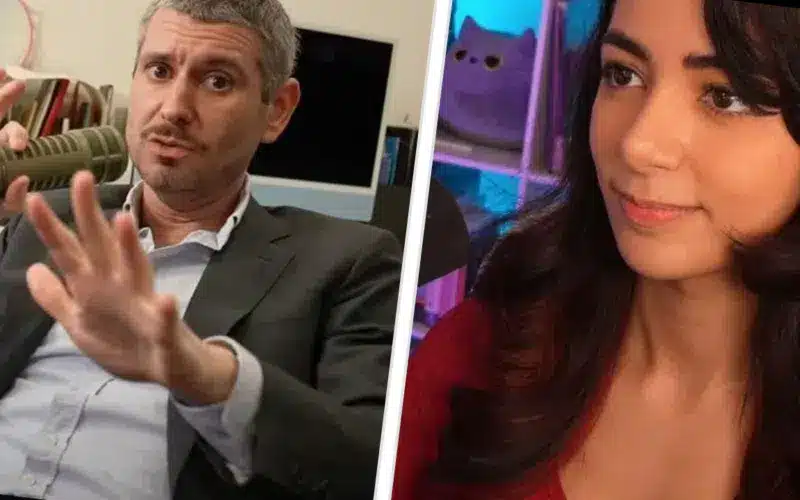
The tentative ruling I covered last month in Ted Entertainment, Inc. v. Saber is now official. On June 29, Central District of California Judge Wesley Hsu granted Twitch streamer Denims judgment on the pleadings (read here), holding her nearly four-hour livestream reaction to Ethan Klein’s Content Nuke documentary was fair use as a matter of law—while leaning heavily on the same reaction-video fair use precedent Klein helped establish as a defendant in 2017.
The final order is almost identical to the draft, with two additions—both responding to arguments Klein’s counsel made at the June 5 hearing.
The first is a nod to the hate-watching dynamic I flagged last month. Judge Hsu acknowledges “some merit” in TEI’s argument that “the entire purpose of Denim’s [sic] watch party was to hate-watch TEI’s work without giving any benefit to TEI,” but finds it “insufficient to negate the transformative nature of Defendant’s work.” Fair enough—except that the court parks the analysis inside factor one, where it answers the wrong question. The hatewatch argument was never really about whether Denims transformed the Nuke. It was about whether she effectively replaced it, siphoning off Klein’s own disaffected audience so they could consume his content without giving him the view count.
That’s factor four, and factor four didn’t change a word from the tentative. It still relies on Hughes v. Benjamin, which found no market harm because a conservative reactor and a progressive creator don’t share an audience—the precise assumption a hatewatch is designed to defeat. While the Hughes court had “no reason to think” that a creator’s viewers would decamp to a critic’s channel to watch her own work, TEI alleged that Klein’s viewers did exactly that—and backed it up with chat logs thanking Denims “for helping us avoid the sin of giving Ethan views,” and a viewership count that cratered from 45,800 to 8,000 the moment the Nuke ended.
None of that means TEI should necessarily win on a full record. But this was a motion that, as the court recognized, required construing the allegations in TEI’s favor—and whether a hatewatch audience actually substitutes for the original is a factual question. It’s not one to resolve against the plaintiff at the pleading stage.
The court’s second addition raises a different problem. At the hearing, Klein’s team pressed what Judge Hsu calls a “piecemeal” argument: that Denims might have a fair use defense for some portions of her stream, but not for the long stretches (74 of them, each 30 seconds or longer, by TEI’s count) where the Nuke simply played without commentary. The court rejected it in two sentences, finding that TEI “does not present authority to support this argument” and that the court “does not find authority or a bright-line rule to endorse” it.
It may not be a bright-line rule, but Warhol itself instructs that “a court must consider each use within the whole to determine whether the copying is fair.” And the Ninth Circuit did exactly that in Elvis Presley Enterprises v. Passport Video, evaluating a documentary clip by clip and finding some uses transformative (brief excerpts deployed as historical reference points) and others not (clips “simply rebroadcast for entertainment purposes”). Judge Hsu didn’t engage with either, which gives TEI an opening on appeal.
And that appeal is coming, with Klein’s counsel warning that if the decision stands, it “risks encouraging the unauthorized restreaming of any kind of copyrighted work during their premiere.” He might be right. But Hosseinzadeh v. Klein appears in three of the four factors Judge Hsu weighed against him. To win, Klein will need the Ninth Circuit to narrow the precedent that bears his name.
Un Verano Sin Summary Judgment
Can you copyright the rhythmic backbone of an entire genre? It may take a jury to find out.
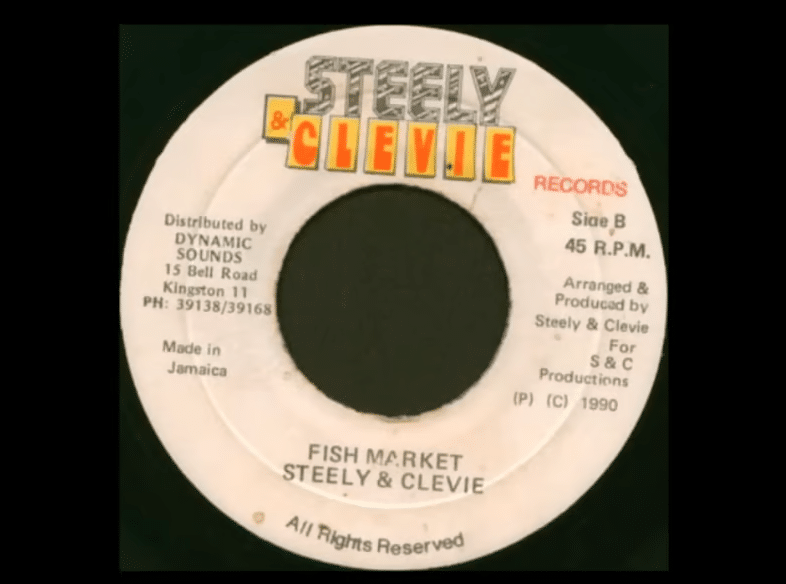
Back in 2023, I wrote about Steely & Clevie’s suit against what felt like the entire reggaetón industry and predicted the plaintiffs would have a tough time collecting what some have dubbed the “Dem Bow Tax.” The tax remains uncollected. But on July 1, it survived its biggest audit yet.
The stakes are enormous. Plaintiffs claim that “Fish Market,” a 1989 instrumental produced by Cleveland “Clevie” Browne and the late Wycliffe “Steely” Johnson, is the copyrightable source of the Dem Bow riddim—the boom-ch-boom-chick drum pattern running under a huge share of modern reggaetón. The consolidated cases name more than 150 artists (Bad Bunny, Karol G, Drake, Daddy Yankee, Luis Fonsi, and Justin Bieber among them), units of all three major label groups, and potentially thousands of songs. Phase 1 of the case was limited to a threshold question: is the riddim protectable at all?
In a 44-page order (read it here), Judge André Birotte Jr. did what federal judges facing dueling experts have been doing with increasing frequency. He punted. Both sides had moved for summary judgment. Both lost. This case, he wrote, “boils down to a battle of the experts,” and “that battle must be resolved by the trier of fact.” Whether the claimed elements are commonplace or original, and whether they add up to a protectable selection and arrangement, are “classic disputes of fact, not law.”
Birotte’s framework gives each side something and neither side everything. Originality means independent creation plus a modicum of creativity—not novelty—so the defendants can’t win just by proving somebody, somewhere, played a similar beat first. But prior works still matter to filtration, so the plaintiffs can’t win by pointing at their registration and calling it a day. The defense traces the core pattern to the habanera, a rhythm that predates “Fish Market” by about a century and a half, which they say “exists in countless prior works and musical genres.” That argument didn’t end the case on summary judgment, but it’ll be waiting if this ever reaches a jury.
On the Daubert motions, nearly everyone’s experts survived. In one notable exception, the court barred Clevie himself from testifying as an expert on the originality of his own song, since expert designation “carries an imprimatur of authority that may improperly elevate the witness’s conclusions beyond their factual foundation.” He can still testify about how he made “Fish Market.” He just can’t grade his own homework.
Plaintiffs’ counsel says the riddim comprises seven discrete elements combined in a way no prior work has matched. Maybe. But selection-and-arrangement doctrine can only carry so much weight before it starts protecting the building blocks themselves, and I still think a genre shouldn’t have to license its own heartbeat. The parties have 21 days to propose a plan for the rest of the case—and if this one ever reaches a jury, it could be the most consequential music copyright trial since Blurred Lines.
The Tortious Poets Department
In the span of one week, Taylor Swift got married to Travis Kelce and had a $25 million copyright lawsuit against her dismissed with prejudice. As of this writing, only one of those is being appealed.
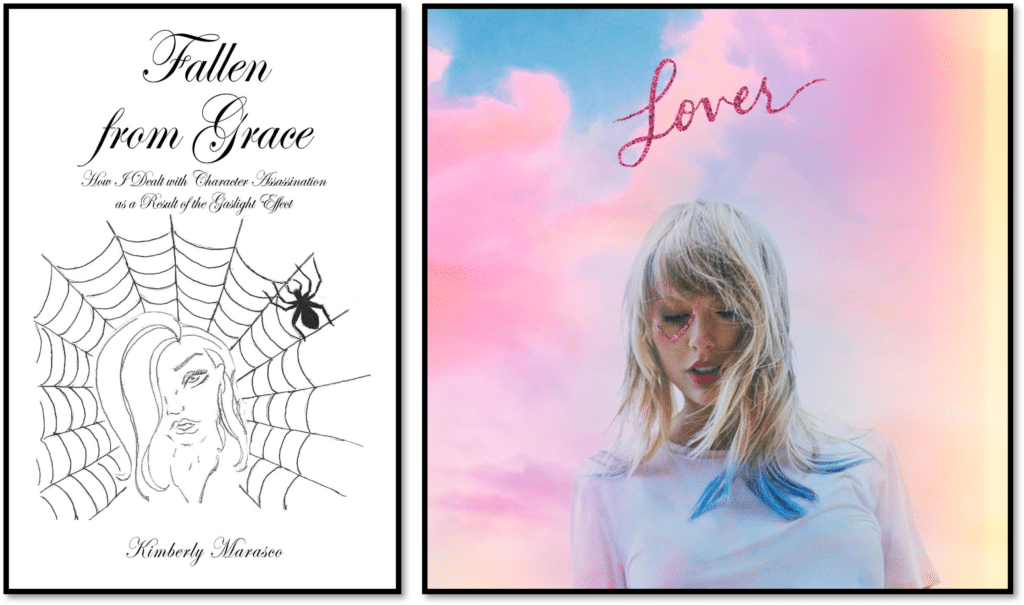
The plaintiff is Kimberly Marasco, a self-published Florida poet representing herself, and this was her second swing at essentially the same claim. What Swift supposedly stole was a catalog of things no one can own. Across five albums, Marasco alleged, Swift copied the theme of a woman working in a corporate environment, the metaphor of “desire as fuel and fire,” the observation that leaves turn “gold,” and the individual words “art” and “heart.” For “Mastermind,” she pointed to a poem of hers titled Elon = MC2, on the theory that Swift had lifted the idea of treating people as equations. And she claimed Swift’s Lover cover copied her own book cover’s depiction of a woman with hair over one eye. The court didn’t reach that last argument, possibly because it was busy not reaching several others.
In a ten-page order that reads like a slow, patient explanation of the idea/expression dichotomy to someone who very much did not want to hear it, Judge Aileen Cannon found that not one of Marasco’s twelve counts identified any protectable expression (read the order here). The claimed similarities are “quintessential themes, concepts, and isolated words—exactly the kind of material copyright law does not protect,” and once those are filtered out, “nothing remains to compare.” Marasco didn’t help herself by describing the copying as “paraphrases,” “rephrases,” and “minor word substitutions,” which, as the court noted, is another way of conceding the works aren’t substantially similar at all.
Courts often give pro se plaintiffs extra chances to get it right. Marasco had already used hers—this was her second lawsuit and her third complaint—so Cannon dismissed with prejudice, explaining that the defects were “in the underlying works themselves, which consist of ideas, themes, metaphors, and isolated words that no amendment can transform into protectable expression.” Marasco, undeterred, filed a notice of appeal to the Eleventh Circuit within 48 hours, seeking review of “all rulings, findings, and conclusions adverse to her interests”—which at this point is more or less everything.
Thin Air, Thin Copyright
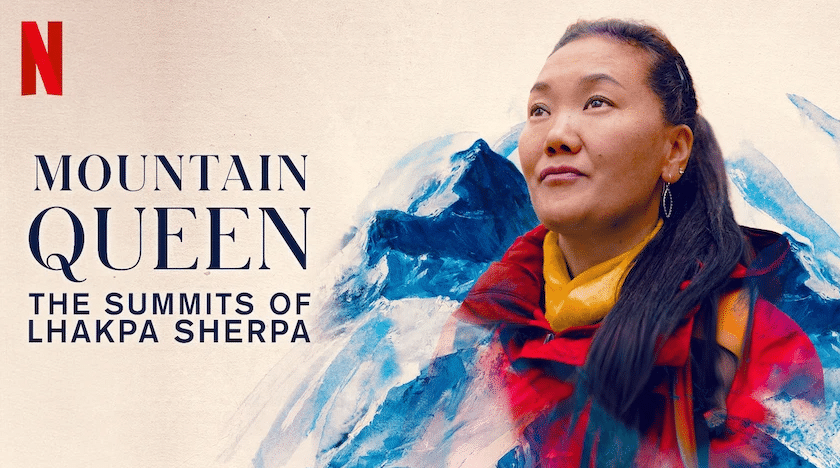
Lhakpa Sherpa has summited Everest more times than any other woman on the planet, a fact made more remarkable by the years she spent between climbs working low-wage jobs in Connecticut. In 2014, filmmaker Alan Blassberg signed an exclusivity agreement with her to develop a documentary about her life. He wrote a four-page outline in 2017 and handed copies to Sherpa and her brother at a pre-production meeting in Nepal. The contract was extended twice and expired at the end of 2018. The project never came together. Years later, a different team made Mountain Queen: The Summits of Lhakpa Sherpa, which premiered at Toronto in 2023 and hit Netflix in 2024. Blassberg sued, and on June 23, District of Connecticut Judge Michael Shea dismissed his copyright claims. (Read the order here.)
Judge Shea found Blassberg had adequately alleged access against most defendants. The outline passed from Sherpa to the production companies through a plausible chain of custody. The exception was Netflix, which came aboard only after the film was finished. Access alone, though, isn’t enough. The claim came apart when the court set the two works side by side and found the four-page outline “a sketch of an expression of an idea—and a vague one at that,” consisting of “mostly unprotectable facts and scenes a faire” and “too rudimentary to convey any original overall concept or feel.”
Every element Blassberg claimed as his creative contribution—juxtaposing Sherpa’s record-setting climbs with her humble life in Connecticut, interviewing the counselor from her Connecticut women’s shelter, ending on a triumphant note—would appear in virtually any documentary about this subject, and prior reporting had already framed her story exactly that way. Stock concepts like these earn protection only if the work augments them “with significant detail or imagination to render the arrangement original.” A four-page list of headings and sentence fragments doesn’t. Blassberg’s 109-page exhibit cataloging alleged parallels didn’t move the needle either; the Second Circuit has long warned that a scattershot list of “random similarities scattered throughout the works” can’t establish substantial similarity. Once you strip out the facts and the scènes à faire, and there was nothing left to compare.
Blassberg isn’t all the way off the mountain. His breach-of-contract and unjust-enrichment claims against Sherpa survived, in what the court described as “a close call.” But the copyright claim doesn’t make it past base camp.
Duck, Duck, Sue
A San Diego screenwriter is suing Illumination, Universal, and Mike White, alleging that the 2023 animated hit Migration was ripped from South for the Winter, his 2007 screenplay about a young bird who misses the annual migration to Florida. (Read the complaint here.)

Kenneth Giavara registered the screenplay with the Writers Guild in 2007 and spent the next decade shopping it—including contest entries, InkTip listings, pitches to Los Angeles producers, and a submission to Pixar. It won first prize at the Fresh Voices Screenplay Competition in 2011. None of that landed a deal. In December 2023, Illumination and Universal released Migration, about a family of ducks who leave a New England pond (by way of New York City) for Jamaica, from a screenplay by White Lotus creator Mike White. Last month, Giavara sued them all.
The complaint’s list of similarities is long: an anthropomorphic bird family in New England, an overprotective father, a restless child who wants out, an older mentor bird, key scenes in Central Park, a family separated mid-journey, and a tropical destination at the end. The centerpiece allegation is that both fathers share a name—”Mac” in the screenplay, “Mack” in the film. Giavara’s lawyer leaned all the way in: “When they went to steal his screenplay, which had won first prize years earlier in an L.A. screenplay contest, they didn’t even bother to change the name of one of the animated characters—Mack.”
Here’s the problem. Birds migrate south for the winter; that’s why the premise exists. An overprotective parent and a kid who wants to explore is the plot of roughly every animated family film since Finding Nemo. It is also, as it happens, the plot of Finding Nemo. That’s all ideas and scènes à faire, and a chart of shared themes isn’t shared expression. Names aren’t copyrightable at all, and “Mack Mallard” isn’t exactly a bold choice for a mallard.
A couple other details from the filing are worth mentioning. Giavara didn’t register his screenplay with the Copyright Office until December 2025. That’s eighteen years after writing it, two years after Migration came out, and six months before filing suit. Late registration doesn’t bar the claim, but it limits him to actual damages and profits, which means no statutory damages and no attorneys’ fees (the complaint asks for both anyway). The complaint also repeatedly calls Migration—a theatrical feature that grossed roughly $300 million worldwide—a “television series.” And the prayer for relief asks the court to stop defendants from “inverting” the copyrights, which wasn’t one of the Title 17 remedies last time I checked.
Ducks fly south every winter. I don’t expect this complaint to survive its first one.
Judging a Book by Its Cover
Robert Santora designed the cover for Sandra Brown’s novel Slow Heat in Heaven back in 1988. Thirty-seven years later, he sued Hachette, alleging that the publisher had used AI to spin his artwork into covers for other Brown titles. On July 8, Southern District of New York Judge Nelson Román dismissed the complaint (read the order here), mostly because Santora’s cover wasn’t very protectable to begin with.
The AI allegation got the case its headlines, but the court dismissed it with a shrug, finding the claim that Hachette used AI to create the accused covers was “speculative and unsupported by nonconclusory factual allegations.” It wouldn’t have mattered anyway. What Santora claimed as his own—large capital letters, a sans-serif font, the placement of the author’s name and title—is the basic grammar of mass-market book design. Typeface isn’t protectable. Typographic ornamentation isn’t protectable. The creativity in letter spacing and type shapes, the court noted, is “de minimis and trivial.” Whether the accused covers came from a designer, a template, or a model trained on forty years of romance paperbacks, big block letters over a moody landscape aren’t copyrightable. Santora has until August 7 to try again, but you can’t amend your way to a copyright in a font.

Tweet Nothings
And finally this week, the photographer whose Tom Brady snapshot produced a landmark embedding decision is back in the Southern District of New York. His return trip didn’t go well.
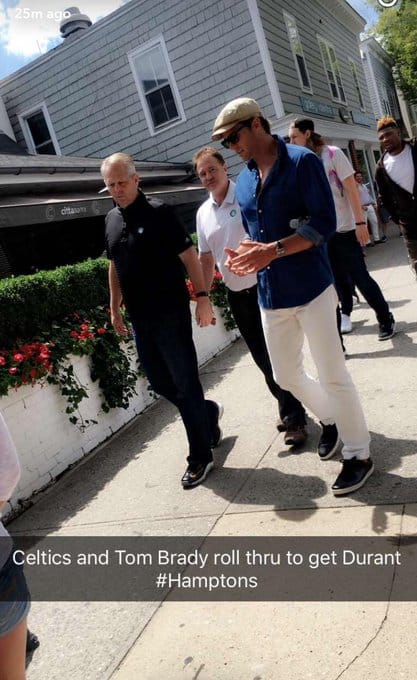
In 2016, Justin Goldman snapped Brady walking in East Hampton with then-Celtics GM Danny Ainge and other team executives, fueling rumors that Brady was helping recruit Kevin Durant. He sued several outlets that ran the photo without permission, including Vox Media. That case settled in 2017 and Goldman dismissed with prejudice. The broader litigation also produced Goldman v. Breitbart, the 2018 decision rejecting the Ninth Circuit’s server test and holding that embedding an image can infringe the display right regardless of where the file is hosted. That ruling has been a recurring guest on this blog ever since.
Nine years later, Goldman noticed that a Vox-affiliated contributor still had the photo up on his X account, where it had been sitting, publicly visible, since 2016. Now proceeding pro se, he sued Vox again, this time for breach of the 2017 settlement, and once again for copyright infringement.
Judge John Koeltl dismissed both (read the order here). The contract claim failed because Goldman couldn’t identify any provision of the settlement requiring Vox to take the photo down. The infringement claim was time-barred. Goldman’s theory was that the photo’s “continued presence on X until 2025” was a “reaffirmation, republication, or a new infringing act,” which is to say that every day the tweet stayed up restarted the three-year limitations clock like a snooze alarm. But the court found that merely leaving a copyrighted work on a website, without more, doesn’t restart anything. Only a new upload or affirmative republication will. Goldman has 21 days to amend if he can identify a subsequent use inside the limitations period, but the passive-display theory is foreclosed.
Goldman tried to add a new alleged use in his opposition brief, but the court said too late. And when the motion came on for oral argument on June 18, he didn’t appear. So in the end, the man who beat the server test lost to the calendar, which remains undefeated.
Seven cases, one vacation. I’d call it even. Let me know what you think in the comments below or @copyrightlately on social media. And if you got this far, you’re exactly the sort of person who should be getting the newsletter. You can fix that here.
The post What’s Up With Copyright Lately?: Summer Breeze Edition appeared first on Copyright Lately.