
The co-founder of Palestine Action told the Guardian this week that the group’s battle to overturn its ban as a terrorist organisation would be won in the courts or on the streets. But if the group had simply campaigned on the streets, it would not have been banned in the first place. And if Palestine Action had not broken into an RAF base a year ago and disabled two aircraft — normally used for operational support, medical evacuation and disaster response — the Court of Appeal might not have upheld the home secretary’s proscription order in the judgment it delivered on Monday.
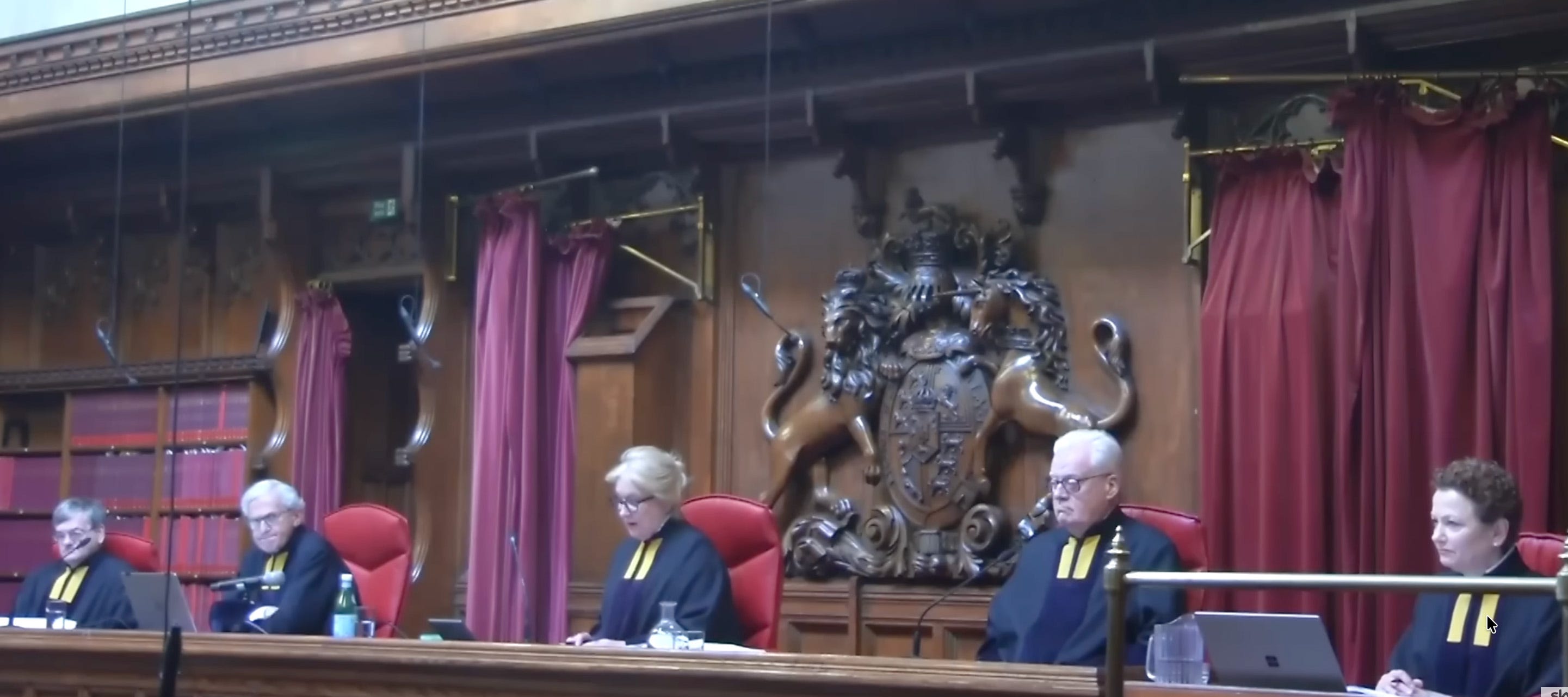
Does Huda Ammori have any chance of winning in the courts now? And where does the ruling leave well over 3,000 people who have been arrested on the streets? Those are among the questions I address in my column for today’s Law Society Gazette.
A week ago, four Palestine Action activists were given substantial prison sentences after a retrial. Their first prosecution had ended without convictions on any charges. What does that tell us about the state of jury trial in England and Wales?
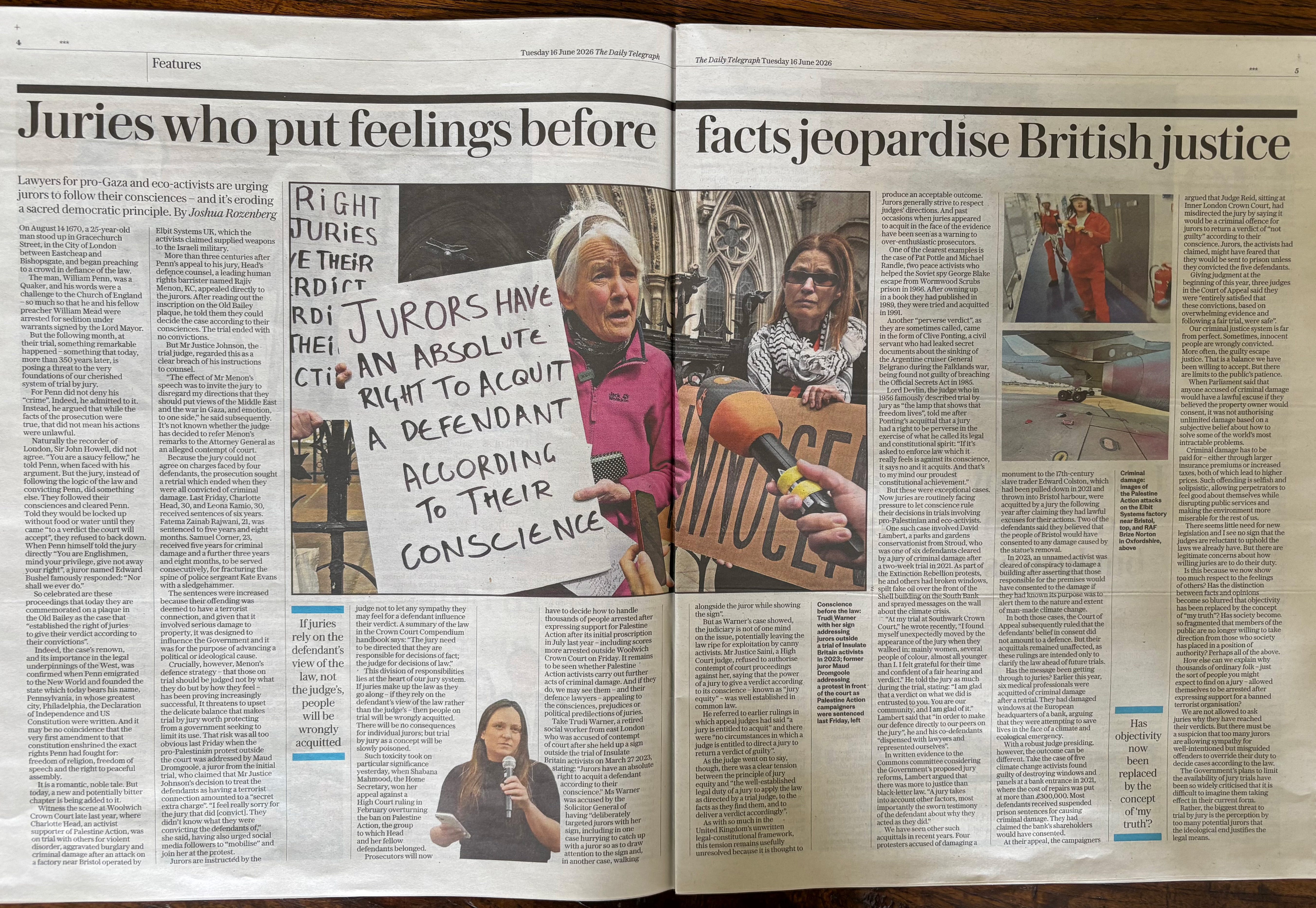
On Tuesday, the Telegraph published a lengthy essay in which I explored this issue. You can read that, too, online.
I make the point at the end of the piece that the government’s planned jury reforms are unlikely to take effect in their present form. We now know that the Courts and Tribunals Bill’s third reading debate will not be held until July at the earliest. Andy Burnham’s decisive victory in Makerfield makes it less likely that the reforms will take effect at all.