
Perhaps appropriately, given the terrorist attack in Manchester yesterday — which my wife analysed last night on her own Substack — terrorism and security are at issue in some of the most interesting appeals to be heard by the UK Supreme Court this term.
I discuss two of the justices’ forthcoming cases in my column for today’s Law Society Gazette. But I note that their diet is not confined to matters of state: they must also decide whether a drink made of oats can use a slogan that mentions milk. You can read my column by clicking here and then clicking anywhere on the left-hand page.
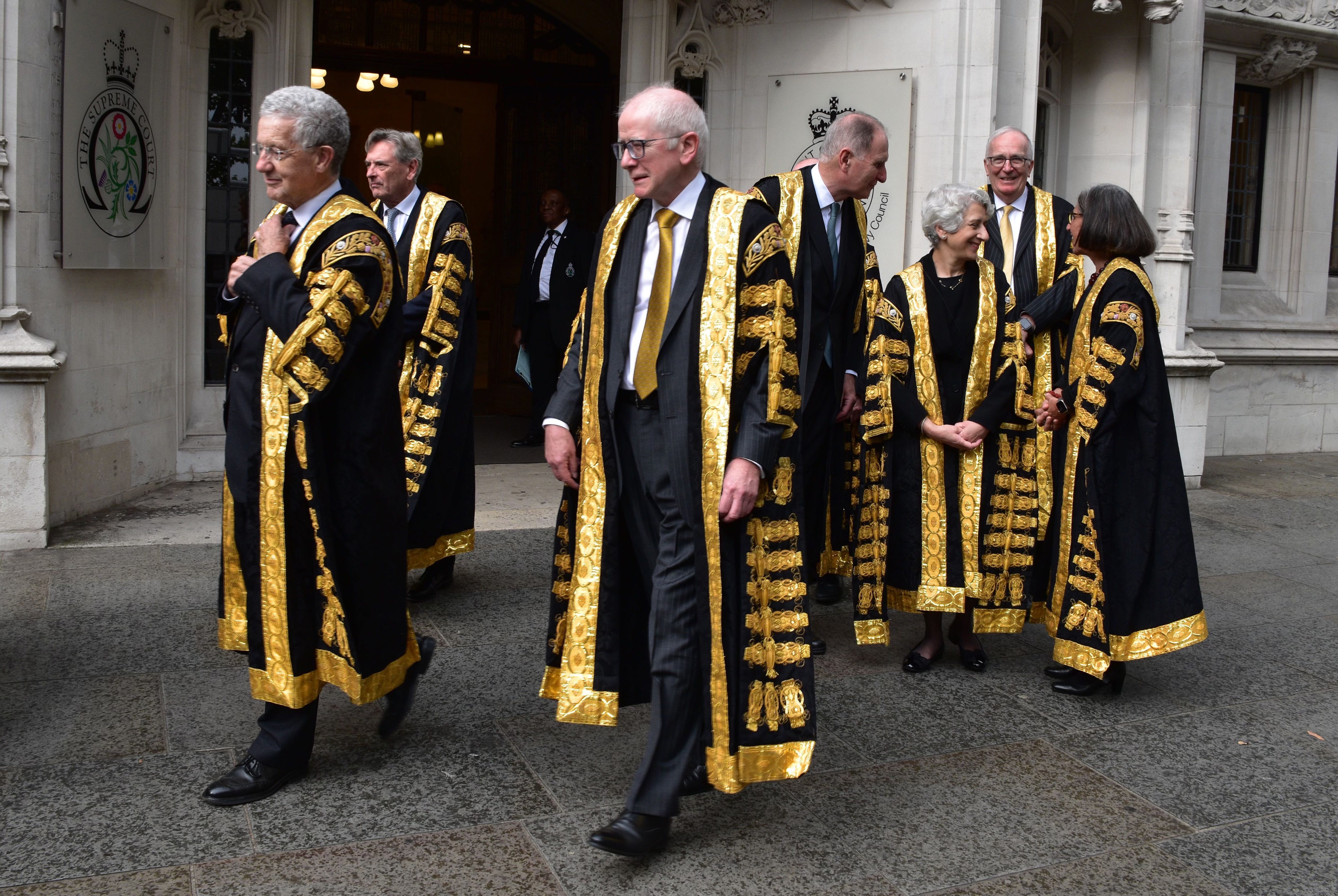
The new term that started this week will be the last for Lord Hodge, who retires as deputy president of the Supreme Court at the end of the year. In a wide-ranging interview with The Times last month, Hodge told Magnus Linklater he thought there was no case for leaving the European convention on human rights because it would mean the UK becoming an outlier.
He said:
At a personal level, I would feel much more comfortable if we joined an international grouping to say to the Council of Europe: “We need to reconsider the terms of the deal struck 70 years ago in the light of current circumstances.”
I think there is an emerging consensus within Europe that people should go back to the Council of Europe and say, “Look, we need to tweak the terms of the deal and the terms of the treaty to cope with what all European countries are facing, which is a level of migration that is causing alarm to their electorate.”
His views are shared by the government but not by two of the opposition parties. But that’s a subject I’ll be returning to on Monday.
Hodge’s retirement in December will create two vacancies — a new justice from Scotland and a deputy president. I predicted last year that the post of deputy president would go to Lord Lloyd-Jones, the next most senior member of the court.
Lloyd-Jones might have declined to put his name forward on the basis that he reaches retirement age (for the second time) at the end of next year — and it might be better to for the court to have a deputy who can succeed Lord Reed in a few years’ time. But if Lloyd-Jones does take the job for a year it will give those who choose his successor more time to assess the field.
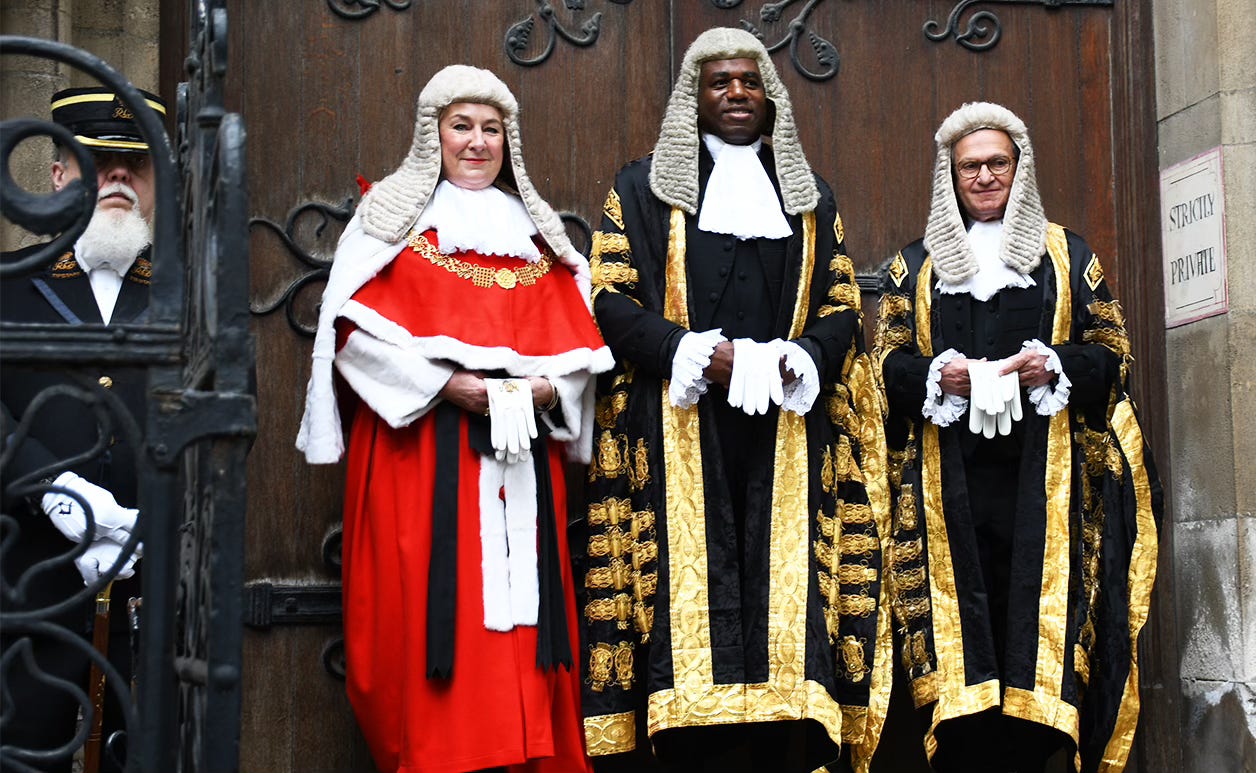
There is rather less job security on the political side of the law. Swearing in David Lammy as lord chancellor on Wednesday, the lady chief justice Baroness Carr of Walton-on-the Hill told him:
It is becoming a tradition on these occasions for appointments to your great office to mark a constitutional first. Your swearing-in marks the first appointment, not before time, of a black lord chancellor and secretary of state for justice. And deputy prime minister. We congratulate you on your appointment to each of these important offices of state. Your dual role confirms that justice remains at the heart of the government’s agenda.
We also take this opportunity to wish your predecessor well in her new office. It was only a matter of months ago that she tempted fate at the City of London’s dinner for His Majesty’s judges at the Mansion House by hoping that she might well be the first lord chancellor in quite some time to attend three dinners. That is not to be.
My immediate predecessor spoke of having worked with as many lord chancellors as Henry VIII had had wives (if you count Dominic Raab twice). I will have worked with three lord chancellors in only two years — as many lord chancellors as John of Gaunt had wives. We very much hope to build a strong and enduring partnership with you, my lord chancellor, in the years to come.
Here are some extracts from Lammy’s reply:
From student to barrister to practice in California, justice has been my compass; justice has been my cause. And now, as lord chancellor, justice is my charge.
So I stand here humbled, I stand here honoured and believe me when I say I stand here feeling the full weight of this ancient office, more than a thousand years old. The names of its holders echo through history: Becket, Bacon, More, Wolsey. Some of them noble; some notorious. And I wonder what they would think about our nation’s first black lord chancellor.
I think of those who came before me, who gave new life to the ancient promise of Magna Carta: that no one is above the law and that the law must protect the liberties of us all.
I think of Lord Elwyn-Jones who, before he wore these robes, stood at Nuremberg to face down the architects of racial hatred and war, ensuring that even the most powerful can be held to account before the law…
And I think of Lord Irvine of Lairg, who brought the Human Rights Act into being – weaving equality into the fabric of our common law.
And so my task is threefold.
First, to respect the rule of law…
This is Britain’s greatest gift to the world. But we take these principles for granted at our peril. As rights are eroded abroad, as democracy retreats in too many places, I will do everything in my power to defend those values at home, and overseas…
Second, I am to defend the independence of the judiciary.
That independence is part of our prestige. It is why our justice system is trusted the world over and why international businesses choose our courts and our laws to settle their disputes.
And I promise you I will defend that independence to the hilt. In recent years we have seen troubling signs of judges denounced for doing no more than interpreting the law and even attacked in their own courtrooms.
And we have seen, at the darkest extreme where this road ends. We see it in Putin’s Russia where the courts no longer speak for justice but for power to crush, silence and oppress critics.
I am clear: in Britain there will always be space for dissent. There will always be space for debate. The freedom to disagree is part of who we are.
But debate must never become intimidation. Disagreement must never become violence. You must be free to do your work — to make decisions on the most difficult and contested questions — without interference, without influence and without fear for your safety.
Because when those who uphold the law are threatened, the rule of law itself is threatened. That is something no free society can ever allow. And on my watch it will not be.
Finally, I am charged with the efficient and effective support of the courts, ensuring they are fit for the people they serve.
I inherit a system that has been under too much pressure for far too long. The past few years have tested the justice system like never before, from the pandemic to the pressures now facing our courts, prisons and probation services.
I know you, our judiciary — and so many others across our courts and tribunals — have carried that weight. You have kept the machinery of justice turning, never letting it falter. I am profoundly grateful.
Thanks to my predecessor, the justice system is now stabilising and we are on the road to recovery. It will be a long journey but we walk it with determination.
Those efforts have necessarily focused on criminal justice, on prisons and probation, on driving down the backlog in the Crown Courts. And I will carry on that transformative work through the Sentencing Bill, delivering punishment that cuts crime, and Sir Brian Leveson’s independent review so our criminal courts are not just fit for today’s demands but resilient for tomorrow’s…
I pledge that this office will stand, as it has at its best moments in history, for fairness, for dignity and for the belief that every citizen is equal under the law…
I will work with determination, I will serve with devotion and I will defend with every fibre of my being the rule of law.
Finally, courtesy of the Law Society Gazette, I can report what an increasingly self-confident attorney general said at the ceremony when Ellie Reeves was sworn in as the third of his deputies. Referring to her husband, whose duties in the House of Lords previously included party discipline, Lord Hermer KC confessed to being “the first attorney general to admit in open court what a pleasure it was to be whipped by the solicitor general’s husband”.