
A federal judge has dismissed an artist’s copyright infringement lawsuit over a Lion King ride concept, finding no substantial similarity after filtering out Disney’s own IP.
In what may be the year’s most self-defeating copyright case, an aspiring Disney designer just learned how hard it is to sue Disney for copying your copy of Disney.
Artist Danielle Lawson brought a copyright infringement lawsuit after the Walt Disney Company unveiled plans for a new Lion King attraction at Disneyland Paris, alleging the company made an unauthorized derivative work of her college designs—which Disney countered were themselves an unauthorized derivative work of The Lion King. On Friday, Central District of California Judge James Selna put an end to this Circle of Strife, ruling that the two works shared no meaningful similarities once Disney’s own intellectual property was removed from the comparison (read order here).
The case underscores a tough truth for artists trying to break in: if you build your portfolio around someone else’s IP, you’re on shaky ground. The Copyright Act has an entire section—section 103—governing what happens when you create derivative works. Subsection (b) limits your copyright to only the new material you contribute, while subsection (a) can eliminate protection for portions of your work—or potentially all of it—depending on how the borrowed IP is integrated with your original contributions.
All of which brings us back to Lawson’s lawsuit—and why it never made it past the starting line.
From Portfolio Piece to Federal Court
In 2014, Lawson was a college student aspiring to become a Disney Imagineer—one of those creative designers who makes sure every ride ends in a gift shop. She began receiving mentorship from Will Martinez, a creative director at Disney Imagineering, a relationship that continued until 2019.
During this period, Lawson created “Pride Rock Plunge,” a set of concept drawings for a Lion King-themed water attraction. Her designs featured multi-tiered track layouts, ride vehicle concepts, and costume designs for characters she called “The Princess” and “The Prince.”
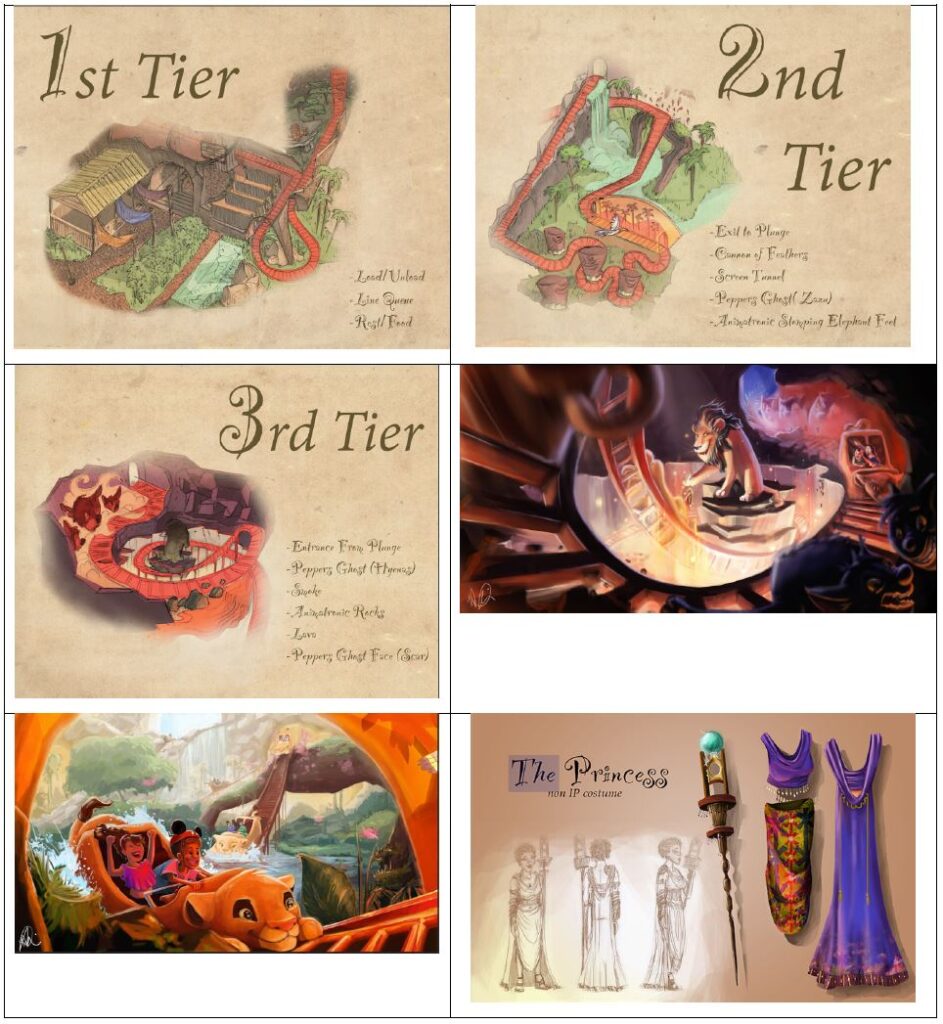
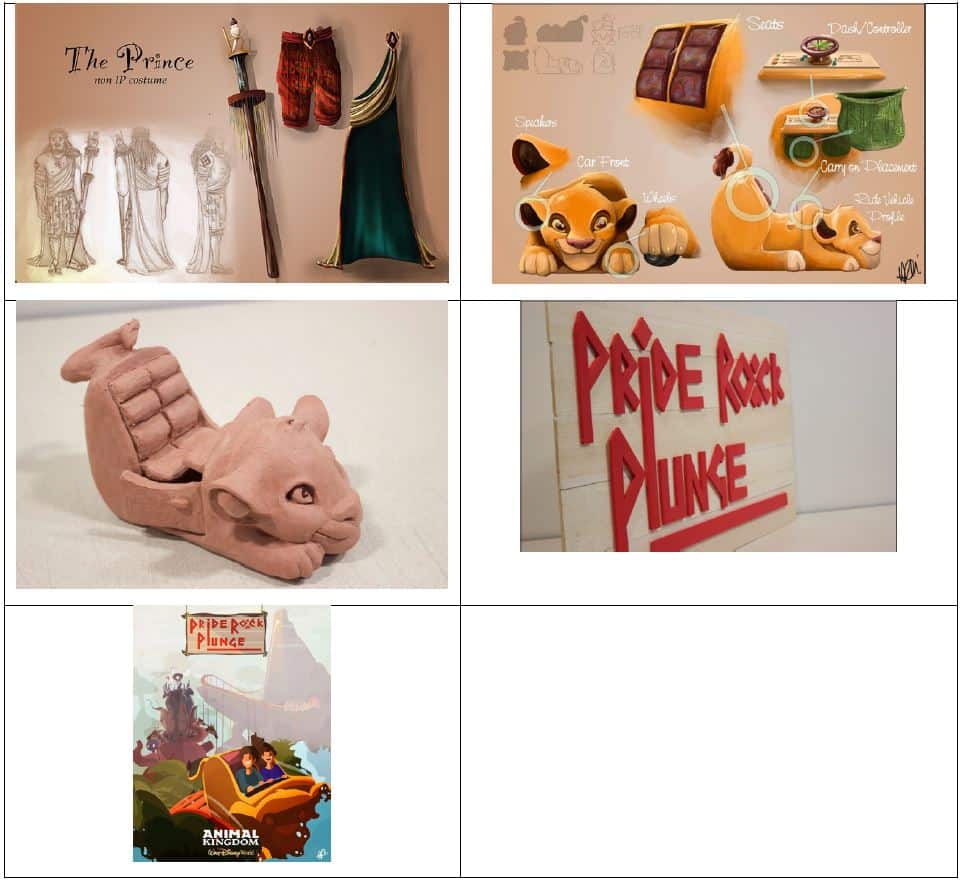
In May 2015, Lawson registered her work with the U.S. Copyright Office. Importantly, her registration expressly disclaimed “Pride Rock and characters from Disneys [sic] Lion King,” claiming copyright protection only for her “2-D artwork” and “sculpture” additions.
Nearly a decade later, at the 2024 D23 expo, Disney unveiled its own Lion King attraction planned for Disneyland Paris. Disney’s announcement teased that “Disney Imagineers will bring to life the majestic Pride Rock, which will serve as the gateway to an adventure-filled water attraction that will plunge guests beneath the rock to follow Simba on his journey from cub to king.” The concept art showed a water ride through an African savanna rendered in photorealistic style.

Believing Disney had infringed her copyright, Lawson sent a demand letter in November 2024 seeking “an amicable resolution that may involve potential working opportunities” and compensation for her “valuable design work.” Disney’s January 2025 response was essentially: no, and also no. Lawson filed suit in April, alleging both copyright infringement and violations of the Digital Millennium Copyright Act.
The Court’s Analysis: No Access, No Substantial Similarity
Disney moved to dismiss on two grounds: Lawson couldn’t prove Disney had access to her work, and even if she could, no substantial similarity existed between the designs once Disney’s IP was filtered out.
On the first question, the court found Lawson’s access theory implausible. Her claim required believing that Martinez memorized her drawings during their mentorship, spontaneously shared them with Disneyland Paris designers nine years later, and those designers then used them for the D23 concept art. The court called this chain of events a “bare possibility,” not the “reasonable possibility” required for copyright infringement.
But even if Lawson had proven access, her case would have failed for lack of substantial similarity. Following Ninth Circuit precedent, Judge Selna first excluded the Disney-owned elements, including Pride Rock and The Lion King characters, from its similarity analysis. The court noted that under section 103 of the Copyright Act, a derivative work may enjoy copyright protection, but only to the extent the author contributed her own material to the work. What remained after filtering was “a generic African safari adventure ride” with warm colors and cartoonish imagery.
Per Disney’s motion to dismiss, here’s one of Lawson’s drawings with the Disney IP blacked out:
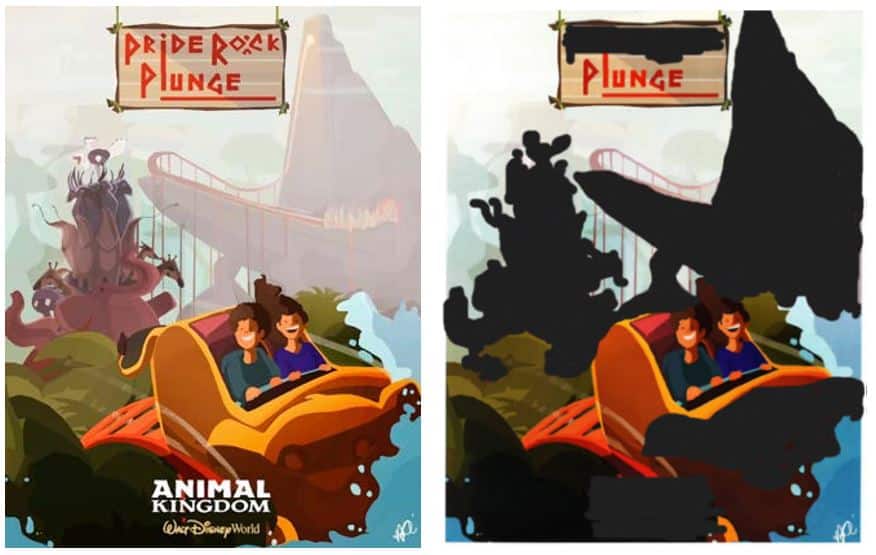
The court found no meaningful overlap between the filtered works. Disney’s concept art featured cool blues and greens with photorealistic imagery reminiscent of the 2019 live-action Lion King film, while Lawson’s work maintained a warm, cartoonish aesthetic. Of the eighteen “original” elements Lawson claimed, most were simply absent from Disney’s design—including her three-tiered track layout, West African costume designs, and vibrant color palette. The court concluded that “an ordinary observer who did not set out to detect the disparities” would not “regard their aesthetic appeal as the same.”
The court also rejected Lawson’s DMCA claim, which alleged Disney removed her copyright information from the concept art. Without underlying copyright infringement, there can be no DMCA violation—you can’t remove copyright information from a work you didn’t copy in the first place.
Judge Selna dismissed the entire lawsuit with prejudice, denying Lawson an opportunity to amend. As he explained, “The works are either substantially similar or they are not, and the Court holds that they are not.”
Section 103’s Double-Edged Sword
Although Judge Selna resolved Lawson’s case through a fairly mechanical application of the Ninth Circuit’s filtration test, the court’s opinion barely touched the deeper complexities of 17 U.S.C. § 103. That section contains two related provisions that together determine not just what derivative work authors own, but whether they own anything at all.
Section 103(b) supplied the filtering mechanism in Lawson’s case. It provides that copyright in a derivative work “extends only to the material contributed by the author of such work, as distinguished from the preexisting material employed in the work, and does not imply any exclusive right in the preexisting material.” That’s why Judge Selna stripped out all Disney-owned elements before comparing the works: Lawson could only claim copyright in her additions, not in Pride Rock or Simba. Under this provision, Lawson retained copyright in her original contributions—her color palette, costumes, and track layouts—even though those elements weren’t enough to support an infringement claim against Disney.
While in some ways a mirror image of section 103(b), section 103(a) potentially cuts deeper. It says that “protection for a work employing preexisting material does not extend to any part of the work in which such material has been used unlawfully.” Had the court applied this provision and concluded that Lawson’s use of Disney’s IP was itself infringing and inseparable from her additions, her copyright could have been invalidated altogether.
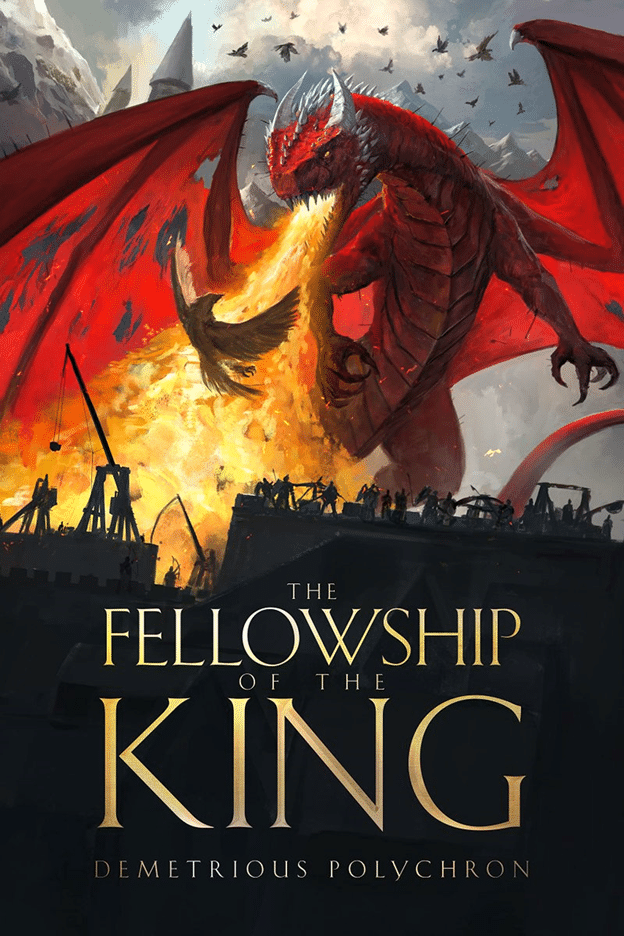
That’s exactly what happened in the 2023 case Polychron v. Bezos. Author Demetrious Polychron wrote an unauthorized Lord of the Rings sequel and then filed a lawsuit against Jeff Bezos, Amazon Studios and the Tolkien estate, claiming that Amazon’s authorized prequel The Rings of Power was a ripoff of his ripoff of The Lord of the Rings. The court held that because Polychron’s book was an unauthorized derivative work that “bodily appropriated” Tolkien’s characters, it wasn’t subject to copyright protection. Among the other derivative works cases the court relied on was Anderson v. Stallone, which held that the author of an unauthorized treatment for Rocky IV had no standing to sue Sylvester Stallone for infringement.
Some courts have softened section 103(a)’s harsh effects through the “tends to pervade the entire work” standard, preserving copyright when original contributions are separable from unauthorized material. Others say this judge-made rule has no basis in the actual law. But in Polychron, where the author admitted his work was a literal continuation with every plot point flowing from Tolkien’s ending, the court found the Tolkien IP so permeated the work that no copyright protection existed at all.
The Bottom Line
The interplay between sections 103(a) and 103(b) creates a precarious balance for artists like Lawson. Build your portfolio on someone else’s IP, and section 103(b) limits you to protecting only your thin slice of originality. Push too far, and section 103(a) threatens to erase even that. And as Lawson discovered, even when your original contributions survive under 103(b), enforcing them against the original IP owner is an uphill battle.
The takeaway: When you wish upon someone else’s star, it makes no difference who you are—you still don’t own the star.
As always, I’d love to hear what you think. Drop me a note in the comments below or @copyrightlately on social media. In the meantime, here’s a copy of the court’s ruling in Lawson v. Disney.
The post Pride Rock Plunge: Theme Park Dreams Meet Copyright Reality appeared first on Copyright Lately.