
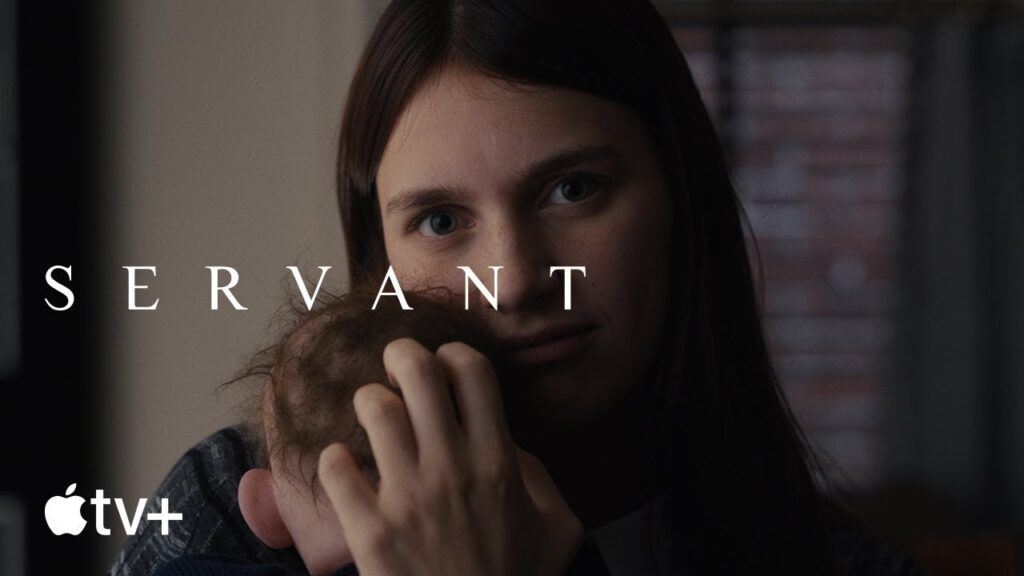
A jury will decide if Apple TV+’s Servant infringed Francesca Gregorini’s 2013 indie film The Truth About Emanuel as a rare substantial similarity trial begins this week.
While much of Los Angeles grapples with the devastating destruction and displacement caused by recent wildfires (here’s how to help), a dozen or so lawyers have been gearing up for a high-stakes jury trial in the long-running copyright lawsuit over M. Night Shyamalan‘s Apple TV+ psychological horror series Servant. On Monday, January 13, jury selection and opening statements are set to begin—nearly five years to the day that filmmaker Francesca Gregorini first accused Apple, Shyamalan, and the series’ creators of infringing her indie film The Truth About Emanuel.

Gregorini v. Apple Inc.
Emanuel premiered at the 2013 Sundance Film Festival, garnering modest critical acclaim and a handful of awards, though it achieved only limited commercial success. Six years later, Servant debuted as a flagship series on the newly launched Apple TV+ platform, eventually running for four seasons. The works share a similar premise: a grieving mother copes with the loss of her baby by caring for a hyper-realistic doll that she and her teenage nanny treat as a real child, forming a strong bond through this shared delusion.
Beyond this premise, however, the two works diverge significantly. Emanuel is a grounded psychological drama, while Servant explores supernatural and religious themes, including a mysterious nanny and unexplained phenomena.
Gregorini’s lawsuit targets the first three episodes of Servant, though she seeks a share of profits from the entire 40-episode series. Among their defenses, Apple, Shyamalan, and their co-defendants argue that Servant was independently created by Tony Basgallop, who began developing the series—then titled Practically Perfect—in 2005, nearly a decade before Emanuel‘s release. Gregorini counters that Emanuel combines unique elements—such as the mother’s delusion, the use of a reborn doll, and the nanny’s complicity—in ways too specific to be coincidental. She also claims that key aspects, like the inclusion of a reborn doll, were added to Servant only after Emanuel’s release.
It’s a legal battle fit for the big screen, though the case will unfold in the decidedly un-Hollywood city of Riverside, about 50 miles southeast of downtown LA, in the courtroom of Central District of California Judge Sunshine S. Sykes. As a federal jury readies to decide questions of originality, substantial similarity, and independent creation, here’s what you need to know:
From Early Dismissal to Jury Trial
When Gregorini filed her copyright infringement lawsuit in 2020, the case appeared destined for an early dismissal. That May, Judge John F. Walter granted Apple and the other defendants’ motion to dismiss, concluding that Emanuel and the first three episodes of Servant weren’t substantially similar as a matter of law. While he acknowledged the works shared a “basic plot premise”—a grieving mother so traumatized by her baby’s death that she cares for a doll she believes is real—Judge Walter ruled that “the alleged similarities between the works pale in comparison to the differences in the plot, themes, dialogue, mood, setting, pace, characters, and sequence of events.”
The Ninth Circuit’s Revival of the Case
But in 2022, the Ninth Circuit Court of Appeals revived the case, holding that Judge Walter had improperly resolved the substantial similarity issue at the pleading stage without allowing Gregorini to present expert testimony or conduct discovery. The appellate court emphasized that copyright’s “extrinsic test”—an objective analysis of the works’ specific elements—required further factual development, remanding the case for additional proceedings.

Key Pretrial Rulings
Following extensive discovery in the district court, Apple and its co-defendants sought summary judgment, challenging the validity of Gregorini’s copyright registration, asserting a lack of access to Emanuel, and arguing that the works weren’t substantially similar as a matter of law. But in November 2024, Judge Sykes, who now presides over the case, denied the motion, citing unresolved factual disputes that must be decided at trial.
And just last week, the court independently granted summary judgment in favor of Gregorini on the validity of her copyright registration, concluding that an idea for Emanuel shared by her longtime friend Sarah Thorp was an unprotectable concept and not a preexisting work requiring disclosure to the Copyright Office. This ruling eliminates one of the defendants’ challenges to Gregorini’s claims as the trial begins.
What to Expect at Trial: Witnesses and Key Issues
Logistics
The trial is scheduled to begin at 9 a.m. on Monday, January 13, 2025. Each side will be allotted 13 hours to present its case, which includes time for opening and closing statements as well as witness examinations. The parties are also expected to screen Emanuel and the first three episodes of Servant for the jury, which is expected to take about three hours.
Before deliberations, Judge Sykes will provide the jury with detailed instructions, outlining the principles and standards jurors are required to follow to reach a unanimous verdict. These instructions will cover key concepts like copyright ownership, the extrinsic and intrinsic tests for substantial similarity, the definition of unprotectable elements such as ideas and scènes à faire, and the plaintiff’s burden to prove unlawful appropriation and causation. Secondary liability claims, such as vicarious and contributory infringement, as well as the standards for determining damages, will also be addressed.
Percipient Witnesses
The trial will feature testimony from a range of witnesses, including the creators and producers of Servant, executives from Apple TV+, and Francesca Gregorini herself. Their testimonies—along with a screening of the works at issue—will help the jury decide whether Servant was unlawfully copied from Emanuel. Here’s a breakdown of some of the key fact witnesses:
- Francesca Gregorini (Plaintiff). Gregorini will testify about the creation and development of Emanuel and its dissemination, which she claims provided the defendants with access to her work. She’ll also likely discuss the similarities between the works and the personal and professional impact of discovering the alleged infringement.
- Tony Basgallop (Creator of Servant). As the creator and primary writer of Servant, Basgallop is expected to testify about the series’ origins and development, which he began conceptualizing in 2005. He’ll emphasize independent creation, citing early drafts and brainstorming documents, as well as personal experiences, such as hiring a religious nanny for his child. Basgallop will also explain how the reborn doll concept was integrated in 2016, after he saw it used in the TV show The Leftovers.
- M. Night Shyamalan (Executive Producer of Servant). Shyamalan will testify about the development and production of Servant, focusing on his creative contributions, including its supernatural and psychological themes. He’ll counter allegations that the series borrowed from Emanuel, perhaps emphasizing his reputation for twist-filled storytelling to support the defense’s argument for independent creation.
- Matt Cherniss (Apple Executive). Cherniss, a creative executive at Apple who oversaw Servant, is expected to testify that Apple’s involvement in the series began only after the scripts for the first three episodes were completed, limiting the company’s connection to the claimed similarities. He’ll likely challenge claims of a causal link between the alleged infringement and Servant‘s profits, while disputing allegations that Apple executives had prior access to Emanuel.
Expert Witnesses
Each side is expected to call up to three expert witnesses to testify on access, substantial similarity, and damages:
Access
- Ellen Pittleman (Plaintiff’s Expert). Pittleman, an entertainment industry executive, is expected to testify about the dissemination of Emanuel, including its screenings at Sundance, availability on platforms like iTunes and Amazon, and submissions for professional opportunities. Gregorini will use this testimony to argue that the defendants had reasonable access to the film during the development of Servant.
- Marci Wiseman (Defense Expert): Wiseman, an expert in television and film industry practices, will testify about the distribution and reach of Emanuel, as well as the defendants’ alleged exposure to the film. She is expected to discuss industry norms for film festivals, theatrical releases, and episodic director selection. Wiseman may also address common tropes in the thriller genre, such as the use of dolls and nannies.
Substantial Similarity
- Professor David Román (Plaintiff’s Expert). Román, an English professor at USC and an expert in narrative and literary analysis, will testify about the alleged similarities in protectable expressive elements between Emanuel and Servant. Gregorini will use this testimony to argue that the similarities extend beyond unprotectable ideas and that Servant copied Emanuel’s distinctive creative expression.
- Bob Gale (Defense Expert). Gale, an expert in story analysis and narrative structure (and co-writer of Back to the Future), will analyze Emanuel and Servant under the extrinsic test. He’ll testify that the similarities between the works are minimal, generic, or derived from unprotectable ideas, prior art, and scenes-à-faire, such as using a doll for grief therapy. Gale will also emphasize differences in tone, pacing, and supernatural themes to support the defense’s claim that Servant isn’t substantially similar to Emanuel.
Damages
- Dominic Persechini (Plaintiff’s Damages Expert). Financial expert Persechini will quantify Gregorini’s claimed damages, focusing on the profits generated by Servant. He’s expected to testify that revenue from Apple TV+ subscriptions and later seasons of Servant were directly tied to the alleged infringement of Episodes 1-3, which Gregorini will argue established the show’s audience and drove its overall financial success.
- Dana Trexler (Defense Damages Expert). Trexler, the defense’s financial expert, is expected to testify about the lack of a causal connection between the alleged infringement and profits from Episodes 4-40 of Servant or Apple TV+. She uses a cost-based approach to identify profits from Servant Episodes 1-3 that could be considered attributable to the allegedly infringing scripts, supplementing other defense evidence that the show’s overall profits weren’t driven by the allegedly infringing elements.
What’s Next
It’s quite rare for copyright infringement lawsuits in the entertainment industry to go to trial, especially when substantial similarity is at issue. Gregorini v. Apple Inc. offers a unique opportunity to see how a jury will decide key questions of access, substantial similarity, and damages in a high profile case. Stay tuned for updates, and share your thoughts in the comments below or on social media @copyrightlately.
The post ‘Servant’ Copyright Trial Begins for Apple, Shyamalan: What to Know appeared first on Copyright Lately.