
My good friend Laurie Margolis retires today after 50 years at the BBC. He started work at Radio Sheffield in 1974 and we met the following year on the day we both joined the BBC news training scheme. He remained at the BBC for twice as long as I did.
Though we were meant to be learning from our instructors, Margolis taught me just about everything I know about radio broadcasting — including, as I recall, the now totally redundant skill of offset audio editing on a Uher portable reel-to-reel tape recorder.
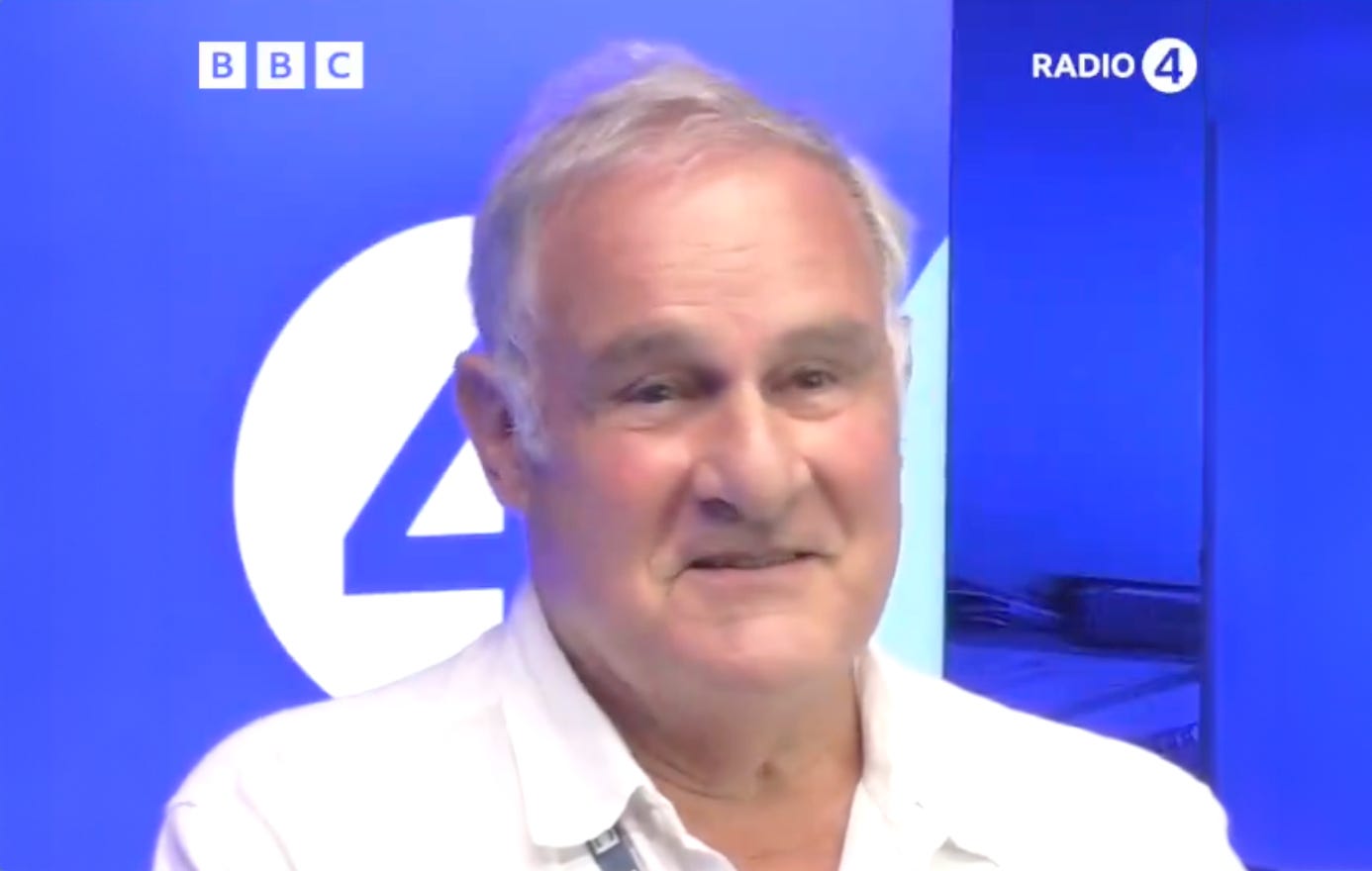
Margolis is known throughout the BBC for the many scoops he has achieved during his career as a journalist, the most remarkable of which was informing Radio 4 listeners —and then Mrs Thatcher’s government — that one of Britain’s overseas territories had been just been invaded by a foreign power. He recounted the story to Evan Davis on Radio 4’s PM programme this week — and you can listen to the item by clicking here:
My own travellers’ tales are rather less newsworthy. I first owned up to one particular story three years ago; but I’m repeating it now because so many new subscribers have signed up since then.
In the summer of 1976 — the driest since 1772 — I spent an enjoyable three months working at what was then called BBC Radio Birmingham. The station occupied a small corner of the BBC’s regional base in Pebble Mill Road, Edgbaston — opened in 1971 and demolished in 2005. I was half-way through a two-year BBC journalism training course.
As I recall, Radio Birmingham had two conventional studios, which I had not been trained to use. But the station engineer had also designed and built an easy-to-use “self-operated” studio, using odd bits of equipment that the network studios didn’t seem to need.
Although Radio Birmingham was on the air 24 hours a day, during the night it would simply rebroadcast BBC Radio 2. At some point between 4am and 5am, the early presenter would arrive, bring in the milk bottles and put himself on the air for an hour in the self-op studio.
He could do this by pressing a big square button in the centre of the control panel in front of him. The illuminated button would then change from green to red. Or possibly from red to green: I can’t quite remember. The presenter would then play music and read the speedway results (no, I don’t know what they were either but several people tuned in just to hear them).
During the day, when the conventional studios were in use, the self-op was available for reporters to pre-record news reports and other items.
I was the late reporter on the night before the Queen’s birthday honours were due to be published. Everyone else had gone home. My job was to write a news story about local athletes and other worthies who were being honoured. Journalists are given a list of names shortly before publication so that they can prepare their reports. But there is a strict embargo: nothing may be published or broadcast until the agreed release time, which in those days was midnight.
I wrote my story and went into the self-op studio to record it. It’s not unusual to have one or two goes at getting a “voice-piece” to sound right. I was still a bit new to all this and I had more than one or two goes at it. Each abortive attempt was followed by a theatrical groan (although no expletives — fortunately, as it turned out).
After a while, I had an acceptable version. I stopped the tape recorder and edited the recording — a process that involved the use of a razor blade, lots of sticky tape and pieces of non-magnetic “leader”. This required much manoeuvring of the tape spools as I listened on headphones. Again, my inexperience meant that sticking all the bits together took much longer than it should.
Finally, I was done. I had been instructed to press the big square button before I started and again when I had finished. So I did.
As I left the studio, I was approached by an engineer who’d walked over from the network control room. He didn’t wear a brown coat but I’m sure he had his shirt-sleeves rolled up.
“We’ve just had a call from the transmitter in Sutton Coldfield,” he said slowly. “Something strange is going out on the Radio Birmingham frequency. It sounded like someone was talking about honours.”
The colour drained from my face. Realisation dawned. I had been told to make sure the big red button was green (or red) before I started using the studio. Or so I thought. In fact, it had to be red (or green). I had inadvertently put myself on the air for the hour or so that it had taken me to record and edit my report. Worse still, I had broken a strict embargo.
Writing up his log, the engineer seemed quite phlegmatic. But I was in a state of shock as I drove back to London that night. I had two days’ leave before I was due back in Birmingham. Would I still have a career on my return?
As soon as I decently could, I confessed to the news editor. He seemed remarkably unconcerned. These things happen in local radio, he said.
But surely there would have been complaints from the listeners? Or from the honours list people? Not at all, he said. Nobody had said a thing.
After a while, I realised that nobody was likely to have been listening. Why would anyone tune in to Radio Birmingham when it was just rebroadcasting another network? You’d get a better signal by going straight to Radio 2.
Just forget about it, the news editor said.
I have forgotten a great deal over the past 48 years. But not that.
-
A reminder that my new podcast — A Lawyer Talks — will be launched on 16 September. Although the first episode will be available to all, you will need a paid subscription to A Lawyer Writes in order to hear subsequent editions. As a unique summer offer, though, I have reduced the price of a year’s subscription to £40 for those joining or renewing before the end of this month. The annual fee for full access to this Substack blog will revert to £50 on 1 September. My monthly subscription rate — set in 2020 — remains unchanged at £4.99.