
An inquiry into the criminal justice system could limit the right to jury trial, the lady chief justice of England and Wales has said.
Calling for a formal public inquiry in a lecture last week, Baroness Carr of Walton-on-the-Hill said it could lead to real improvements. She told me afterwards that an inquiry might recommend “recalibrating” cases that can currently be tried either in the magistrates’ courts or by a judge and jury in the Crown Court. So-called either-way cases include most thefts, burglaries and some drug offences.
Carr confirmed that this would mean limiting a defendant’s option to choose jury trial.
That would be taking jury trial away from people who are entitled to it at the moment, I suggested.
Carr agreed, while stressing that there were already a number of offences that could be tried only in the magistrates’ courts.
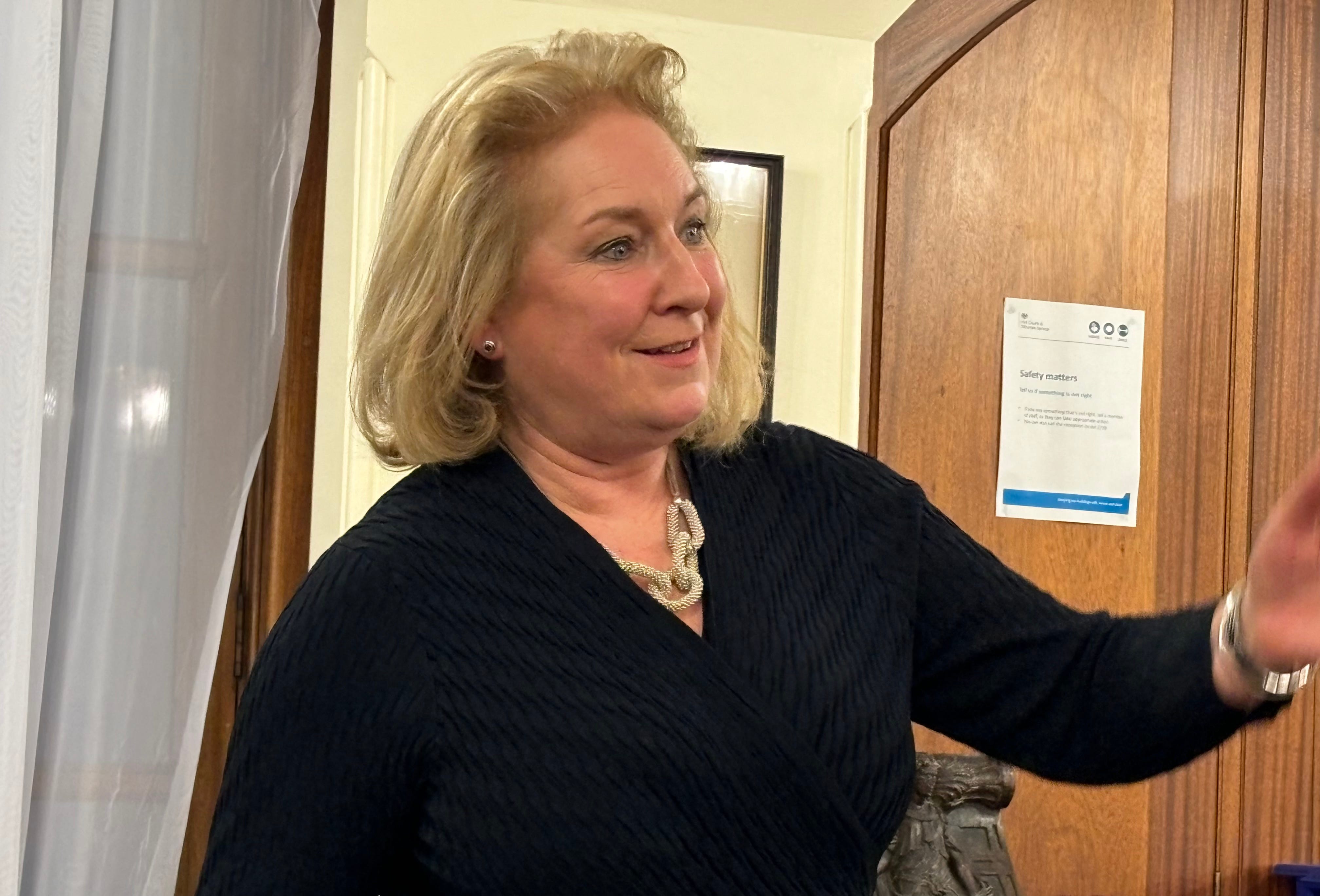
Asked about other possible reforms in an interview for Law in Action broadcast yesterday on BBC Radio 4, the lady chief justice said she would like the government to restore the power of magistrates to imprison offenders for up to 12 months, twice the current maximum.
That power was introduced in May 2022 but then withdrawn in March 2023. Carr said that reinstating a 12-month maximum would reduce backlogs in the Crown Court. But she acknowledged that allowing magistrates to pass longer sentences would have an impact on the prison population.
Magistrates’ sentencing powers were doubled nearly two years ago in the hope that this would reduce the number jury trials. Limited prison capacity is presumed to be the reason why — to nobody’s surprise — the Ministry of Justice reversed the increase after less than a year.
Post Office
Carr’s interview — her first since taking office six months ago — was recorded a few hours before MPs debated the government’s Post Office (Horizon System) Offences Bill last week. The lady chief justice made it clear that she could not comment on the bill itself, which will instantly clear postmasters who meet the bill’s requirements without the need for a court hearing.
But some MPs who took part in the debate last Wednesday were critical of judges who had presided over the wrongly-convicted postmasters’ trials. For example, Kevan Jones (Labour) said “the conduct of certain judges in some of these cases was not very sympathetic to the victims”. And Sammy Wilson (Democratic Unionist Party) said:
I am still baffled by how we ever reached this stage — how Post Office officials, ministers and judges did not question how people who had so much to lose suddenly turned into thieves in their tens and hundreds…
The judges were also responsible, because they heard evidence. Did they question it as rigorously as they ought to have done? I do not know — I do not know many of the individual cases — but it is quite clear that many similar cases were coming before the courts, and somebody should have asked.
I anticipated questions such as these when I asked Carr whether public confidence in the criminal justice system had taken a knock because of the Post Office scandal.
This was her response:
Something went horribly wrong in terms of the disclosure processes and the prosecutions. But if you look at the judges and the courts, absolutely not.
I have always seen the courts as being the solution and not the problem in terms of righting these egregious miscarriages of justice. So the Court of Appeal has always stood ready, willing and able to deal with the appeals that come before it in double-quick time. As you know, earlier this year we were disposing of appeals — one, I think, within seven days of its arrival on our books.
If you take a step back and if you’re asking me about the actual convictions themselves, I think over 90% of the convictions followed upon guilty pleas. So there’s no trial. In the small percentage of cases that did involve a trial, convictions were imposed by juries.
I followed up by asking whether there was “anything that the judges collectively could have done — perhaps by getting together and saying, why have we got so many of these Post Office prosecutions — to prevent this going wrong in the first place”.
“No, not that I can see,” Carr replied. She added:
It’s also, as you know, an absolute hallmark of judicial independence that, by and large, each judge operates by themselves. So there isn’t an awful lot of coming together. And I suspect there wasn’t any reason why judges should have, as it were, put two and two together. These cases were coming forward with defendants who are legally represented and entering guilty pleas.
Priorities
I began the interview — for the farewell edition of Law in Action — by asking the first lady chief justice of England and Wales about her priorities. They covered three broad areas, she replied:
The first is recognising and promoting our strengths, communicating the work that we do: the vital role that the judiciary plays in the administration of justice and the importance of the administration of justice. It’s very important for me to make sure that people understand, as far as possible, that a successful, thriving, effective administration of justice means that all areas of life are impacted. So it’s health, education, thriving businesses.
The second area is building judicial unity, bringing the judiciary together, increasing cross-deployment and of course, fostering a truly inclusive atmosphere and environment for judges to work in.
And the third is as important: it’s the very important question of efficiency, maintaining quality, and improving timeliness. And, of course, addressing the backlogs.
There must be things that worried her, I suggested: concerns that kept her awake at night.
Adequate resourcing, adequate funding for the judiciary, is a daily concern. We really do need proper resourcing, both in terms of retention and recruitment of judges, in terms of the estate, in terms of morale — but also as fundamental is getting the money to have adequate sitting days so that we can do and get through the work that we are capable of doing with what is now a pretty healthy cohort of numbers in most jurisdictions; not all, but in most.
The backlogs worry me, of course, performance is a very important issue. That is something that keeps me awake. But I wouldn’t want you to leave this conversation with a sense that I am always worrying. There are lots of things to celebrate; and lots of exciting things going on at the same time.
Forty years on
We also discussed how the law had changed over the past 40 years. In the late 1980s — long before the introduction of mobile phones — it was much easier for a barrister to disappear, she recalled.
Disappear?
“You go to court and take the long journey back to chambers without anybody knowing where you were: you couldn’t be found,” she explained. “You could have the afternoon off.”
Carr joined Brick Court, a leading commercial set of barristers’ chambers. It had few women and even fewer facilities for them.
“I remember that there were no ladies washing facilities in my building,” she said. “So I had to cross Brick Court to the other side of the court to go to the loo.”
Law in Action
You can listen to the final edition of Law in Action — which also includes an entertaining interview with Lord Pannick KC — on BBC Sounds. As I mentioned in a note yesterday, the programme has not been recommissioned by Radio 4.
New podcast
I am currently working on plans to launch my own podcast in the autumn.
If you are reading this on the Substack app or on my website, join the mailing list and you’ll be the first to know.
If you have received this as an email, you can let me know what kind of podcast you would like to hear by simply replying. And if you are a paid subscriber then please feel free to set out your thoughts in a public comment.