
|
|
|

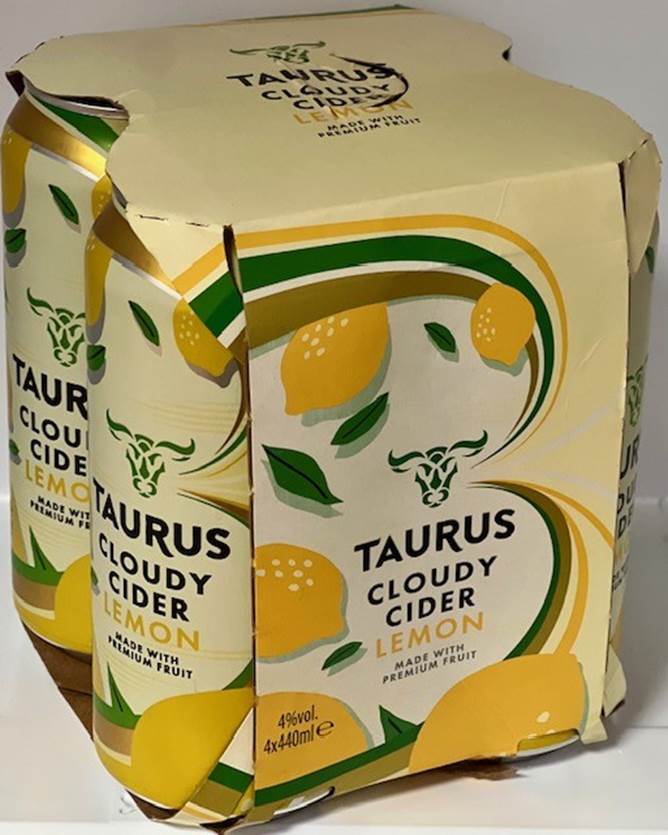
“Trade Mark Infringement
1. Does the Claimant have a reputation in the UK in relation to the Trade Mark?
2. Is the overall appearance of the Aldi Product, as defined in paragraph 14 of the Particulars of Claim (“the Sign”) similar to the Trade Mark?
3. If the answer to (2) is yes, does such similarity give rise to a likelihood of confusion pursuant to section 10 (2) of the Trade Marks Act 1994?
4. Did the Defendant’s use of the Sign cause a link in the mind of the average consumer between the Sign and the Trade Mark?
5. Does the Defendant’s use of the Sign without due cause, take unfair advantage of, and/or is detrimental to the distinctive character and/or repute of, the Trade Mark pursuant to s.10 (3) of the Trade Marks Act 1994?
6. Does the Defendant have a defence under s.11 (2) (b) of the Trade Marks Act 1994?
Passing Off
7. Is the Claimant the owner of goodwill in the business of the sale of the Thatchers Product associated with the Trade Mark?
8. Has the Defendant passed off by making misrepresentations leading the public, or likely to lead the public, to believe that the Aldi Product is that of, licensed, or approved by, or otherwise connected in trade with the Claimant?
9. If so, have the said misrepresentations caused damage?”
The learned judge considered the issues slightly out of order starting with Issue 2, continuing with 3 and 1 and concluding with 4, 5, 6, 7 and 8.
Issue 2 – Is the overall appearance of the Aldi Product, as defined in paragraph 14 of the Particulars of Claim (“the Sign”) similar to the Trade Mark?
Having considered Lord Justice Kitchin’s observation in Comic Enterprises Ltd v Twentieth Century Fox Film Corporation [2016] EWCA Civ 41, [2016] FSR 30, [2016] ETMR 22 that the likelihood of confusion arising from the use of a sign must be viewed from the perspective of the average consumer of the goods or services in question, the judge’s first step was to identify such average consumer.. In this case, there was no dispute that the average consumer would be a retail purchaser of alcoholic beverages, including cider.
After taking account of Thatchers’s submissions between para [74] and [76] and Aldi’s at [77], the judge was satisfied that the dominant elements of the trade mark were the central element made up of the “THATCHERS” brand with “CLOUDY LEMON CIDER” in large and decorative font underneath. The whole yellow lemons with quite large green leaves around the top and left edge and the creamy-yellow colourway of the background were also important but less dominant. In Her Honour’s view, the arc or roundel in the trade mark made up of the words “Family Cider Makers” at the top of the text and “Zingy and Refreshing” below were not negligible. However, she doubted that the average consumer would bring those words to mind. He or she might remember that there was something of the roundel about the trade mark rather than exactly how that visual impression had been created. The judge thought that the “Made With Real Lemons” wording was negligible for comparison purposes because it was unlikely to be remembered by the average consumer. The overall impression of the trade mark carried in the mind of the average consumer would be dominated by the words “THATCHERS CLOUDY LEMON CIDER” within something of a roundel, with the lemons, leaves and background colour playing important parts.
The words “Cloudy Cider Lemon” were not as dominant as the equivalent words are in the trade mark, because they were in a smaller non-decorative font which looked merely functional and descriptive. They were not as centrally placed, being on the lower portion of the packaging. In addition, the word “Lemon” was somewhat lost visually in a yellow font on the cream background. The words “Made with Premium Fruit” were neither distinctive nor dominant.
The judge said at para [89] that she took all the above factors into account to reach her conclusion.
“A person infringes a registered trade mark if he uses in the course of trade a sign where because—
(b) the sign is similar to the trade mark and is used in relation to goods or services identical with or similar to those for which the trade mark is registered,
there exists a likelihood of confusion on the part of the public, which includes the likelihood of association with the trade mark.”
She then considered the six requirements for infringement under s.10 (2) (b) that were stated by Mr Justice Arnold (as he then was) in Sky Plc and others v Skykick UK Ltd and another [2018] EWHC 155 (Ch), [2018] ETMR 23, [2018] RPC 5 at [285] from Comic Enterprises v Twentieth Century Fox Film Corp [2016] EWCA Civ 41 ):
“(a) there must be use of a sign by a third party within the UK; (b) the use must be in the course of trade; (c) it must be without the consent of the proprietor of the trade mark; (d) it must be of a sign which is at least similar to the trade mark; (e) it must be in relation to goods or services which are at least similar to those for which the trade mark is registered; and (f) it must give rise to a likelihood of confusion on the part of the public.”
The judge noted that confusion for the purposes of s,10 (2) (b) can arise in different ways and can include concepts usually referred to as ‘direct confusion’, ‘indirect confusion’ and ‘wrong way round confusion’, Her Honour referred to paras [10] to [14] of Lord Justice Arnold’s judgment in Liverpool Gin Distillery Ltd v Sazerac Brands LLC [2021] EWCA Civ 1207, [2021] ETMR 57:
“[10] It is well established that there are two main kinds of confusion which trade mark law aims to protect a trade mark proprietor against… The first, often described as ‘direct confusion’, is where consumers mistake the sign complained of for the trade mark. The second, often described as ‘indirect confusion’, is where the consumers do not mistake the sign for the trade mark, but believe that goods or services denoted by the sign come from the same undertaking as goods or services denoted by the trade mark or from an undertaking which is economically linked to the undertaking responsible for goods or services denoted by the trade mark.
…
[14] “Likelihood of confusion” usually refers to the situations described in paragraph 10 above. As this Court held in Comic Enterprises, however, it also embraces situations where consumers believe that goods or services denoted by the trade mark come from the same undertaking as goods or services denoted by the sign or an economically linked undertaking (sometimes referred to as ‘wrong way round confusion’).”
As I also mentioned in relation to Issue 2, the judge said that Lord Justice Kitchin summarized the key principles to be applied in assessing the likelihood of confusion in para [52] of Specsavers:
“a) the likelihood of confusion must be appreciated globally, taking account of all relevant factors;
b) this must be judged through the eyes of the average consumer of the goods who is deemed to be reasonably well informed and reasonably circumspect and observant, but who rarely has the chance to make direct comparisons between marks and must instead rely upon the imperfect picture of them he has kept in his mind, and whose attention varies according to the category of goods or services in question;
c) the average consumer normally perceives a mark as a whole and does not proceed to analyse its various details;
d) the visual, aural and conceptual similarities of the marks must normally be assessed by reference to the overall impressions created by the marks bearing in mind their distinctive and dominant components, but it is only when all other components of a complex mark are negligible that it is permissible to make the comparison solely on the basis of the dominant elements;
e) nevertheless, the overall impression conveyed to the public by a composite trade mark may, in certain circumstances, be dominated by one or more of its components;
f) and beyond the usual case, where the overall impression created by a mark depends heavily on the dominant features of the mark, it is quite possible that in a particular case an element corresponding to an earlier trade mark may retain an independent distinctive role in a composite mark, without necessarily constituting a dominant element of that mark;
g) a lesser degree of similarity between the goods or services may be offset by a greater degree of similarity between the marks, and vice versa;
h) there is a greater likelihood of confusion where the earlier mark has a highly distinctive character, either per se or because of the use that has been made of it;
i) mere association, in the strict sense that the later mark brings the earlier mark to mind, is not sufficient;
j) the reputation of a mark does not give grounds for presuming a likelihood of confusion simply because of a likelihood of association in the strict sense; and
k) if the association between the marks creates a risk that the public might believe that the respective goods or services come from the same or economically-linked undertakings, there is a likelihood of confusion.”
“i) that when he is buying Aldi Product, he is in an Aldi shop or on the Aldi online shop as these are the only two sales channels in the UK;
ii) because at the relevant date Aldi did not sell Thatchers products, and had not done so since 2012, when the average consumer is buying cider in store or on the website he does not have the opportunity to make a direct comparison between the Trade Mark and the Sign;
iii) the average consumer, who is reasonably well informed and observant, would know that Aldi sells third party brands in its stores, including third party ciders;
iv) accordingly although he would not expect to see the Thatchers Product in Aldi (as Thatchers had not been sold in Aldi for many years) he would not be surprised to see something which he perceived as or mistook to be the Thatchers Product, as he might believe it was a new introduction;
v) the average consumer would pay an average level of attention to the products he is purchasing, but could be expected to browse for ciders and make a decision to purchase in a matter of a few seconds. Accordingly, he would be looking for visual cues from shelf stand-out, including colour, to draw his attention and encourage him to purchase.”
Save for a tweet from someone who had visited the Aldi store and thought that he had seen Thatchers’s cloudy lemon cider on display there was no evidence of actual confusion. The judge observed that the absence of evidence of direct or indirect confusion notwithstanding the very high volumes of sales of both parties’ products was a factor weighing against the likelihood of confusion but not determinative of it.
“A person infringes a registered trade mark if he uses in the course of trade, in relation to goods or services,] a sign which—
(a) is identical with or similar to the trade mark,
(b). . . . . . . . . . . . . . . . . . . . . . . . . . . . . . . .
where the trade mark has a reputation in the United Kingdom and the use of the sign, being without due cause, takes unfair advantage of, or is detrimental to, the distinctive character or the repute of the trade mark.”
in Match Group, LLC and others v Muzmatch Ltd and another [2023] WLR(D) 199, [2023] Bus LR 1097, [2023] EWCA Civ 454 (“Muzmatch”), Lord Justice Arnold listed the requirements for a successful claim under s.10 (3) of the Trade Marks Act 1994 at para [55]:
“(i) the registered trade mark must have a reputation in the relevant territory; (ii) there must be use of a sign by a third party in the relevant territory; (iii) the use must be in the course of trade; (iv) it must be without the consent of the proprietor; (v) it must be of a sign which is identical with or similar to the trade mark; (vi) it must be in relation to goods or services; (vii) it must give rise to a link between the sign and the trade mark in the mind of the average consumer; (viii) it must give rise to one of three types of injury, that is to say, (a) detriment to the distinctive character of the trade mark, (b) detriment to the repute of the trade mark, or (c) unfair advantage being taken of the distinctive character or repute of the trade mark; and (ix) it must be without due cause.”
“I am not with Aldi. Let us remember what goodwill or reputation is. It is “the attractive force which brings in custom” (IRC v Muller & Co Margarine Limited [1901] AC 217). I do not accept that a plain can stamped with ‘THATCHERS’ or ‘THATCHERS Cloudy Lemon Cider’ is likely to have accrued as much in sales as the Thatchers Product has achieved with the Trade Mark applied to it, nor that it could have been heavily promoted and subject to such wide engagement on social media in plain packaging as it has under the Trade Mark. That is a simply unrealistic submission, in my judgment. Once again, it is also not supported by Aldi’s own evidence that improving the design of its packaging would improve the attractiveness of the Aldi Product to consumers, and enhance sales. That principle – which is surely a basic principle of marketing retail goods such as these – must equally apply to the Thatchers Product, which Mr Watkins thought did a very good job of using whole lemons in its design of the Trade Mark to communicate to customers exactly what the Thatchers Product was. That is why one of his team members emailed Aldi’s third party packaging designers to say, ‘add lemons as per Thatchers’. He thought the presence of lemons was attracting custom. I agree.”
“[120] Infringement under this provision requires a certain degree of similarity between the registered mark and the sign, such that the average consumer makes a connection between them. It is not necessary that the degree of similarity is such as to create a likelihood of confusion, but it must be such that the average consumer establishes a link between the registered mark and the sign; and this is to be assessed having regard to all the circumstances of the case, as the Court of Justice explained in Adidas- Salomon AG [2003] ECR I-2537 at [29]-[30]:
‘[29] The infringements referred to in Art.5 (2) of [Directive 89/104], where they occur, are the consequence of a certain degree of similarity between the mark and the sign, by virtue of which the relevant section of the public makes a connection between the sign and the mark, that is to say, establishes a link between them even though it does not confuse them (see, to that effect, Case C-375/97 General Motors [1999] ECR I-5421, para.23).
[30] The existence of such a link must, just like a likelihood of confusion in the context of Art.5 (1) (b) of Directive [89/104], be appreciated globally, taking into account all factors relevant to the circumstances of the case (see, in respect of the likelihood of confusion, [Case C-251/95] SABEL [[1997] ECR I-6191], para.22, and [Case C-425/98] Marca Mode [[2000] ECR I-4861], para.40).’
The judge accepted that that might be the case with some of the comments but after taking all relevant circumstances into account, and standing in the shoes of the average consumer, she was satisfied on the balance of probabilities that seeing the packaging would call to mind the trade mark.
Issue 5 – Does Aldi’s Use of the Sign without Due Cause, take Unfair Advantage of, and/or is detrimental to the Distinctive Character and/or Repute of, the Trade Mark pursuant to s.10 (3) of the Trade Marks Act 1994?
Judge Melissa Clarke referred to Mrs Justice Joanna Smith’s review of the authorities and summary of the applicable principles in Lidl Great Britain Ltd v Tesco Stores Ltd [2023] EWHC 873 (Ch), [2023] E.T.M.R 30 at [73(15) – [73(27)]. Her Honour announced that she was concerned with the weakening of the trade mark’s ability to identify the goods for which it had been registered by the use of the packaging. She noted that detriment would be established where there was evidence of a change in the economic behaviour of the average consumer or a serious likelihood that such change would occur in the future ( Argos v Argos Systems Inc [2018] EWCA Civ 2211).
“A registered trade mark is not infringed by—
…………….
(b) the use of signs or indications which are not distinctive or which concern] the kind, quality, quantity, intended purpose, value, geographical origin, the time of production of goods or of rendering of services, or other characteristics of goods or services, ……
provided the use is in accordance with honest practices in industrial or commercial matters.”
Issue 8 – Has Aldi passed off by Making Misrepresentations leading the Public, or likely to lead the Public, to believe that the Aldi Product is that of, licensed, or approved by, or otherwise connected in trade with Thatchers?