
The ITV drama Mr Bates vs The Post Office1 has captured the attention of politicians much more effectively than the careful and methodical work of Sir Wyn Williams’s public inquiry. But I would be surprised if ministers pre-empt the former judge’s work by taking the radical steps that some are now calling for. It seems even less likely that there will be any prosecutions before Williams has finished taking evidence.
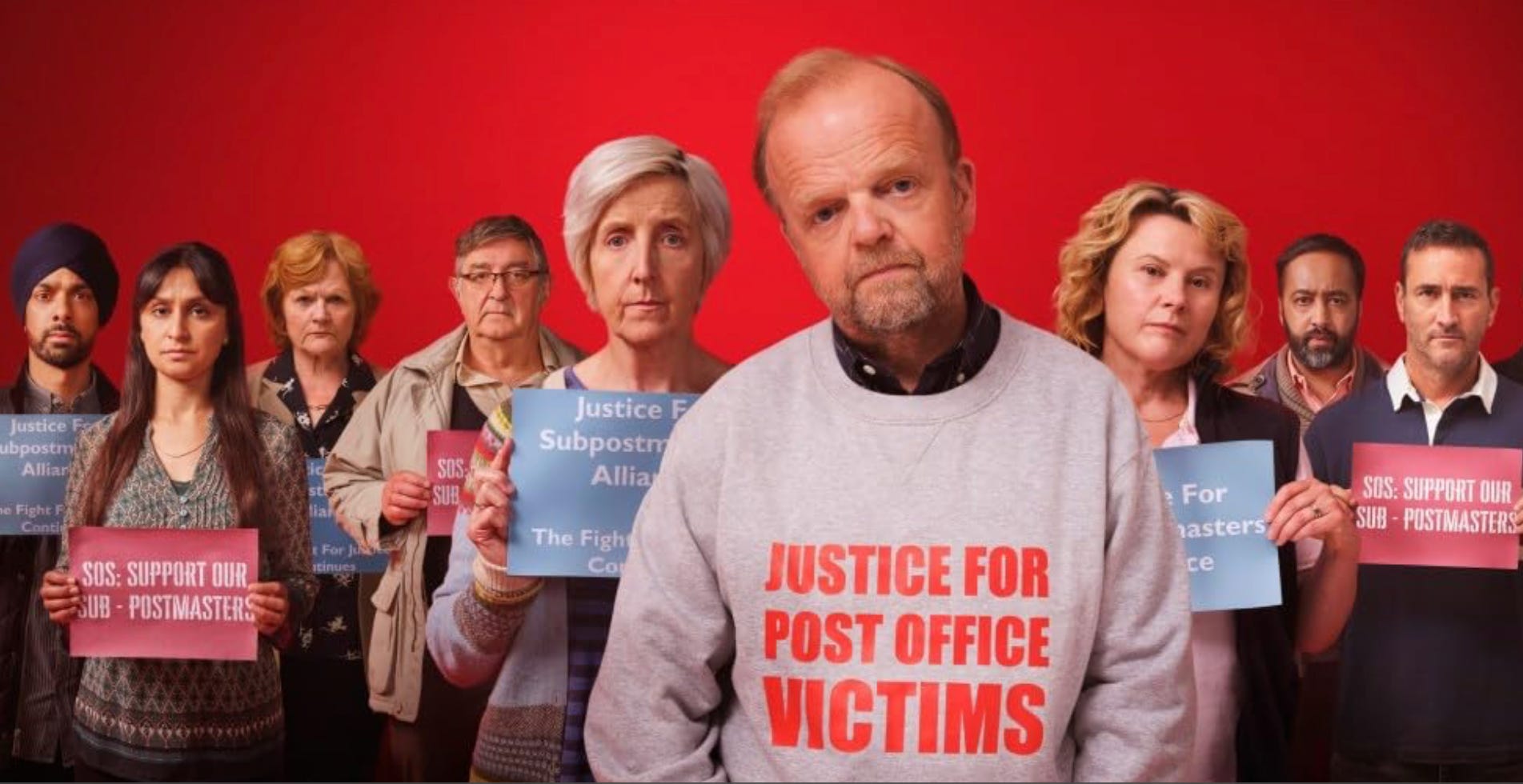
Hundreds of sub-postmasters were wrongly prosecuted by the Post Office. Others were sued over non-existent shortfalls. As a result, the Post Office received payments to which it was not entitled. Saturday’s Times quoted the Metropolitan Police as saying that officers were “investigating potential fraud offences arising out of these prosecutions” relating to “monies recovered from sub-postmasters as a result of prosecutions or civil actions”.
The Sunday Times reported yesterday — and the prime minister later confirmed — that the justice secretary was exploring how to exonerate hundreds of sub-postmasters who had been unjustly convicted during the Horizon IT scandal.
The paper said:
Alex Chalk is looking at whether the Post Office can be stripped of its role in the appeals process, with many victims still attempting to overturn wrongful convictions…
This includes whether the Crown Prosecution Service could take over [outstanding appeals], which may make it easier for convictions to be quashed.
That strikes me as strange. It’s true that a handful of appeals have been opposed by the Post Office. In April 2021, the Court of Appeal overturned the convictions of 39 sub-postmasters in a single judgment. The judges drew a distinction between those 39 cases — in which there was no independent evidence of an actual shortfall — and three further appeals in which the reliability of Horizon data was not essential to the prosecution case. Those three convictions were safe, the court found.
I can see no reason to suppose that the outcome would have been any different if the respondent to these appeals had been the Crown Prosecution Service rather than the Post Office. These were ultimately decisions for the Court of Appeal.
Perhaps this is a diversionary tactic by the justice secretary. As I reported on Friday, Chalk received a letter on 14 December from the government-appointed Horizon Compensation Advisory Board. This pointed out that only 93 convictions had been overturned, although there had been more than 900 prosecutions.
The board offered a number of possible explanations:
-
Over two decades, much of the evidence has been lost or destroyed by the Post Office.
-
Individuals’ unwillingness to appeal given their understandable deep distrust of authority.
-
The Court of Appeal rules impose limitations on the Post Office’s ability to concede cases.
-
The unreliability of evidence about other Post Office-related systems and Department of Work and Pensions payments, which has still not been adequately examined and may never be.
-
In cases where Post Office concludes that a retrial would not be in the public interest, the conviction is overturned but the postmaster is denied full compensation and left with an implication of continued guilt.
The board recommended overturning “all Post Office-driven convictions from the Horizon period” — even though “a small minority” of those convicted must have been “genuinely guilty of something”.
That might require legislation. Some MPs would baulk at the prospect of paying compensation to criminals, while others would say it was a price worth paying for the greater good.
A detailed paper sent with the board’s letter pointed out that the Post Office still retained managerial control over the appeal process, though it had instructed independent leading counsel. In the board’s view,
it cannot be right that a body found to have prosecuted in a manner that was found to be an affront to justice, and which continues to demonstrate real difficulties in providing proper disclosure, continues to manage critical decisions on appeals.
For that reason, the board recommended “there should be an independent authority that could step in and govern such a process of investigation and review”.
That may have been what inspired Chalk to suggest bringing in the Crown Prosecution Service.
My own view is that it should be up to those involved — the sub-postmasters and their families — to decide what to do.
The Criminal Cases Review Commission published a note on Friday offering its help. Helen Pitcher OBE, who chairs the commission, said:
Everybody affected by these failings should receive the justice they deserve. However, hundreds of potential applicants have still not come forward, whether that’s directly to the Court of Appeal or requesting a review from the Criminal Cases Review Commission.
Some might understandably still be traumatised by what has happened to them and to their loved ones but we can help and we encourage them to contact us.
That seems to be the right approach. A state-owned body generated these wrongful convictions. If — for whatever reason — those involved want nothing more to do with the criminal justice system, that is surely their privilege.
Am I being pedantic in objecting to the US abbreviation for versus?