
The Council of Europe, which supports the European Court of Human Rights and supervises the enforcement of its rulings, has written to the Russian foreign minister Sergey Lavrov urging the Russian Federation to implement more than 2,200 outstanding adverse judgments.
Good luck with that one. Given that invading another member state might just about qualify as a breach of human rights, Russia was thrown out of the Council of Europe on 16 March. It it still required by international law to implement judgments issued by the court before 16 September, when the Russian Federation ceased to be a party to the human rights convention. But the Russian government broke off all communication with the court in early March and declared that it would not comply with any judgments issued from 15 March. Russia had jumped a day before it was pushed.
As far as we know, Russia has not paid more than €2 billion in damages awarded by the court in more than 1800 cases, most of it to shareholders in the former Yukos oil company. It has not complied with the decision to release Alexei Navalny, whose detention under harsh conditions was “deeply deplored” last week by the committee that supervises enforcement of the court’s judgments. Nor has Russia has not introduced appropriate criminal sanctions for domestic violence, as it had also been required to do.
Some 17,000 claims against Russia are still waiting to be dealt with by the human rights court.
What’s to be done?
The Council of Europe’s committee of ministers, which supervises the execution of judgments, published a strategy paper last week. This proposed closer co-operation with international organisations. It promised better communication with the public. And it said officials would take stock of pending cases.
That’s all very welcome, I’m sure, but how is it going to help Russians who have been denied their human rights?
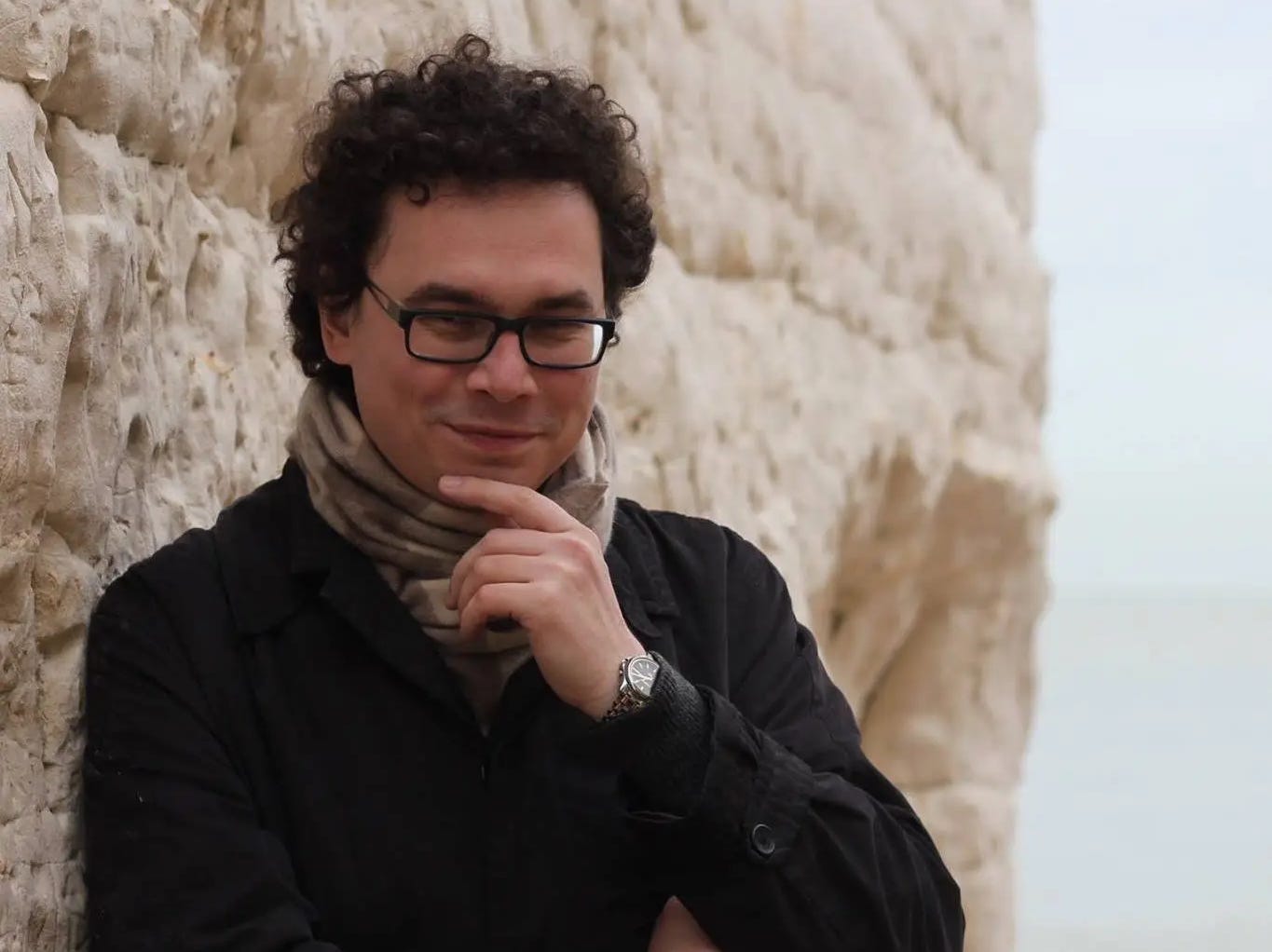
A way forward was suggested this week by Kirill Koroteev, a lawyer who has been representing hundreds of applicants in cases against Russia. Koroteev is the head of international practice at the Agora international human rights group, an association of more than 50 lawyers working on landmark human rights cases in Russia. Agora is one of 15 campaign groups that make up the International Network of Civil Liberties Organizations.
In a blog this week, Koroteev recalled the case of Burmych v Ukraine, decided by the European Court of Human Rights in 2017. Five applicants complained of non-enforcement — or delayed enforcement — of decisions in their favour that had been given by Ukrainian courts.
The human rights court decided that this issue had already been considered in a pilot judgment called Ivanov it had given in 2009. The committee of ministers had been trying for eight years to get Ukraine to comply with that judgment and the court thought there was no point in hearing the five new cases separately. These could be dealt with under the principles laid down in Ivanov. Best of all, so could another 12,143 similar applications that were listed in the 474-page judgment. These were all taken off the court’s case list and sent to the committee of ministers for enforcement. Ukraine agreed to help.
Koroteev called for similar bulk disposal of cases against Russia. Some would certainly need to be resolved by the court and, although the judge nominated by the defendant state takes part in every hearing, Russia no longer has a judge in Strasbourg. However, other sitting judges could be appointed in the Russian’s absence.
Just satisfaction
So far, so good. But a ruling is little comfort to a claimant while Russia is refusing to pay compensation — “just satisfaction”, as the court calls it. And, as Koroteev says, it will only get worse.
In the years to come, the court will inevitably decide on the cases arising from the conflicts on the Georgian territory (South Ossetia and Abkhazia) and, importantly, on the post-2014 cases of violations on the Ukrainian territory: Crimea, Donbas, downing of MH17. It will then proceed with the cases concerning the 2022 invasion. The new Russian law provides for non-payment of damages under those judgments. Tens of thousands of victims are likely to remain uncompensated for the harm they suffered.
Isn’t that Russia’s fault? Of course — but Koroteev says there are wider implications.
Failure to enforce the judgments, even with regard to compensation, severely undermines the authority of the court… The committee [of ministers] has to avoid becoming a powerless bystander, merely registering the outstanding obligations that stem from the final court judgment, as it intends to…
New mechanisms should be discussed and developed to ensure that victims are compensated and the court’s authority is restored.
But where would the compensation come from?
A novel solution may consist in establishing a trust fund, under the aegis and within a legal framework of the Council of Europe. The fund may receive voluntary contributions from states and individuals and dispense funds to the applicants who were awarded compensation by the court…
The trust fund should then be empowered to recover the spent funds from any Russian property that may be subject to attachment and seizure. It will be better placed to do so than multiple indigent individuals scattered across the globe.
If and when Russia applies to return to the Council of Europe, it may be required to reimburse, with all accrued interest, the amounts spent by the trust fund.
Koroteev accepts that this is an “audacious” solution — though he notes that trust funds for victims already exist in France and at the International Criminal Court. And of course his proposals would be in the interests of his clients.
At the very least, though, he wants to promote debate:
<div class=”tweet” data-attrs=”{“url”:”https://twitter.com/Korkinen/status/1602352224155439106″,”full_text”:”This does not concern only Russians. Victims from Ukraine, Georgia, Transnistria, passengers and crew of #MH17 will equally be denied payment. They should be provided with an interim solution.nnIf that’s not the correct one, make new proposals. But do nothing won’t work at all.”,”username”:”Korkinen”,”name”:”Kirill Koroteev”,”date”:”Mon Dec 12 17:18:35 +0000 2022″,”photos”:[],”quoted_tweet”:{},”retweet_count”:0,”like_count”:1,”expanded_url”:{},”video_url”:null,”belowTheFold”:true}”>

If that’s not the correct one, make new proposals. But do nothing won’t work at all.
Comment
The 46 member states already fund the Council of Europe and its court. Contributions to a trust fund should not add hugely to their budget obligations, especially if there is a sensible cap on payments in individual cases.
Sooner or later, one hopes, Russia will have to start paying reparations for its invasion of Ukraine. Victims of the invasion must have priority and Ukraine must be rebuilt. But Russia should not be allowed to ignore the human rights obligations that it chose to accept.
Maybe Dominic Raab will have some thoughts on this when the justice secretary appears before parliament’s joint committee on human rights at 4.15pm today. You can watch it here.