
On November 21, the Washington State Supreme Court held that general contractors may be on the hook for the injuries of the workers on their jobsites (Vargas v. Inland Washington, LLC). And not just on the hook to provide a safe jobsite for all, but for the injuries of its subcontractor’s workers. And
Latest from From the Ground Up - Page 5
Event Recap: October Construction Breakfast Roundtable on Delegated Design
The Construction Team hosted back-to-back Breakfast Roundtables in Portland and Seattle earlier this month. Attendees included contractors, suppliers, design professionals, in-house counsel, and others from across the construction industry. The topic: delegated design. We kicked off the discussion by defining the topic as delegating to the contractor a portion of the design of the work. For example, a
Breakfast Roundtable: A 360° Discussion on Delegated Design

Please join us for a roundtable discussion on the risks and benefits of delegated design. Delegating design has been the industry standard for fire-suppression and elevator trades and is common for mechanical, electrical, and plumbing work. Delegated design is extending beyond its traditional place to encompass more building elements and trades, including entire envelope systems.
2020 Brings Change to Oregon’s Public Contracting Code
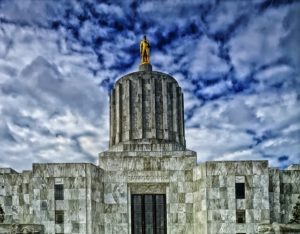 Changes are coming to Oregon’s public contracting code in the form of HB 2769, passed during the Oregon Legislature’s 2019 session.
As those familiar with Oregon’s public contacting rules know, under ORS 279C.110, contracting agencies are required to use a qualification-based selection process when choosing consultants to provide architectural, engineering, photogrammetric mapping, transportation planning, or
Understanding Insurance Terms in Construction Contracts
 Miller Nash attorneys Seth Row and Shanelle Honda were published in the Fall 2019 issue of the NAMC-OR Newsletter. The link to the full story is available below.
Construction contracts at all tiers usually include terms requiring certain types of insurance, and often contain related provisions about indemnity. This “boilerplate” can be important if a job goes south,
Bid Protest Time Extension
Washington contractors now have more time to file a bid protest on a public works project.
Under prior law, an aggrieved contractor had to submit their bid protest within two days after the bid opening. RCW 39.04.105. For many contractors, they often did not know the basis to protest an award without receiving access to
Supreme Court Gives Government Contractors Greater Protection for Their Confidential Information
As we’ve discussed on our IP Law Trends blog, there is significant tension between government’s duty to give the public access to its records, and the desire of those who deal with the government to keep some of their information confidential. Yesterday, confidentiality won. In a 6-3 decision, the Supreme Court overturned the
The U.S. Supreme Court Rids Constitutional Takings Claims of the “San Remo Preclusion Trap”
 On June 21, 2019, the U.S. Supreme Court released Knick v. Township of Scott, in which the Court overruled a 1985 decision holding that a property owner’s claim against a local government under the Takings Clause of the Fifth Amendment was not ripe until a state court had denied the just-compensation claim under state
Responding to a Crisis: How Human Resources Can Make Things Better, Not Worse
Cody Elliott and Mike Porter, two Miller Nash partners, were published in Constructor Magazine, a publication of Associated General Contractors. The link to the full story is available below.
Just as unforeseen site conditions can test a contractor’s problem-solving skills, unexpected events can test a construction employer’s crisis-management readiness. Crises can hit at any time, and
Judging Java: California Reverses Need for Proposition 65 Warnings on Coffee
 California’s coffee industry breathed a collective sigh of relief earlier this month when the state’s Office of Environmental Health Hazard Assessment (“OEHHA”), the agency charged with implementing Proposition 65, finalized a regulation that exempts coffee from the need to bear a cancer warning.[1]
California maintains a list of chemicals that it considers to cause