Latest from Connect on Tech - Page 6

Recent regulatory developments underscore the growing scrutiny of professional uses of generative AI. On 13 January 2026, the Spanish Data Protection Authority (“Spanish DPA”) issued a formal notice warning of the legal and privacy risks involved in uploading, transforming or generating images of individuals through AI tools. At the same time, the European Commission has

I. In brief

This article has practical relevance for online service providers that are either established in an EU Member state or subject to the Digital Services Act and currently see themselves pressured to comply with national digital regulatory rules that have been introduced on EU Member State level (e.g. youth protection or social media

2026 is a pivotal year for consumer protection regulation both in the UK and across the EU.

With the UK implementing major reforms under the Digital Markets, Competition and Consumers Act 2024 (“DMCCA”) and the EU preparing to reshape the digital consumer landscape under the upcoming Digital Fairness Act (“DFA”), the regulatory environment is becoming

This article was originally published by IAPP linked here.

Vietnam is accelerating its push to emerge as a regional technology powerhouse, with strategic investments in artificial intelligence and semiconductors underscoring this ambition. Government officials highlighted the technologies as twin engines for innovation and global competitiveness, aiming to nurture talent and build intelligent manufacturing centers.

Key Takeaways:

  • While early chatbot litigation focused largely on IP disputes, a growing wave of lawsuits and regulatory actions alleging addictive use and physical harm has made companion chatbot safety a key concern.
  • Chatbots of all kinds face a multifaceted compliance landscape, including privacy, cybersecurity, consumer protection, IP, AI transparency, content moderation, and industry-specific regulations.

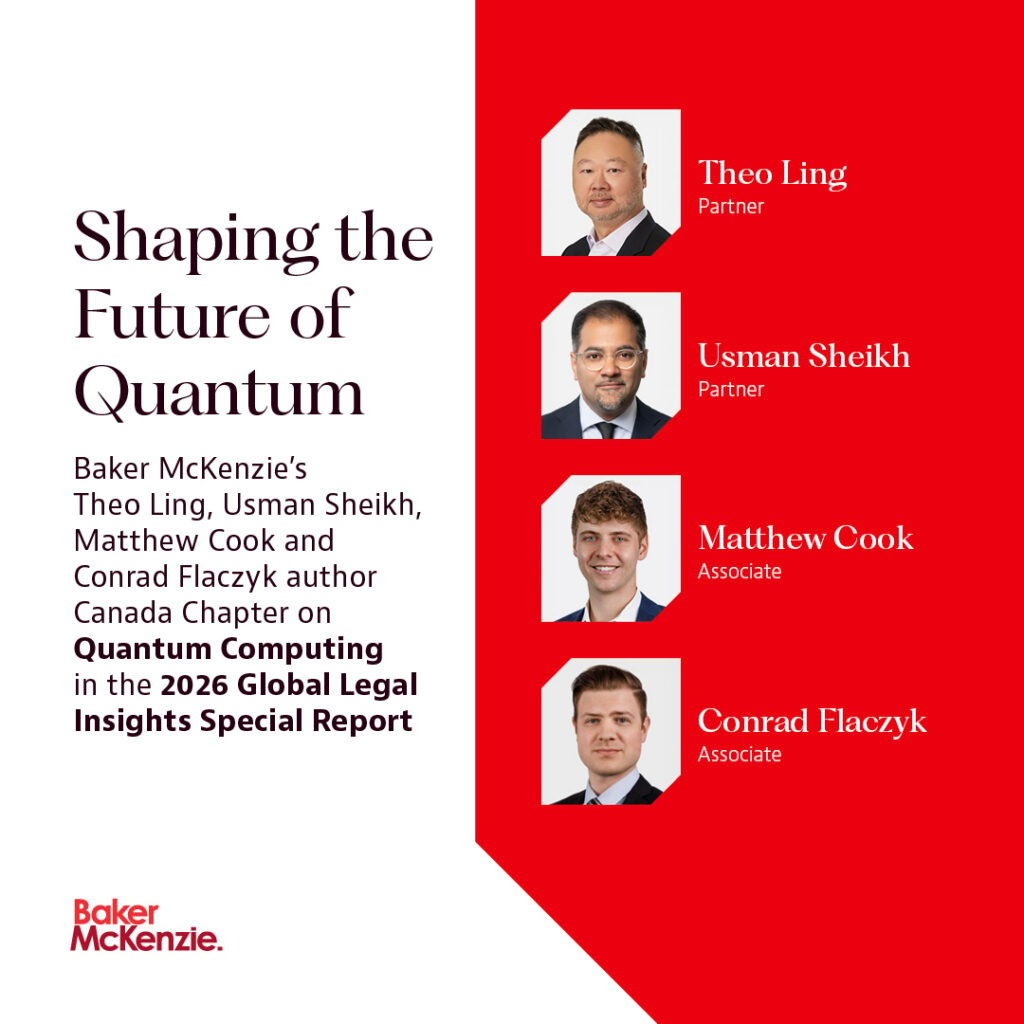
We are pleased to share that our colleagues Theo Ling, Usman Sheikh, Conrad Flaczyk, and Matthew Cook have authored the Canada chapter on Quantum Computing for the Global Legal Insights: Special Report 2026

Canada maintains a substantial ecosystem for quantum technologies, anchored by university research hubs, public–private labs, and a growing base of domestic

On February 05, 2026, the Florida Attorney General James Uthmeier announced the creation of the Consumer Harm from International Nefarious Actors Prevention Unit. As a first-of-its-kind division, this specialized unit will be a dedicated section within the Office of the Attorney General focused on addressing risks to Florida consumers, data privacy, and economic security arising

In October 2025, governments from around the world convened in Hanoi, Vietnam, to sign the United Nations Convention against Cybercrime—now referred to as the “Hanoi Convention.” As the first global treaty dedicated to preventing, investigating, and prosecuting cybercrime, the Hanoi Convention marks a pivotal moment for global cooperation to prevent and combat cybercrime. Although

Executive Snapshot

January 2026 | Baker McKenzie

The Cyber Security and Resilience Bill represents the UK’s most significant cyber reform since the the UK NIS Regulations 2018. The Bill modernises the UK framework to address systemic cyber risk, digital supply‑chain exposure and the need for earlier visibility of incidents, with full effect anticipated by 2028