
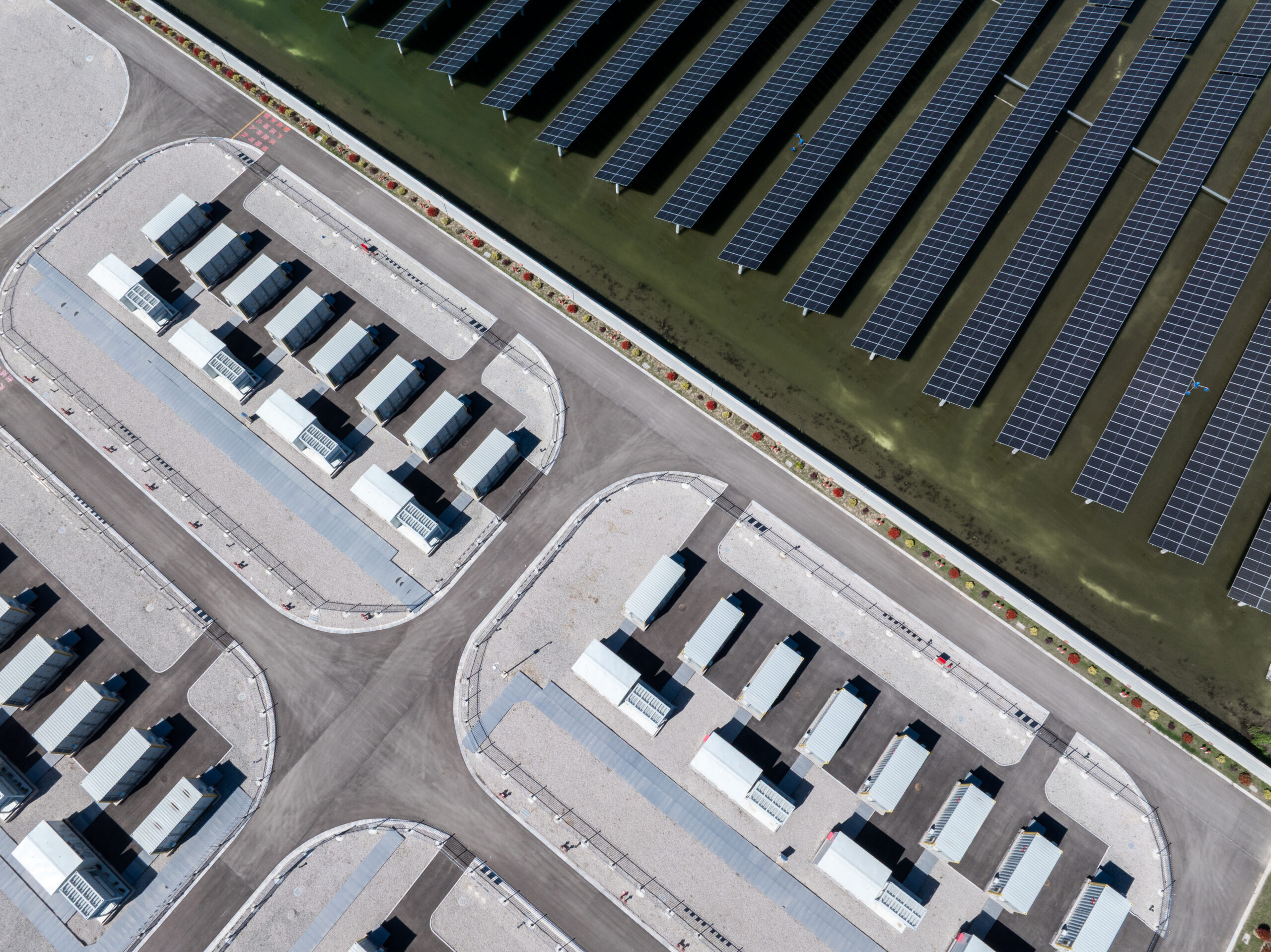
Battery energy storage system (BESS) projects are increasingly common in utility-scale renewable energy projects, and Kansas developers are pairing BESS projects with solar installations at a growing rate. But a property tax exemption issue is catching many of those developers off guard.
Under Kansas law, a BESS co-located with a solar facility may not qualify for the Commercial and Industrial Machinery and Equipment (CIME) exemption under Kansas Statutes Annotated (K.S.A.) 79-223—and the Kansas Department of Revenue issued guidance in November 2024 making clear that the stakes are real.[1] The distinction between a qualifying BESS and a non-qualifying one comes down to a factual, case-by-case determination, and getting it wrong can expose the BESS developer to taxation at the project’s full ad valorem rate.
The CIME Exemption Does Not Automatically Cover Co-Located BESS
The CIME exemption is a meaningful benefit for Kansas energy developers: it exempts commercial and industrial machinery and equipment from property tax. The problem is that K.S.A. 79-223(d)(2) expressly carves out “any electric generation facility or addition to an electric generation facility that is used predominately to produce and generate electricity utilizing renewable energy resources or technologies.”[2] That exclusion puts co-located BESS projects in a difficult position. If a county appraiser or the Kansas Board of Tax Appeals (BOTA) concludes that the BESS is a component of, or an addition to, the renewable generation facility—rather than a standalone system that is distinct and separate from it—the BESS does not qualify for the CIME exemption.
The determination is made using the three-part fixture test under K.S.A. 79-261, on a case-by-case basis by the county appraiser or BOTA.[3] The Department of Revenue’s guidance is clear that doubts about exemption eligibility are to be resolved against the exemption and in favor of taxation.[4] It is also worth noting that the 10-year property tax exemption available to solar facilities under K.S.A. 79-201(Eleventh) does not extend to a co-located BESS that is not considered part of the renewable generation facility, so developers cannot rely on the solar exemption as a fallback for the BESS either. The Kansas legislature has not yet enacted a dedicated co-located BESS exemption—and the 2026 legislative session confirmed that the gap is not about to close. HB 2083, which would have created a standalone property tax exemption for new energy storage systems and excluded them from the CIME exclusion, died in committee without becoming law. The current legal framework therefore offers developers little certainty and no easy answers.
The IRB Structure as an Alternative
For developers with a co-located BESS that may not qualify for the CIME exemption, an Industrial Revenue Bond (IRB) structure is a well-established alternative worth considering early in the development process.
Under an IRB structure, the county issues bonds on behalf of the developer—not backed by the county’s credit or taxing authority but repaid solely from project revenues. To facilitate the property tax abatement, the county holds nominal title to the project through a sale-leaseback or lease-leaseback arrangement, with the developer leasing the project back and making lease payments that service the bonds. A significant advantage of the IRB structure for co-located projects is that it can cover both the solar and BESS components together, sidestepping the CIME eligibility question. The structure requires county commission approval, public hearings, and negotiated documentation—including an indenture of trust, bond purchase agreement, ground lease, and deed, all prepared by bond counsel—and once finalized, the county notifies BOTA of the abatement, with annual filings required for the duration of the abatement period.
An additional benefit worth highlighting: the IRB structure provides a sales tax exemption on construction materials, which can represent meaningful savings on a project of this scale.
The Bottom Line for Kansas Developers
The key takeaway for Kansas developers is straightforward: be wary of assuming that a BESS co-located with a solar project qualifies for the CIME exemption without getting a clear answer first. The Department of Revenue has signaled that county appraisers should resolve any doubt against exemption, which means the default outcome for ambiguous co-located configurations is taxability, not exemption.[5] Developers who intend to co-locate a BESS with a solar facility in Kansas should evaluate the IRB structure early—before site control is executed and before project financing is structured—because restructuring after the fact can be costly and time-consuming.
Early engagement with tax and transaction counsel familiar with Kansas property tax law and with the applicable county is the most straightforward way to avoid a significant and avoidable surprise at the end of the development timeline.
[1] Kansas Department of Revenue, Division of Property Valuation, Memorandum: Renewable Energy Resources & Battery Energy Storage Systems (BESS) (Nov. 21, 2024) [hereinafter KS DOR Memo].
[2] K.S.A. 79-223(d)(2).
[3] KS DOR Memo, supra note 1; K.S.A. 79-261; see also Dodge City Coop. Exch. v. Bd. of Cty. Comm’rs of Gray Cty., 62 Kan. App. 2d 391 (2022) (holding that counties should give considerable weight to the taxpayer’s intent regarding annexation when determining whether property constitutes a fixture)
[4] KS DOR Memo, supra note 1; see also Farmers Co-op v. Kansas Bd. of Tax Appeals, 236 Kan. 632, 635, 694 P.2d 462 (1985) (“[A]ll doubts concerning exemption are to be resolved against the exemption in favor of taxation.”).
[5] KS DOR Memo, supra note 1; Farmers Co-op, supra note 4.