
As Omar Little of The Wire famously quipped, “When you come at the king, you best not miss.” It’s a very true saying—and an apt title for the third book by prosecutor turned bestselling author Elie Honig, When You Come at the King: Inside DOJ’s Pursuit of the President, from Nixon to Trump.
Special counsel Jack Smith investigated and prosecuted Donald Trump. But before either of Smith’s two cases could go to trial, Trump was reelected. Now Jack Smith finds himself under investigation—by the administration of a president who declared that Smith should be “considered mentally deranged” and “thrown out of the country.”
In the meantime, what will happen to the institution of the special counsel, during the administration of a president who is clearly not a fan? That’s one of many topics I tackled in my conversation with Elie Honig. We also discussed his journey from prosecution to punditry, highlights from his time as an assistant U.S. attorney, and how today’s Supreme Court might rule if asked to review the constitutionality of the Justice Department regulations that made Jack Smith’s investigation possible.
Thanks to Elie for joining me—and congratulations to him on his latest book.
Show Notes:
-
Elie Honig bio, Wikipedia
-
When You Come at the King: Inside DOJ’s Pursuit of the President, from Nixon to Trump, Amazon
Prefer reading to listening? For paid subscribers, a transcript of the entire episode appears below.
Sponsored by:

NexFirm helps Biglaw attorneys become founding partners. To learn more about how NexFirm can help you launch your firm, call 212-292-1000 or email careerdevelopment at nexfirm dot com.
Three quick notes about this transcript. First, it has been cleaned up from the audio in ways that don’t alter substance—e.g., by deleting verbal filler or adding a word here or there to clarify meaning. Second, my interviewee has not reviewed this transcript, and any transcription errors are mine. Third, because of length constraints, this newsletter may be truncated in email; to view the entire post, simply click on “View entire message” in your email app.
David Lat: Welcome to the Original Jurisdiction podcast. I’m your host, David Lat, author of a Substack newsletter about law and the legal profession also named Original Jurisdiction, which you can read and subscribe to at davidlat dot Substack dot com. You’re listening to the eighty-first episode of this podcast, recorded on Friday, September 12.
Thanks to this podcast’s sponsor, NexFirm. NexFirm helps Biglaw attorneys become founding partners. To learn more about how NexFirm can help you launch your firm, call 212-292-1000 or email careerdevelopment at nexfirm dot com. Want to know who the guest will be for the next Original Jurisdiction podcast? Follow NexFirm on LinkedIn for a preview.
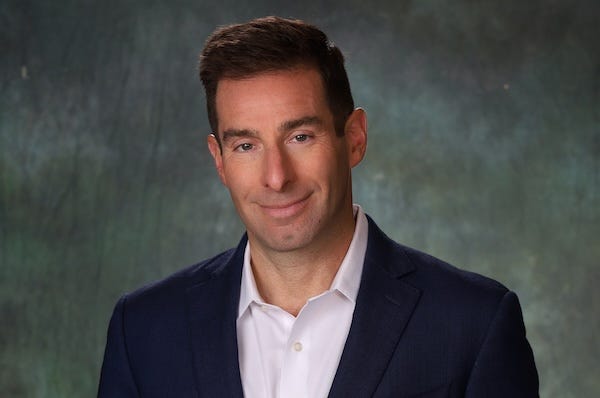
My guest today is a kindred spirit: Elie Honig. Like me, Elie is a federal prosecutor turned legal journalist and author. His latest book, When You Come at the King: Inside DOJ’s Pursuit of the President, from Nixon to Trump, was published on Tuesday, September 16—and it’s a work that Original Jurisdiction readers and listeners are sure to enjoy. It’s a history of the institution of the special counsel, covering some of the most important Justice Department investigations of the past fifty years, based on dozens of on-record interviews with firsthand participants. Anderson Cooper—Elie’s colleague at CNN, where Elie serves as senior legal analyst—praised When You Come at the King as a “fascinating, fast-paced insider’s account,” as well as a “riveting, deeply reported book.” And in our conversation, Elie shares with me some of his great reporting. Without further ado, here’s my conversation with Elie Honig.
Elie, thank you so much for joining me.
Elie Honig: Thanks for having me, David. Usually it’s the other way around—usually I have you on as my guest for Sirius—so now I’ll be receiving questions from you.
DL: Exactly. So we do share some things in common, besides both being podcasters. I believe that you, like me, grew up in New Jersey.
EH: Yes, I did. But I’m a South Jersey guy, so that’s kind of a different whole world than the rest of Jersey. So yes, we are both Jersey guys, and both former federal prosecutors.
DL: What town did you grow up in?
EH: I’m from Cherry Hill, New Jersey. And yes, that makes me both a graduate of Cherry Hill East and an Eagles, Phillies, Sixers, and Flyers fan, and there’s nothing I can do about it. It’s like a religion.
DL: I can totally relate; some of my in-laws are in that same camp. And in terms of your background, I believe you are the descendant of Holocaust survivors?
EH: I am. Both of my father’s parents were Holocaust survivors. They were both Polish Jews. I’ve written and done a bit of work about this. They lost their whole families, everything. They were basically the only survivors within their immediate and extended families. They were both refugees. People sometimes think, “Oh, the camps were liberated, and then I guess everything was back to normal.” There was no normal, and things still weren’t great.
So they met as refugees in Sweden in 1949, came to this country in 1950, had my dad in 1950, and I will say Jersey plays into this: they settled in New Jersey. My grandfather—who I’m named after, that’s how I have this sort of unusual name—died in 1960. So I never met him; it was when my dad was 10. And my dad grew up with a single mother with no education, no money, no family. And through the New Jersey public schools, my dad managed to get himself a good education and make a living for us—so it sort of ties back.
DL: Did any of that background spark your interest in law? Did you have any lawyers in the family? What led you to gravitate toward this field?
EH: Well, it’s funny, because my aforementioned father was a lawyer for a long time in New Jersey. Some people say, “Well, that must be why you wanted to be an attorney.” It’s the opposite. I have all the respect in the world for my dad, but I saw firsthand the grind.
He was either solo or he had a partner here or there, and he worked hard and he did well. But he had one of these offices that’s in a suburban house that zoned for business—you know what I’m talking about, in Jersey. And the first paying job I ever had was when the basement of his office flooded, and that’s where all the physical files were—this was before computer servers. And so I got paid to go in there and pick up all the moldy files out of the muck and reorganize them on the shelves and make an index. So I didn’t grow up with this rose-colored vision of, “Oh, it’s just L.A. Law or A Few Good Men.” I knew what it really meant.
Now, that said, I went to Rutgers, another New Jersey public school, and I got an internship with the Middlesex County, New Jersey Public Defender, and I went and started going into prisons and jails and courthouses. And something lit for me. I just thought, “This is what I want to do—oh yeah, this is it.”
DL: And is that what then inspired you to go to law school, to go to Harvard Law?
EH: For sure. So yeah, I do always like to brag that I went to New Jersey public schools all the way up through college, all through high school and college. And then yes, Harvard Law School—I did sell out and go private at that point. But given the miracle that I got in, I felt like I had no choice. But I knew pretty much from that point what I wanted to do. The main thing I did at Harvard Law School, activity-wise, was Harvard Defenders, where you could represent indigent people, once you were a second-year and beyond. And I did cases defending a guy who got in a fistfight with his cab driver in Dorchester and a medical student who was accused of theft and that kind of stuff. So I loved that experience.
DL: It’s interesting: you had this internship on the defense side, then in law school you did defense work, but you spent the bulk of your career as a prosecutor.
EH: Yeah. And look, I don’t just say this, I have equal respect for both sides—in fact, in a way I have more respect for defense lawyers. Because I’ll tell you, having been a prosecutor for 14 years, it’s harder to be a defense lawyer. The stakes are higher. You have a client, a human being sitting next to you. But look, being a prosecutor is, to put it bluntly, more fun. I thought it would be more fun, and it was very fun.
I wanted to work for the U.S. Department of Justice. I wanted to make cases against bad guys. And I got to do that at the S.D.N.Y. So it’s a little bit of an overly simplistic way to look at it, but that was certainly my mindset. And look, I was also cognizant of the fact that working at DOJ and being a prosecutor tends to be a springboard in a way that’s I think unique among legal jobs. So I was aware of that too. But I was all in as a prosecutor, no question.
DL: So when you were in law school, were you already thinking you wanted to work as a prosecutor afterward, or to the extent that you saw it as a springboard, were you thinking of political office or something like that?
EH: I was never really interested in running for political office. I’m allergic to asking people for money; I couldn’t beg my friends to donate. I knew pretty much early in law school what I wanted to be. I was surprised, when I got to law school, by how many people did not even want to be lawyers. A lot of them just wanted to go into finance or, at the time, dot-coms—now it’s whatever kind of startups. And even of the ones who wanted to be lawyers, a lot of them—especially at the time, I graduated law school in 2000—wanted to just go be corporate-side people. So a surprisingly small number of people in my law school experience were like, “I want to be in courtrooms.”
I knew I wanted to do it. I took a trial workshop at Harvard; I took Evidence. Those were probably my two favorite classes. And I knew pretty early on that I wanted to be at DOJ. And I’ll say—this will interest your audience—I got rejected a ton. I got rejected from the DOJ Honors Program. I got rejected from various U.S. attorney’s offices before I got hired at the S.D.N.Y. And my advice—I teach undergrads at Rutgers now, and I talk to law groups—is that you have to apply far and wide. Because if you want to work in the public sector, so much can depend just on things like, do they have a budget this year, or not? Or did 10 people leave last year, or did two people leave last year? So there’s plenty of rejection involved in this profession, no matter what you do.
DL: You didn’t go to DOJ Honors, which is the typical path for people who want to go into federal government service right after law school. Instead, I believe you went to Biglaw.
EH: Yes, Covington and Burling, which I think may now just call itself Covington. I asked someone there the other day, and they were a little unsure.
DL: What I always do is I scroll to the bottom of the law firm website, and that’s where their official name is. So I think it may still be Covington & Burling LLP, but everyone just calls it Covington.
EH: I’m convinced there was some PR or marketing firm that went around and was hired by all the law firms three years ago and told them, “Oh, you need to get down to one name.” But I had a great experience at Covington. Look, I was thrilled to start my career there, but I never intended to be someone who worked there my whole life. What a great experience, though. They taught me, first, how to write. And I got lucky there: they let me do a pro bono case, a death-penalty defense, which I spent hundreds and hundreds of hours on. They let me work with great clients. I did depositions. I met people.
In fact, Lanny Breuer—whom I interviewed for this book, because he was a White House lawyer during the Clinton saga—became a mentor of mine there. I had many mentors and friends. I just had a great experience. Again, when I speak to law student groups, I say, “Don’t be snobbish about starting at a big firm. It’s a great place to start your career. You make a lot of money. You can pay down your debts.” So I had nothing but a great experience at Covington.
DL: You mentioned Lanny. Of course, Covington has a renowned white-collar practice. Did you do a lot of white-collar work there?
EH: Yeah, that was a big part of what I did. One of the things I did with Lanny that we still sort of chuckle about is… I guess I won’t say too many details, but we represented a TV company, a production company that was making reality TV at the time. Now as you can imagine, they get sued, because people are doing stupid things on camera. They’re trying to block episodes from coming out. They’re suing for damages. Sometimes there’s dating stuff or drinking involved.
But what great experience that was. I would say I did half white-collar criminal defense and half “massive corporation suing massive corporation.”
DL: And were you working for Covington in New York or D.C.?
EH: I was based in D.C., but we would zip up to New York a good amount.
DL: And then after that is when you went to the S.D.N.Y., correct?
EH: Yes, exactly. And like I said, it wasn’t quite as linear as that, just because I got rejected. I wanted to work for Philly, for the Eastern District of Pennsylvania; they declined. I wanted to work for Brooklyn. I honestly didn’t even apply to S.D.N.Y. at first because I was under the misimpression—I was actually under the opposite of the correct impression—I thought you could get hired at the S.D.N.Y. only if you had already been a prosecutor either at Main Justice or with a DA or an AG’s office. It turns out it’s really the opposite: by and large, the way the S.D.N.Y. hires is by picking 28- to 32-year-olds out of the top firms.
DL: So what would you describe as some of the highlights of your time as a federal prosecutor in the Southern District?
EH: Well, I became chief of the organized crime unit, and so I did Mob cases. People ask, “Is it like The Sopranos?” Yeah, but real, and better in some instances. We did cases involving multiple murders. I did one case involving five separate murders and murder attempts. I did a case involving a guy who got shot nine times and lived. I did a case involving an individual who’d been gone, missing, for seven years, and we’d figured out from a cooperator where he was, and we dug up his corpse in the woods—incredibly exciting stuff like that.
I will say, though, the one thing I did that was really unusual and that I’m very proud of was a massive human-trafficking case where we arrested more than 30 people, mostly South Korean nationals, sometimes here illegally, sometimes here legally, but older South Korean men and women who were bringing in young South Korean women, not underage, but 20, 22, and lying to them. They were telling them, “We’ll get you into the U.S., and then you’ll owe us $10,000, but you’ll work in a restaurant or you’ll be a housekeeper or something.” They’d get here, and then what were they told? “Now you owe us $40,000, and you’re going to basically be a sex slave.”
So we did a series of search warrants—14 search warrants in one day—from North Carolina up to Rhode Island. And we found roughly 70 of these victims, locked in boiler rooms, not allowed to leave. A lot of what you do in the U.S. Attorney’s Office involves working off of pre-existing samples. “Hey, does anyone have a sample indictment for a Hobbs Act case?” This we had to make up; there was no sample. Human trafficking was still a relatively new thing. And three or four other AUSAs had begged off—it was too messy, too sprawling—and got reassigned. So I did that case with Lisa Zornberg, who later became criminal division chief of the S.D.N.Y. And we tried five of those defendants at the same time and convicted them all, and it got written up in The New York Times, actually—there was a good op-ed about it, I remember. It was a really hard case. It was one of those cases that was daunting, but worth it—incredibly distressing, but satisfying as well.
DL: How many years were you at S.D.N.Y. overall?
EH: I was at S.D.N.Y. eight and a half years, and then I went over to the New Jersey Attorney General’s office to become the director of the Division of Criminal Justice for five and a half years. So I worked as a prosecutor for 14 years and change, if you add it all up.
DL: And when you jumped over to this side of the Hudson, how did your portfolio change?
EH: It was a totally different job. I was only ever in a courtroom once, when I argued a case in the New Jersey Supreme Court. I went from duking it out in the courtroom every day to overseeing this agency with 550 people—prosecutors, detectives, support staff—and it was much more of a policy-based job and management job.
So in some ways it was more satisfying because you could do a lot. I was part of the team that instituted full-blown criminal-justice reform in New Jersey, which was very successful and went on to become a model. But I also technically had supervisory authority over every cop and prosecutor in the state—yes, the AG was above me—and the job could involve constant headaches and crap that you don’t have to worry about when you have the luxury being a fed, like all of a sudden you have to answer to the media.
DL: So you mentioned the media and dealing with them. When did you start to make your own forays into writing and journalism?
EH: This was all 100 percent unplanned. I never took a journalism course in my life. I left the New Jersey AG’s office after 14 years as a prosecutor, in 2018. And my thought was, “I’ll go teach at Rutgers, and I’ll take a breath.” My kids were 13 and 11 at the time. So I thought I’ll be more available for them, and I’ll take two years maybe, and then I’ll figure out what I want to do next.
Well, on day three of that, the Wednesday that I started, this was the summer of Robert Mueller, and every day it was front-page, A-block, all day. And so Mimi Rocah, who was one of my supervisors—you probably know her, she was the Westchester District Attorney—and Dan Goldman (who’s actually now in Congress), both my colleagues at the S.D.N.Y., they were both doing this. And they said, “We’ll give your name to some bookers with CNN and MSNBC.” And I started doing hits that summer, and I really enjoyed it. I cringe when I look back at those appearances, but they were okay enough that CNN eventually signed me. And I’m seven years in at CNN, and it’s all sort of flowed from that.
DL: So before we delve into your latest book, tell us about how you came to become a book writer—because this is actually your third book, I believe.
EH: Yeah. It happened by accident. I had a book agent briefly who tried to shop some ideas, and we got some nibbles, but nothing happened and it kind of went away. The way these three books happened was, five years ago, I got a DM from a stranger on Twitter, and I’ve quoted it, I think, in the acknowledgments of this book. And it basically said something to the effect of, “I see you on air. Would you be interested in writing a book about Bill Barr? P.S. I’m an editor, not an agent.”
Well, that was Eric Nelson, who’s an editor and a content guy for HarperCollins, and we’ve done all three books together. We keep our team nice and small. And the way it works with Eric is either he’ll pitch an idea to me or I’ll pitch an idea to him. And this one, for the new book—after I did two books in three years, I thought, “It’s going to be a while until my next one.” But when I had this idea—and Eric is not afraid to say no—but when I had this idea and I texted him, he said, “That’s it. Let’s go.” So this one just made so much sense, and it came together so well.
DL: So before we delve into that, one last biographical question: I have on good authority that you are one-half of a legal power couple.
EH: That is true. My wife was a colleague of yours at the D.N.J, Rachael Honig. She was the acting U.S. attorney for a year, for all of 2020. In fact, her first day in office was January 6th, 2021—fun fact. And the funny thing is—our kids are now 20 and 18, both in college—we decided when they were young to sort of tell them what we were doing (we wouldn’t tell them the horrifying stuff). They loved the stories. And we would explain, “Here’s what a trial is, when you have a bad guy,” and this and that.
I’m going to tell you this story, and I promise you it’s true—but the reason I say that is because it sounds like it’s pulled from a sitcom, but I swear to you it’s true. There were a lot of eyewitnesses. So one year at some family gathering, I don’t remember if it was Thanksgiving or what, but all of our families and in-laws were sitting around the table. And my wife, when my son was maybe five, my wife said, “Tell everyone what a trial is.” And he said, “A trial is when you don’t see mommy or daddy for a long time.”
DL: Oh my gosh, that’s great.
EH: Any lawyer I think just got stabbed in the heart, as I did, because you know what that feeling is. Your kids are young. You know the feeling.
DL: No, totally. But at least now you can laugh at it.
EH: But I should say he turned out fine. He’s okay. And he’s probably going to law school.
DL: That was what I was about to ask. Are either of your kids interested in law school?
EH: I think my son is destined for that (he’s starting his junior year), and my daughter is just starting her freshman year, but I put the over/under at 1.5 in terms of how many of them go to law school. So you can bet accordingly.
DL: So let’s turn to the book, which is great—congratulations.
EH: Thank you.
DL: It’s called When You Come at the King, and it’s about a very timely topic. So tell us, in a nutshell, what is the book about?
EH: Well, it’s a history of independent-counsel or special-counsel (the names varied over the years) investigations, really in earnest from Watergate on, although it does go back to Ulysses S. Grant. But I have individual chapters on everything from Watergate on, inside interviews with the players on those cases, the prosecutors, the defense lawyers, etc. So part of it is about telling those stories in a coherent way. But I also want to make the point that what’s happening right now with Donald Trump, and the way he’s dealing with accountability—whether special counsel specifically or accountability more generally—is different in kind from anything we’ve seen before. So it’s both a history and a forward-looking assessment.
DL: So you mentioned how you came up with the idea for this and pitched it to your editor. What gave you the idea? What inspired you?
EH: I will tell you exactly what it was. I read the George Stephanopoulos book, The Situation Room, which came out maybe a year ago or so—a great book. And the structure of it, I really did have this struck-by-lightning moment where I said, “Oh, so what Stephanopoulos does is he takes this important governmental institution—the White House Situation Room—and he tells our modern history through these chapters that have involved the Situation Room, from the Cuban Missile Crisis up through the stock-market crash”—I’m skipping things here—“up through 9/11 and then the hunt for bin Laden and then Covid.” And I thought, “Ooh, you know what that structure could also work for, right? The independent counsel or special counsel.” And so there’s a deep history chapter, but then there’s Watergate, Iran-Contra, Clinton and Ken Starr, and all the other ones too that have sort of been forgotten, like Mike Espy and Henry Cisneros. And then you get into the modern ones, right? Starting with Hillary Clinton and Jim Comey—who was not a special counsel, but we’ll talk about that—and then Scooter Libby, all the way up through Mueller and all the way up through the Biden investigations and Jack Smith.
And look, my advice to anyone who’s going to do a book is, definitely do it, but definitely don’t do it until you know damn well that you love your topic, because you are going to live with this thing. And the structure of this one really presented itself and flowed together so nicely.
DL: So you wrote very quickly by book standards, it seems to me.
EH: I did. I think about a year ago right now is when I started. I probably wrote it for six months, maybe seven months. I have a research team: I have three researchers, a couple of my former students from Rutgers who are now law students, and I have a fact-checker. But I write quickly—I write a weekly column for New York Magazine—and I spent way more time on this one pursuing and doing the interviews than just sort of writing my thoughts.
It took a lot of work writing it. But with some of the chapters, I knew where I wanted to go. With others I thought, “I don’t know,” and I would talk to the person and would go, “Okay, that’s the story here.” And I will tell you—look, my first book was a criticism of Bill Barr. We knew that was going to be the case. It’s called Hatchet Man. With this new book, I approached it like a juror. With every chapter, I said, “I don’t know.” In the end, some of these investigations got panned, and some I think I hold up as being well-done. But I tried to go into every one of them with a clear mind and hear from both sides, and the reader’s free to judge accordingly as well.
DL: The structure is very specific and very disciplined, because you have a set of criteria by which you evaluate the different special-counsel investigations of what you call the modern era—because as you discuss early on in the book, you could think of these three eras. There’s what you call the “wild west.” There was the “independent-counsel era” under the now, I guess, no longer re-upped statute. And then now we have this “special-counsel era,” which you focus on.
So there’s a ton of original reporting in the book, which I think people will really enjoy. And it even opens with kind of a crazy story, in light of all the classified-document stuff of recent years, involving a Watergate prosecutor who was keeping documents in a cardboard box in her attic, which doesn’t sound like best practices today.
But let me ask you—you spoke to many, many alumni of special-counsel investigations—do you have a favorite anecdote or two, or a fun fact that hadn’t previously come to light? Just give us a flavor of some of this great reporting.
EH: Well, one of my favorite moments is—and Jill Wine-Banks is the prosecutor you’re referring to, who gives me that opening story about how she was storing Watergate documents in a cardboard box. And she says to me essentially what you said, “I don’t know in retrospect that it was really the best idea, but we felt like….”
DL: She got burglarized!
EH: Yeah, she got burglarized. The burglars didn’t take the box, but she was terrified; that was her first thought. And she was worried. They were worried that Nixon’s goons were going to ransack the office and take over. But I spoke with Jill and with Jim Quarles. Now, Jim was a 26-year-old on the Watergate team, and 40-some years later, he’s on the Mueller team. And Jim had a great line. He said, “I was too young for Watergate, and too old for Mueller.”
But they both told me what happened in that office the Sunday morning after the Saturday Night Massacre. For Jill, it was the only day she had gotten off in weeks. She was at a wedding in New York, and someone hands her a piece of paper that Saturday night saying, “The office has been seized by the FBI, return immediately.” But that next morning, they’re all sitting there, the prosecutors—they know Archibald Cox has been fired, they know the AG and deputy AG have resigned, they don’t actually know what their own status is. In fact, The New York Times wrongly reported that they’d all been fired.
Well, they told me what happened. They have this moment where Archie Cox comes in, he’s been fired. He’s their hero and their leader. And he says—I’m paraphrasing, but I have the quote in the book—he says something to them like, “Don’t give him what he wants. You stay here and finish this work.” And that’s what they did. It took some political maneuvering, but they did. So I love getting inside the action.
I’ll tell you another moment that I love from inside the action. I talked to a guy named Sol Wisenberg, who was Ken Starr’s number two, essentially. Of course, Ken Starr passed away a couple of years ago. And I talked to David Kendall—who was, and still is to this day, the Clintons’ lawyer—and Lanny Breuer.
We talked about the famous grand-jury testimony that Bill Clinton gave from the White House. We’ve all seen the video, right? Both men were sitting across the table, and I caught their back-and-forth about what went down. And Sol Wisenberg, whom I interviewed, is the one who asked Bill Clinton the question that prompted the answer, “It depends on what the meaning of is is.” And I asked Sol, “How did you feel when you got that answer?” And he was so candid. He goes—he was Texan, so I’m going to do a bad Texas accent here—he goes, “I’m going to tell you the truth, Elie. Up to that point, he was kicking our ass. We were three and a half hours into this four-hour questioning”—they had agreed on four hours—“and we hadn’t laid a glove on him.” And David Kendall told me the same thing: “Bill—the president—was in control. He was doing all his set pieces. He was running out the clock. We were thrilled. And then he goes, ‘It depends on what the meaning of is is.’”
And Sol said, “At that moment, I knew that would be the only thing that anyone would remember.” He goes, “There was video with it. And if you look at the way he looks”—he asked if I had looked at the video, I said, “Sol, I watched it 10,000 times, in slow-mo”—he goes, “The look that he gives… it that was a jury trial, I would’ve turned to the jury like, ‘Do you believe this guy?’” And that’s the moment that lives on. So I got a lot of inside stuff like that, which I love—you’re inside the prosecutor’s office, you’re inside the courtroom—and there’s a lot of that in the book.
DL: Are you the managing partner of a boutique or midsize firm? If so, you know that your most important job is attracting and retaining top talent. It’s not easy, especially if your benefits don’t match up well with those of Biglaw firms or if your HR process feels “small time.” NexFirm has created an onboarding and benefits experience that rivals an Am Law 100 firm, so you can compete for the best talent at a price your firm can afford. Want to learn more? Contact NexFirm at 212-292-1002 or email betterbenefits at nexfirm dot com.
So tell us about some of the inside stuff you got on the Jack Smith investigation. I think that is really what’s going to resonate with a lot of people, because it’s pretty recent.
EH: Yeah, it’s very recent. That chapter opens with the sentence, “Jack Smith never had a chance.” And I make the argument that, given how much time elapsed before Jack Smith’s appointment in November of 2022, there was no realistic way—especially considering the obvious need to deal with immunity, which I talk about in the book also—there was no way he was going to be able to try his cases before the 2024 election, try as he did.
I got inside accounts of the meeting that happened between Jack Smith and Donald Trump’s legal team three days before the indictment came down, and I lay out the exact legal arguments that they made for Jack Smith. In fact, Jack Smith was kind of surprised. It seemed as if he was expecting to get Trumpian bluster, like, “This is political, and you’ll all rot in hell.” And instead, his lawyers go in there and they make constitutional arguments about how First Amendment speech is protected, and you don’t want to use an aggressive new theory of charging in the January 6th case, in particular. And he was sort of taken aback by that. And he didn’t say anything the whole way. Look, I’ve done a lot of proffers where I already had my mind made up as a prosecutor, and it’s pretty clear that was where Jack Smith was at in that moment. But that’s the way it went down in there.
And the funny thing is Jack Smith didn’t say a word through the whole presentation. He gave them whatever time they wanted. And on the way out, he just said to them, “Well, I wasn’t expecting that”—meaning, “I wasn’t expecting an actual legal presentation”—even though they obviously did not persuade him. And it’s interesting because the defense lawyers didn’t like the fact that he had a security detail with him. They basically said to me, “Look, we’re lawyers; we’re members of the bar. We went through the magnetometers to get into that office. He didn’t need to be surrounded by security.” So I don’t know; I can see it both ways. I get it. This is separate from FBI agents who would normally be there taking notes. So they felt he was a bit imperious.
And look, from a political point of view, Trump’s lawyers said Smith was the best thing that happened to us. They said they believed he was so over the top in the way he went about the case. The quote in the book from one of Trump’s lawyers, John Lauro, is something like, “From a political point of view, from a perspective of reinvigorating Donald Trump’s campaign, we couldn’t have done better if they had chosen Darth Vader.” But I also dig into Jack Smith’s background in the book, and I have people who defend him, and I have people who criticize him, and I think there are fair cases to be made either way.
DL: You talk about how you felt Smith didn’t have a chance. You talk about the difficult position he was in. You lay some blame at the feet of Merrick Garland.
EH: Oh yes, for sure. There’s one line in this book where I quote myself from my last book, and I felt weird doing it, but I had to. I wrote my last book in 2022, before any of the Trump indictments had landed, but we knew they were coming. And I wrote—it’s a quote from Searching for Bobby Fischer, the great movie about a child chess prodigy—“you’ve already lost, you just don’t know it yet.” And I wrote that to Merrick Garland in 2022.
And look, there’s all sorts of speculation about why—why did he wait so long? There are theories; I explore some of them in the book. There’s extensive reporting now, which I referenced, from The Washington Post, New York Times, CNN, that Garland was not engaging in a meaningful way with Donald Trump as a subject or a target until at least a year and a half in. I know enough about federal practice. And I also said, in the prior book, they’re going to have to deal with immunity, one way or another. As much as Jack Smith tried to floor the accelerator, at times in ways that I think were not appropriate, there was no way he was ever going to get this thing tried before November of 2024.
DL: So the book, as we were discussing, consists of your going through the six special-counsel investigations of the modern era—the era we’re in now. Of the six, which do you believe was most successful and why?
EH: Okay, so the six are the five recent ones that I think everyone will remember, which you and I have covered: Mueller; John Durham, the guy with the goatee who investigated the Russia investigators; the Hunter Biden case; the Joe Biden case (I talked to Joe Biden’s lawyer, Bob Bauer, whom you probably know); and the Trump cases. Those are five. And then the sixth, with an asterisk, is the Pat Fitzgerald investigation that led to the Scooter Libby indictment. I say “with an asterisk” because Jim Comey, who appointed him, sort of played games, as Jim Comey will do, and said, “You’re kind of special counsel, but not really, but you kind of are.” So technically, maybe not.
But of those six… Jack Smith has to get a grade of just “incomplete”; he just didn’t have a chance to finish. So I’m going to put him to the side. I think Durham gets an F, and I think the Hunter Biden case gets a D-minus for reasons we can get into. But I think Mueller—and I go in-depth with several members of his team, who defended his sort of refusal to state a definitive “I find that there’s a crime here,” which you can criticize or you can support—I think, by and large, Mueller’s investigation was astonishing in its depth and thoroughness and accuracy, and really important. So I ultimately think Mueller did a good job. I put him on the positive side of the ledger.
Same with Robert Hur. I think Robert Hur grades out well. He used discretion. I think he actually was closer to recommending a charge on Joe Biden than people may realize. Joe Biden did knowingly possess classified documents, but I also think it was appropriate not to charge. He took a lot of heat for saying, “Joe Biden’s an elderly man with a faulty memory.” We talk about that in the book. I get Joe Biden’s lawyer’s take on that, which is actually pretty interesting. But I think Hur, by and large, did a quite good, effective job.
And I think Pat Fitzgerald did a very good job. Fitzgerald charged, tried, and convicted Scooter Libby. I have great inside-the-courtroom trial stories of that. He was very close—and I talk about this in the book—he was very close, razor’s edge, on Karl Rove, but decided, in an exercise of discretion, not to charge Karl Rove. He wasn’t trying to do Karl Rove any favors; he just didn’t think the proof was quite there. So I think Fitzgerald grades out well as well. I don’t know that I can crown a champion among that group, but I think three of them were successful; one was incomplete, Jack Smith; and two were failures.
DL: You have some strong views on Jim Comey. Maybe you can share some of that.
EH: Oh yes. And by the way, I should say that everyone in the book who has any negativity in their portrayal, I asked everyone to speak with me—but Jim Comey, declined because we all know how shy Jim Comey is about media. God forbid, you can’t get him to talk. I don’t know Jim Comey, I should say; I started at S.D.N.Y. maybe six months or so after he left. I’ve met him and chatted with him in green rooms—he’s a nice guy—but I don’t know him in any real way.
I use Jim Comey’s handling of the Hillary Clinton email situation as the best possible example for why we do need special counsel, because they did not choose to appoint special counsel there. So Loretta Lynch takes some criticism here, too. She was the attorney general. Arguably, there’s already a conflict, because you’re investigating the Democratic Party’s leading candidate, Hillary Clinton, a person who had been in this administration as secretary of state. Arguably they should have appointed special counsel right away; they didn’t. Okay, I can live with that. Then they have the tarmac meeting, involving Bill Clinton’s airplane. Both Bill Clinton and Loretta Lynch say they didn’t discuss the case, and I believe them. But Loretta Lynch herself said that that meeting cast—and I quote Loretta Lynch—“a dark shadow over the case.”
Now, at this point, Loretta Lynch has two good options. Option one, just recuse yourself. You know who her deputy was? Sally Yates, who could have done it. So (a) recuse yourself—we’ve seen Jeff Sessions recuse himself appropriately, we’ve seen other various appropriate recusals—or (b) appoint special counsel, and then at least we’ll have an outsider, a respected outsider. They’ll have some guidelines, rules, restraints, and requirements.
But instead, what Lynch said is, “Well, I’m not going to recuse myself, I’m not going to appoint a special counsel”—although I do report that they did consider it at some point—“and instead I’m going to defer to the FBI.” What happens scientifically when you create a power vacuum and say to Jim Comey, “now you get to decide”? He’s going to fill the power vacuum. And he proceeds to basically run wild. He calls his initial press conference, and he doesn’t even tell Loretta Lynch and Sally Yates, his superiors on the org chart, until that morning, when he tells them, “Hey, I’m doing a presser today.” And they’re like, “Okay.” And he won’t tell them what he’s going to say.
And then he compounds it with his second announcement, which is 11 days before the election. And look, this is not a novel position; he’s been criticized since by AGs of both parties, including Eric Holder, a Democrat, including Alberto Gonzales, a moderate conservative, including Michael Mukasey, also a moderate conservative. And I think that’s a great example for why, if you just ad lib it, if you just “Comey it,” if you just make it up and do whatever suits you in the moment, you’re going to run into problems.
Somebody said to me—I think it was Rod Rosenstein, who I talked to for the book—somebody said to me, “The rules are made for the hard cases.” It’s easy to apply the rules where there’s no conflict. But the reason we have these rules is because we need to apply them to the tough cases. And by the way, they’re also there to protect you, Mr. Prosecutor, Madam Prosecutor. So I think that whenever we think about whether we should get rid of this system, it’s easy to go, “Ah, it’s all broken. Get rid of it.” But we should think back to what happened there.
DL: So it’s interesting: you were able to finalize your manuscript after the reelection of Donald Trump. Near the end of the book, you describe the practical outlook for the institution of the special counsel as “bleak.” So is the special counsel as an institution going into hibernation for the next three-plus years? You also raise the prospect of whether it could be weaponized against Trump opponents. What do you think is going to happen?
EH: Yeah. I guess I would say a coma, for sure, for the next three and a half years. Look, we have to be realistic. It’s a miracle, I write in the book, that Mueller happened. Mueller was appointed by Rod Rosenstein, but during Trump’s presidency. Nobody would dare broach that now. And so I think we need to be clear that we are in this period where the only possible way that they’re going to use special counsel is to go after a Jack Smith, to go after a Letitia James, someone like that. Although they seem to prefer this weaponization working group—because again, like Jim Comey, now you don’t have any rules. You don’t have these requirements, reporting requirements, all of that.
The pitch that I make in the last chapter of the book is that whoever becomes president next is going to find that a lot of norms, guardrails, and traditions are gone, kicked down by Donald Trump. And it’s going to be tempting for whoever that person is that comes next to leave them down. What president wants ethics rules and inspectors general and special counsels and restrictions on private profits? But this has to come back. There are ways we can improve it, and I suggest some tweaks that we can make—every 25 years or so, we do tend to revise our system, so we’re about due—but this is too important to just say, “This won’t exist anymore. We’re just going to handle this in the ordinary course.”
I quote Archibald Cox toward the end of the book. A couple weeks after he was fired in the Saturday Night Massacre, he said to the Senate something like, “Our human history has taught us that any time we get into these investigations of the commander-in-chief, we will reach for some sort of outside prosecutor. It’s the best way to do it. It’s never going to be pretty. There’s never going to be unanimity. But it’s the best way we know how to do it.” So I do argue that this is an institution that needs to be maintained and restored.
DL: So about the future of the institution, let me ask you this. You talk in the book a fair amount about constitutional concerns with the institution of the special counsel, and of course you discuss the Supreme Court’s immunity decision in Trump v. United States. Now, your manuscript went to press very quickly, but I’m guessing you finished it before a series of very recent Supreme Court emergency/shadow docket cases that have a very “unitary executive” flavor to them.
And you talk about Morrison v. Olson and, of course, Justice Scalia’s dissent in Morrison v. Olson, which is this great rallying cry for some of the conservatives who are on the Supreme Court today. So do you have any thoughts on how the current Supreme Court, which takes a very robust view of executive power, would rule on the constitutionality of the current incarnation of the special counsel? As you discuss in the book, Judge Aileen Cannon found some problems, and I would not be shocked if there are some justices up there—such as Justice Thomas, who I think is already on record on this—who agree with Judge Cannon.
EH: That’s a great question. So first of all, I do break down the immunity decision in the book, and I do talk about where the limits might be. Separately, there’s a really interesting constitutional history in the book. First of all, there was a challenge to the Watergate prosecutors, which they survived. But then under the independent-counsel regime, we had this case, Morrison v. Olson, which was 8-1, and the one dissent was Antonin Scalia. Even Rehnquist was on the other side of saying it’s constitutional; the one person who said “unconstitutional” was Antonin Scalia. It’s now known as this great dissent, especially in Federalist Society and conservative circles, and it’s gained traction.
And Scalia basically said, “We cannot have this politically unaccountable, essentially fourth branch of government, with no political accountability.” And Scalia’s opinion has definitely gained currency. So first of all, I think Cannon cited it in declaring the entire special-counsel regime unconstitutional. Now, we never got beyond that point; the appeal was pending in the circuit when Trump won, and everything got dismissed. So we’ll never know. But Clarence Thomas, in a concurrence in the immunity case, went out of his way to basically say, “Also, I just want to say I think this whole special-counsel thing is unconstitutional.” So that’s one vote for overturning the whole regime. I’m generalizing here, but conservatives and Federalist Society folks have long been suspicious of this investment of power in somebody who’s not presidentially nominated and Senate confirmed. And if it were to make its way to the U.S. Supreme Court, it wouldn’t shock me if we saw a 6-3 or maybe 5-4 opinion saying that the whole special-counsel regime as currently constituted is unconstitutional.
Part of what I suggest at the end is that what we really need is a statutory fix here. We need the creation of a position that is presidentially nominated and Senate-confirmed. Now, is the current Congress going to do that? No. But I’m writing for the future here. But it is interesting to see even Abbe Lowell, who’s generally a Democratic interest lawyer, saying, “Look, I think Scalia had a good point.” The great Scalia quote is to the effect of a wolf hanging on the flank of the elk—you have this one predator and there’s your prey, so go get it. And that’s a problem.
DL: Yep, exactly. So before we go to my speed round of four final questions—you alluded to this earlier—at the end of the book, you outline seven changes to the special-counsel system. Now, they are largely statutory changes, so if there’s a constitutional problem, that might override the statutory changes. But can you share maybe one or two of some of your most important proposals?
EH: Yeah. Well, what I say is that ideally these would be statutory, but if not, the DOJ can do most of what I suggest by regulation. So part of it would be I would want ideally a presidentially nominated, Senate-confirmed position. I also think that there should be a semi-permanent special counsel. I didn’t invent that, by the way; there’s a great Georgetown Law journal article by Noel Hillman, who’s a retired prosecutor and federal judge, and I credit Judge Hillman. It would be roughly akin to the FBI director, in that it would be a set term of years, five years. So it would cross over and transcend one presidential administration to another.
You would sort of minimize that “blinders” problem, that wolf-on-the-flank-of-the-elk problem—like Ken Starr, obsessed with Bill Clinton, and some would argue, like Jack Smith obsessed with Donald Trump. But here you would have a broader range of subjects, presumably. At times, they might have nothing to do; I haven’t really thought about how they’re going to deal with those situations. But this person would have a permanent staff, support staff, lawyers. It would be akin to, and it could even be located within, DOJ’s Public Integrity Section.
I would want to maintain that separation and independence, a direct line of reporting to the AG. There need to be stronger protections against this person being fired. I actually argue in the book that we need to vet any person who might sit on that team for political bias. Now, look, when I was applying for a normal DOJ job, I was not asked, and it would not have been appropriate to ask you or me, David, “What’s your political affiliation?” I think people who want to work on these special-counsel teams shouldn’t be asked, “What are your political views?” But there should be two questions: “Have you donated to any political party, and have you made public statements for or against?” Because there were certain people, especially on Mueller’s team, who had made public comments or made extensive donations, and I do think that can undermine public confidence. I think the team did a great job, but it gave the public reason to say, “Why should we trust some of these folks?”
So look, I don’t purport to have a magic ring here to solve everything. But I do think the system, by and large, as it’s been constituted, is sound. And I think it’s been 25, 26 years, so I think there are some upgrades we can make based on recent experience.
DL: I think a lot of your proposals are very much worth considering. But as you alluded to, it’s a matter of political will, and that may be lacking.
Turning to my speed round, these are four questions that are the same for all my guests. And my first question is, what do you like the least about the law? And this can either be the practice of law or law as a more abstract system.
EH: Okay, two things, if I may. Number one is that it’s time for cameras in all the courtrooms. If you would’ve asked me this when I was a prosecutor, I would’ve said no, I don’t want it; I don’t want grandstanding. Now I’m in the media, so maybe it’s just because of my self-interest, but isn’t it silly that we have a system where one of our bedrock principles is a speedy and public trial, and we have the technology to let everyone watch or at least listen to these things, and we, at least in the federal courts, refuse to do it? At least let us livestream the audio. The courts of appeals now, I think, all do. I’ve definitely listened to several courts of appeals arguments. The Supreme Court only went to audio during Covid, and some were like, “Oh no!” And guess what? The sky didn’t fall. On CNN, we will play a live audio argument of this stuff. So that’s number one.
Number two is jury instructions. So having sat through a lot of jury instructions, it is lunacy to think that jurors are going to hear 40, 60, 80, whatever, pages of legal instruction, and the idea is to explain it in lay terms, but it’s still packed with legalese. And some courts don’t even send the written jury instructions back into the jury room with the jurors. It’s nuts. So look, you have to have jury instructions, and I would love to see them written with much more of a non-legalese voice. But the courts that don’t let jurors take the instructions back…. I think, I may be wrong, but I think that in the Trump Manhattan DA trial, the jurors were not allowed to take the instructions back with them. That’s utter lunacy. So those two things get under my skin, and I would like them to change.
DL: I am totally with you on both. My second question is, what would you be if you were not a lawyer—and, in your case, also not an author and not a legal journalist?
EH: Okay, good. I was going to say, because I also teach at Rutgers, I was going to say teacher, but that’s a cop-out. I would love to be a cook or a chef. When I was growing up, my main jobs as a teenager were dishwasher and waiter. I was a cook in a large summer-camp kitchen, with 500 people a day, and I worked for catering. And now I’m a good, amateur home chef; I do it by trial and error, and I’ve gotten pretty good. I actually don’t think I could survive in that world—I think it’s way too stressful and competitive—so of course, we’re in the legal world. But in my fantasy world, that’s what I would do. I would be maybe a cook, more than a chef—let’s call it a cook.
DL: Okay, fair enough. My third question, is how much sleep do you get each night?
EH: I’m pretty religious about my sleep. I go to bed at a comedically early hour. My kids laugh at me. If I’m not on air—a lot of times I’m on air for the 8:30 or the 9:00 p.m. show, or the 8:00 or the 9:00 p.m. show, so I won’t get home until 10:00 p.m. or whatever—but on a nice Sunday night, I am in bed by 8:30 p.m. Now I’m an early riser too, but I’m pretty religious about getting six, seven, eight hours a night. I don’t negotiate on that.
DL: Okay, good. I am, again, totally with you. My last question is, any final words of wisdom, such as career advice or life advice, for my listeners?
EH: So if you are a law student and you’re thinking about going into the public sector, please do it. Please do. You’re not going to make as much money as you would otherwise, but trust me, you will be repaid in many other ways and for years to come. I know it’s a little bit cliché, but that’s my main piece of advice. I love it. Look, I teach these undergrads now—I’ve been doing it six, seven years—and I see them come through law school now, and it’s the greatest feeling on earth when, it just happened, one of them just got a job with the Manhattan DA, one of them just got hired by the AG’s office. One of them just got hired by a legal-services organization. It makes me so proud that they go into public service.
We used to say, sometimes, that one of the best things about being a prosecutor is the clichés are true. And I do feel that way about public service—on the defense side, on the prosecution side, or even if it’s not criminal. So take a few years, when you’re young, you don’t have kids yet, you’re fine—go do something meaningful for a few years.
DL: In general, I agree with you, but let me just ask you, because it’s a very germane topic: what about federal service under the current administration?
EH: So my first piece of advice is, let’s do a careful analysis of what job you’re looking at. If the deal is, “I got a job offer at the District of Kentucky as an incoming AUSA,” take it. But if it’s like, “I’m going to go work for the Public Integrity Section at Main Justice,” we’ve got to talk, and you have to be realistic about what it’s going to mean.
I will tell you, somebody whom I mentor just got a job offer with the DOJ Pardon Office, run by Ed Martin. And I said, “Just read what I’ve written about Ed Martin.” And look, let’s be real: Donald Trump’s not going to be using the Pardon Office. So I think you have to be realistic. And jobs that formerly would’ve been, “of course you take that job, and you don’t even think about it”—now, you have to think about. But it doesn’t apply to… I wouldn’t say avoid DOJ entirely. By and large, the U.S. attorney’s office jobs are still going to be the same as when you or I did it, I think. But yes, I do think that’s a relevant consideration; you have to think about reality as well.
DL: Thank you so much, Elie. I have really enjoyed this conversation, and congratulations again on the book.
EH: Thank you so much, David. This was a blast. I appreciate it.
DL: Thanks so much to Elie for joining me, and congratulations to him on the publication of When You Come at the King. If you’re interested in the intersection of law and politics—and I know many of you are—you should definitely check it out.
Thanks to NexFirm for sponsoring the Original Jurisdiction podcast. NexFirm has helped many attorneys to leave Biglaw and launch firms of their own. To explore this opportunity, please contact NexFirm at 212-292-1000 or email careerdevelopment at nexfirm dot com to learn more.
Thanks to Tommy Harron, my sound engineer here at Original Jurisdiction, and thanks to you, my listeners and readers. To connect with me, please email me at davidlat at Substack dot com, or find me on Twitter, Facebook, and LinkedIn, at davidlat, and on Instagram and Threads at davidbenjaminlat.
If you enjoyed today’s episode, please rate, review, and subscribe. Please subscribe to the Original Jurisdiction newsletter if you don’t already, over at davidlat dot substack dot com. This podcast is free, but it’s made possible by paid subscriptions to the newsletter.
The next episode should appear on or about Wednesday, October 1. Until then, may your thinking be original and your jurisdiction free of defects.