
The following is a guest post by Arrington Crilly, a former intern with the Creative Digital Projects program of the Law Library of Congress. She is an alumna of UNC Greensboro, where she currently works and where she earned her B.A. in history and M.L.I.S.
The United States Bureau of Indian Affairs currently recognizes 574 separate Tribal entities throughout the 48 contiguous states and Alaska. Each of these sovereign entities takes its own approach to internal affairs, policies, and codes. These may be outlined in their constitutions, some of which can be read in the Indigenous Law Web Archive and the Native American Constitutions and Legal Materials collection. Many of these policies also reflect key aspects of their respective constitutions. Today, we will examine some of the codes and Constitution of the Yurok Tribe in California.
Tobacco restriction is one topic that has drawn the attention and activism of the Yurok. The Chairman of the Yurok Tribe, Joseph L. James, is quoted as saying, “This ordinance seeks to eliminate exposure to dangerous secondhand cigarette smoke in all tribal spaces….” This move was applauded by the Health and Social Policy Institute as well as the CEO of the United Indian Health Services Tribal Public Health Program. This ordinance not only limits commercial tobacco use “near areas frequented by school-age children,” but it also introduced “[r]igorous regulations on litter aimed at reducing tobacco-related waste,” which reflects both health and ecological considerations in its legislation. Within the Tribal Code, the Yurok indicate several specific ordinances for tobacco use and restrictions “in specified indoor areas,” “specified outdoor areas,” with “[r]easonable distance” requirements, and “[o]ther requirements and prohibitions.” It is important to note that these prohibitions are for commercial use outside of “traditional tobacco use,” which is indicated in these ordinances and defined further in the tribal code.
We can observe a different history on the federal level. In 2000, the Supreme Court ruled that the Federal Food, Drug, and Cosmetic Act (52 Stat. 1040) from 1938 did not grant the Food and Drug Administration authority for regulating tobacco products until the passing of the Family Smoking Prevention and Tobacco Control Act (H.R. 1256), which superseded that law. President Bill Clinton also took a step toward “Protecting Federal Employees and the Public From Exposure to Tobacco Smoke in the Federal Workplace” with Executive Order 13058. H.R. 1865 also took another step in federal regulation by increasing the minimum age to purchase tobacco and related products to 21. Through legislative actions, sovereign entities like the Yurok and the United States have addressed public health considerations, albeit differently.
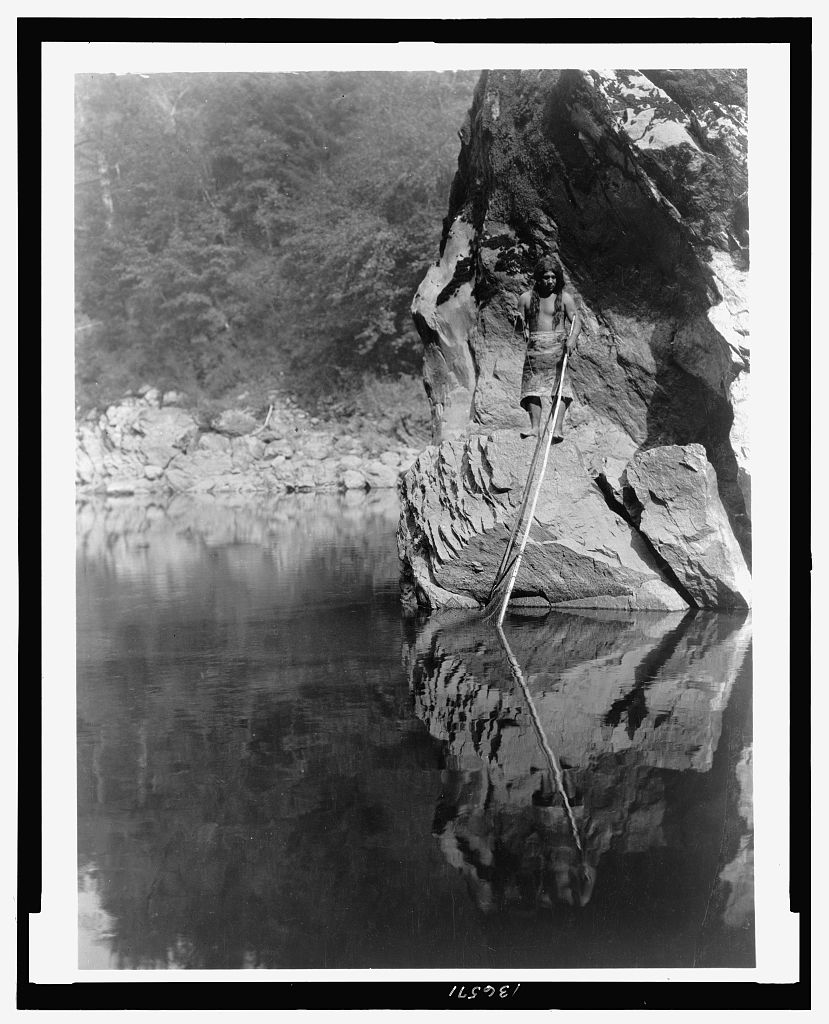
The Yurok have also been active regarding conserving natural resources, like the Heyhl-Keek ‘We-Roy (also called the Klamath River), whose path runs from Oregon into California. These efforts also align with legislation in the United States, whose national consideration for the conservation of fish and fisheries dates back to a joint resolution of Congress on February 9, 1871 (16 Stat. 593 [No. 22]) in which the position of Commissioner of Fish and Fisheries was established. This position would be appointed out of current government employees or civil officers, with no additional pay, but was required to have “proved scientific and practical acquaintance with the fishes of the coast.” Though this position and mission would eventually grow and evolve into the U.S. Fish and Wildlife Service as we know it today, their initial purpose was “to study why the nation’s food fishes were decreasing and recommend ways to reverse that decline.” It is important to note that there is a long legislative history between the United States and indigenous tribes concerning hunting, fishing, and access rights to rivers and wildlife on indigenous land, like 25 C.F.R. 258 (1978), which refers to the Klamath River, or President Franklin D. Roosevelt’s Executive Order which established the Klamath Lake Reservation (Executive Order No. 8475; 5 Fed. Reg. 2541 (July 12, 1940).)
Looking back to the Yurok, in their constitution, they express their intentions toward the management of fish resources, as well as other wildlife: “We pray for the health of all the animals, and prudently harvest and manage the great salmon runs and herds of deer and elk. We [sic] never waste and use every bit of the salmon, deer, elk, sturgeon, eels, seaweed, mussels, candlefish, otters, sea lions, seals, whales, and other ocean and river animals.” Yurok author Che-na-wah-Weitch-ah-wah (also known as Lucy Thompson) touches on these ecological concerns in her book “To the American Indian: Reminiscences of a Yurok Woman.” The Yurok highlight these issues and celebrate successes regarding them in their Annual Klamath Salmon Festival. In 2022, this festival also celebrated the “recent reintroduction of the Prey-go-neesh (California condor) in Yurok Country and the pending removal of the Klamath dams.” The Yurok Fisheries Department is also enacting a revegetation project to “strengthen habitat to support struggling native fish stocks, such as fall Chinook salmon, ESA-listed spring Chinook and coho salmon, steelhead trout and Pacific lamprey.” In addition to benefiting the fish populations, they have also identified benefits to “240 vertebrate species, ranging from river otters to ring-tailed cats.” In all, this project’s objectives include:
- “Establish interconnected, biologically diverse and resilient ecosystems that support robust salmon runs before the dams.
- Create year-round habitat for native fish, mammals, birds, amphibians, reptiles, and insects.
- Encourage environmental complexity to enhance culturally invaluable salmon, steelhead, and Pacific lamprey stocks.
- Stabilize several feet of fine silt trapped behind the dams for the last 57 to 106 years.”
For additional information about this effort and other initiatives, check out the Yurok Tribal News. For those interested in researching the Klamath River in U.S. legislation, you can consult various legislative documents in our collections. Similar efforts from the United States may be found through the National Wild and Scenic Rivers System, which partners with the Bureau of Land Management, National Park Service: Wild and Scenic Rivers Program, U.S. Fish & Wildlife Service, U.S. Forest Service, and the River Management Society. The Yurok and the United States are not the only nations to enact policies and legislation to protect or conserve fish resources.
For additional reading related to the information in this blog, check out these blogs and collections.
- Grizzly Bears and the Endangered Species Act
- Treaty and Fishing Rights Activist Billy Frank: The Fish Wars
- Nation to Nation: Treaties Between the United States and American Indian Nations: An Exhibit
- American Indian Law: A Beginner’s Guide
Subscribe to In Custodia Legis – it’s free! – to receive interesting posts drawn from the Law Library of Congress’s vast collections and our staff’s expertise in U.S., foreign, and international law.