
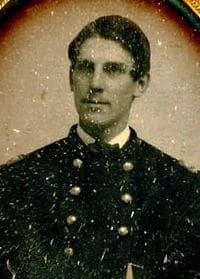
“I can’t help preferring champagne to ditch water — I doubt if the universe does.”[i]
After all these years, I still have my treasured dog-eared paperback copy of Saul K. Padover’s[ii] magnificent essays about those who helped make the American experiment so fascinating. In that wonderful book, Professor Padover first brought to my attention Oliver Wendell Holmes, Jr.[iii] I read it in the 1960s. I was captivated by his essay on Holmes.
For me, Holmes endeavored, in a brilliant way, to answer the question that had been nagging me then and still nags me now: What is the difference between politics and law?
Holmes, it seemed to me, had a rough but imperfect answer that was nevertheless honest, and quite a bit better than the platitudes we swallowed during the Warren Court of my youth and the cant we genuflect to nowadays. In Holmes’ own words, “I always say, as you know, that if my fellow citizens want to go to Hell I will help them. It’s my job.”[iv] Or to put it another way, a judge’s preferences do not matter much. Nor does a judge’s sense of morality, commonly understood not to have much to do with law except to the extent that one version of morality or the other is reflected in the legal reasoning which has gone before. He gave us legal realism in all its savage honesty.[v]
Modern day conservative, liberals and libertarians hate him for it. Conservatives hate him because they sense rightly that Holmes would laugh at Scalia[vi] and “originalism.” Liberals[vii] hate him for his decisions regarding reconstruction and the struggle of blacks during that time[viii] (frequently failing to acknowledge, however, that he was an abolitionist who was shot three times during the civil war pursuing that ideal).[ix] Libertarians despise him for decisions like Buck v. Bell, 274 U.S. 200 (1927) (when upholding forced sterilization required by state law, Holmes famously wrote: “Three generations of imbeciles are enough.”)
Indeed, many (and perhaps most) modern legal elites probably agree with this sentiment: “Holmes was a cold and brutally cynical man . . . .” Jeffrey Rosen, Brandeis’s Seat, Kagan’s Responsibility, New York Times (July 3, 2010). And so it was that I wandered over to the New Republic.
I was interested in a book review about a historian’s new and finely researched take on Holmes from his early life, which had not been deeply studied, until the end. It had been picked as one of the best history books of 2018. I wanted to know whether I should read it. (I haven’t as of yet.)
The book is entitled, Oliver Wendell Holmes, A Life in War, Law, and Ideas by Stephen Budiansky. The book is touted as, “The extraordinary story of the U.S. Supreme Court’s most influential justice.” (My emphasis.) This description of Holmes evidently pissed off a very distinguished Yale Law School professor and historian, John Fabian Witt.
Witt’s review is acidly entitled, The Shrinking Legacy of a Supreme Court Justice, Why veneration of Oliver Wendell Holmes is in decline, The New Republic (October 1, 2019). The good professor trots out all the old criticisms of Holmes, such as emphasizing Buck v. Bell and Giles v. Harris. He wants to make sure that you know that Holmes has nearly faded away. Ah, the cancel culture is alive and well at Yale.
Witt concludes this way:
We don’t find history’s heroes where we used to. Less and less do we expect Olympian detachment on the Supreme Court. The court today is beset by partisan divides in a way that Holmes’s generation could barely have understood. Perhaps it should surprise no one, then, that Holmes seems to have few answers to the pressing legal questions of our time. Budiansky tries to suggest otherwise.[x] But the argument is not as compelling as it once was. A smaller, less magisterial Holmes may be just about right.
I know an academic hit job when I see it.[xi] Witt marginalizes Holmes. But he is not alone. Virtually every stripe of legal “thought leader” today marginalizes Holmes. There is a reason for that marginalization. Holmes still terrifies them. He told the truth about law with all the majestic and also pedestrian cruelty that it sometimes entails. In doing so, he distinguished law from politics in a manner that is both profound and fearsome. No matter one’s sex (or sexual orientation), it takes balls to be the type of judge that Holmes thought proper.
Richard G. Kopf
Senior District Judge (Nebraska)
[i] Letter to William James (March 24, 1907).
[ii] Saul Kussiel Padover was a historian and political scientist at the New School for Social Research in New York City.
[iii] The “Jr.” was necessary to distinguish Holmes from his father, also a genius, who was an “American physician, poet, and polymath.”
[iv] Letter to Harold J. Laski (4 March 1920); reported in Holmes-Laski Letters (1953) by Mark DeWolfe Howe, vol. 1, p. 249.
[v] The abject carnage of the civil war no doubt caused Holmes to see things as they are rather than as one might have wished. This then likely caused him to study what the law really was in practice. If you haven’t read it, I urge you to peruse The Common Law, by Oliver Wendell Holmes, Jr. (“The life of the law has not been logic; it has been experience… The law embodies the story of a nation’s development through many centuries, and it cannot be dealt with as if it contained only the axioms and corollaries of a book of mathematics.”)You should also take a look at The Path of the Law. (“The prophecies of what the courts will do in fact, and nothing more pretentious, are what I mean by the law.”)
[vi] “The provisions of the Constitution are not mathematical formulas that have their essence in form, they are organic, living institutions transplanted from English soil. Their significance is vital, not formal; it is to be gathered not simply by taking the words and a dictionary but by considering their origin and the line of their growth.” Gompers v United States, 233 U.S. 604, 610 (1914). Fun fact: Back in the swamp, I have been interviewed for a job as judge on two occasions. A friend of a friend, who was on the short list for the Supreme Court, advised me never to mention Holmes during my interview with the conservative judge-pickers who were then situated at Main Justice. It is none of your business whether I followed that advice.
[vii] With identity politics now fully capturing liberals, they now ignore Holmes’ dissent in Lochner v. New York, 198 U.S. 45 (1905) (striking down a statute limiting the hours of work that a baker could be required to put in). The majority opinion, he charged, was based on “an economic theory which a large part of the country does not entertain.”
[viii] Giles v. Harris, 89 U.S. 475 (1903) (Plaintiff was a black man who had voted in Alabama. He sought, in a suit in equity (and that is a vitally important but little understood fact), the invalidation of provisions in the Alabama constitution that effected a systemic disenfranchisement of blacks in the state. Plaintiff argued that the provisions violated the Constitution and sought to have disenfranchised blacks placed on the voter registration rolls. Justice Holmes writing for the majority concluded that if changes must be made they should be made through the state or federal legislatures because the courts had no functional ability to do so.)
[ix] After his death, two days short of his 94th birthday, in an envelope he had tucked away long ago, someone cleaning out Holmes’ things found two of the rifle balls that had embedded themselves in his body. They had been removed by surgeons who were habitually and literally bathed in blood during the horror of the Civil War.
[x] Witt reminds us that “Budiansky is not a jurist.” I hope it is not too snarky to say the same thing about Witt.
[xi] Budiansky, unfortunately, is merely collateral damage.