
Own a building or home? How energy efficient is it? The efficient use of energy is an important element towards the development of a smarter grid. One of the first steps to making a building or home more efficient is to understand how much energy it uses and how its usage compares with that of similar buildings or homes. Many major cities are starting to address this issue. In New York, the Greener, Greater Buildings Plan (GGBP) requires owners of large buildings to annually measure their energy consumption in a process called benchmarking. Utilizing the U.S. Environmental Protection Agency’s (EPA) free online benchmarking tool called Portfolio Manager, building owners and potential buyers gain a better understanding of a building’s energy and water consumption, hopefully shifting the market towards increasingly efficient, high-performing buildings.
New York has even assembled a task force to address the “split incentive” problem in commercial buildings by creating model lease language. The split incentive occurs when one party pays for upgrades, but another party reaps the financial benefits of the energy savings, such as when building owners pay the capital expenses for energy retrofits to the base building, but tenants receive the financial benefits of energy savings through a reduction in their proportionate share of base building operating expenses. The model lease language creates a pass-through structure where both sides share the costs and benefits of energy retrofits by agreeing on a predicted amount of annual savings and having the tenant pay the owner recovery costs based on the predicted savings. A protective measure against underperforming retrofits, called a “performance buffer,” is put in place by setting annual payments at 80 percent and extending the payback period by 25 percent. This makes it easier for the tenant to pay back recovery costs by paying in smaller amounts over a longer period of time, as agreed upon by both parties. For more information on how the lease works and to read the model lease language, please see the following:
- EAC overview (in PDF),
- Presentation explaining the Energy Aligned Clause (in PDF),
- Frequently Asked Questions (in PDF), and
- Interactive financial model (Excel spreadsheet) that demonstrates how the lease language affects payback for owners and tenants.
New York is not the only city to encourage energy efficiency. The map and chart below provided by BuildingRating.org provides details on efforts by other cities such as Philadelphia and Chicago.
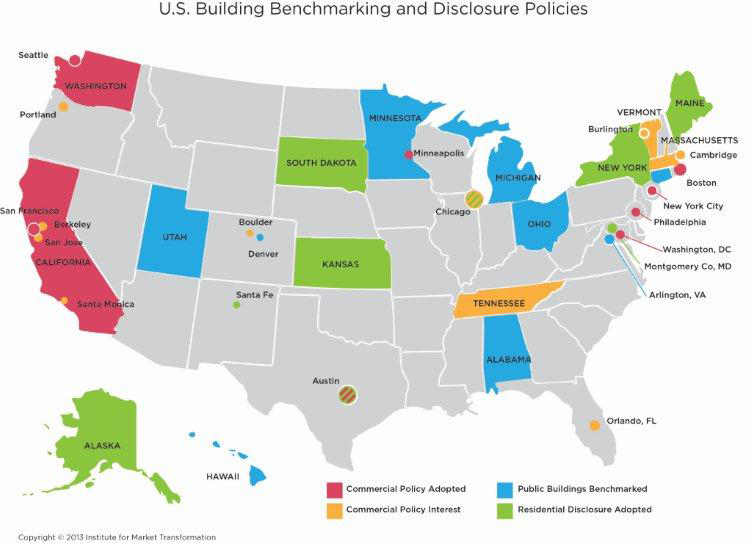
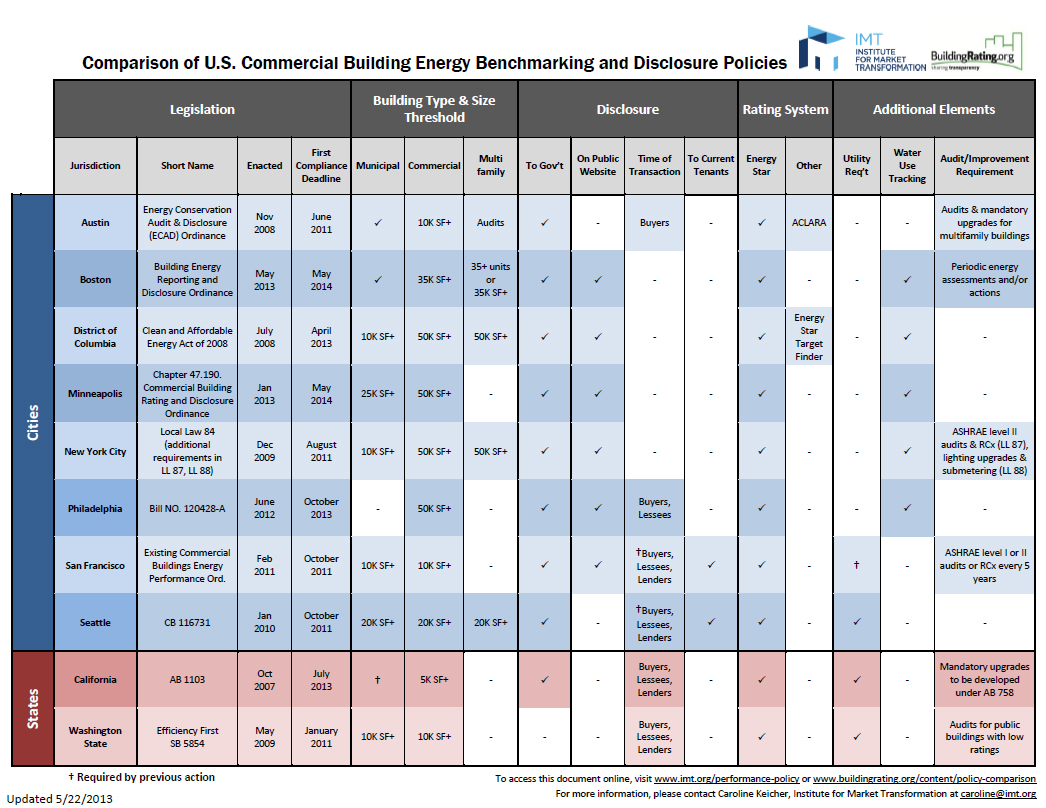
*Click the images above to view them at a larger size.